
World’s biggest powers pour over $2 trillion into AI and military tech, reshaping the global arms race

World’s biggest powers pour over $2 trillion into AI and military tech, reshaping the global arms race

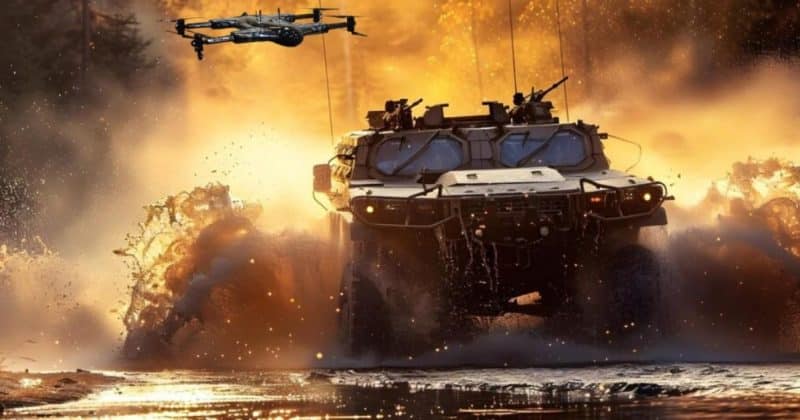
The US, China, and Russia are betting on drones, hypersonics, and autonomous systems instead of nukes to define the next era of military dominance.

The global arms race has a new currency, and it’s not measured in warheads. The world’s largest military powers are collectively funneling more than $2 trillion into AI, drones, hypersonic weapons, and satellite systems, according to Bloomberg. The US alone has pledged roughly $1.5 trillion toward these future battlefield technologies.

The Pentagon’s AI spending hits a record

The Department of Defense’s fiscal year 2026 budget includes $13.4 billion earmarked for AI and autonomous systems. That’s the largest single-year defense AI investment ever recorded.

Anduril Industries, the defense startup founded by Oculus creator Palmer Luckey, raised $5 billion in May 2026. That round pushed the company’s valuation to $61 billion. The company builds autonomous drones, surveillance towers, and AI-powered command systems.

Advertisement

A three-way race with trillion-dollar stakes

Global military expenditure hit $2.887 trillion in 2025, according to SIPRI data. The US, China, and Russia accounted for 51% of that total, combining for roughly $1.48 trillion.

China has been making particularly aggressive moves in autonomous warfare. A military parade in September 2025 showcased the country’s advancements in autonomous drone technology, a development that caught enough attention to warrant coverage from the New York Times in April 2026.

The $2 trillion-plus investment figure isn’t coming from a single budget line item. It’s an aggregate of public defense budgets, allied spending pledges, and private sector capital flowing into defense-adjacent technology.

What this means for investors and markets

Major tech firms are projected to spend around $1 trillion on AI by 2027, and a meaningful chunk of that spending will have dual-use applications, technologies that serve both commercial and defense purposes.

Defense tech companies like Anduril going public could also create interesting dynamics. A $61 billion private valuation suggests an IPO could be one of the largest tech listings in years. China’s dominance in certain supply chains for chips, rare earth minerals, and drone components introduces bottleneck risks that could ripple through both defense and commercial tech sectors.

Disclosure: This article was edited by Editorial Team. For more information on how we create and review content, see our Editorial Policy.

World’s biggest powers pour over $2 trillion into AI and military tech, reshaping the global arms race

World’s biggest powers pour over $2 trillion into AI and military tech, reshaping the global arms race

The US, China, and Russia are betting on drones, hypersonics, and autonomous systems instead of nukes to define the next era of military dominance.

The global arms race has a new currency, and it’s not measured in warheads. The world’s largest military powers are collectively funneling more than $2 trillion into AI, drones, hypersonic weapons, and satellite systems, according to Bloomberg. The US alone has pledged roughly $1.5 trillion toward these future battlefield technologies.

The Pentagon’s AI spending hits a record

The Department of Defense’s fiscal year 2026 budget includes $13.4 billion earmarked for AI and autonomous systems. That’s the largest single-year defense AI investment ever recorded.

Anduril Industries, the defense startup founded by Oculus creator Palmer Luckey, raised $5 billion in May 2026. That round pushed the company’s valuation to $61 billion. The company builds autonomous drones, surveillance towers, and AI-powered command systems.

Advertisement

A three-way race with trillion-dollar stakes

Global military expenditure hit $2.887 trillion in 2025, according to SIPRI data. The US, China, and Russia accounted for 51% of that total, combining for roughly $1.48 trillion.

China has been making particularly aggressive moves in autonomous warfare. A military parade in September 2025 showcased the country’s advancements in autonomous drone technology, a development that caught enough attention to warrant coverage from the New York Times in April 2026.

The $2 trillion-plus investment figure isn’t coming from a single budget line item. It’s an aggregate of public defense budgets, allied spending pledges, and private sector capital flowing into defense-adjacent technology.

What this means for investors and markets

Major tech firms are projected to spend around $1 trillion on AI by 2027, and a meaningful chunk of that spending will have dual-use applications, technologies that serve both commercial and defense purposes.

Defense tech companies like Anduril going public could also create interesting dynamics. A $61 billion private valuation suggests an IPO could be one of the largest tech listings in years. China’s dominance in certain supply chains for chips, rare earth minerals, and drone components introduces bottleneck risks that could ripple through both defense and commercial tech sectors.

Disclosure: This article was edited by Editorial Team. For more information on how we create and review content, see our Editorial Policy.