
World Gold Council warns of $120B gold smuggling crisis fueled by artisanal mining

World Gold Council warns of $120B gold smuggling crisis fueled by artisanal mining

Illicit gold flows now rival the GDP of mid-sized nations, with organized crime and armed groups exploiting small-scale miners worldwide

The World Gold Council has put a number on one of the commodities market’s worst-kept secrets: illicit gold flows have ballooned past $120 billion a year. That figure, cited by WGC CEO David Tait, represents a smuggling operation roughly the size of Morocco’s entire economic output.

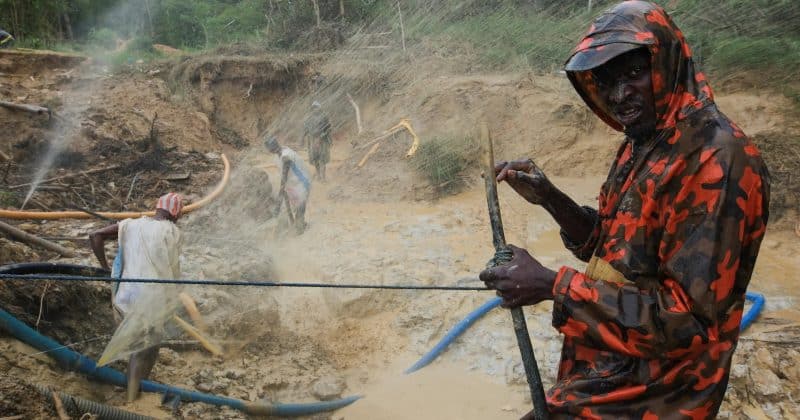
The crisis is centered on artisanal and small-scale gold mining, known as ASGM, which accounts for approximately 20% of global gold supply and employs somewhere between 15 and 20 million people worldwide.

Where the gold goes

Small-scale miners, often in conflict-ridden regions like Sudan and Mali, extract gold that gets funneled through a network of middlemen before arriving at major trading hubs. The UAE has been identified as a key waypoint in these trade routes. By the time the metal reaches a refinery, its provenance has been scrubbed enough to pass cursory checks.

Advertisement

Tait has drawn a direct line between these flows and some of the world’s most dangerous actors. Organized crime syndicates, armed groups, and terrorism financiers all benefit from the opacity of the ASGM supply chain.

The WGC laid the groundwork for this alarm back in November 2024, when it published a report titled “Silence Is Golden” in partnership with former UK Deputy Prime Minister Dominic Raab. That report detailed how exploitation runs rampant in ASGM supply chains and called for urgent international intervention.

A Global Coalition for Action on ASGM launched in November 2025. Brazil stood up its own initiative, the Brazilian Forum for Responsible Gold, in September 2025.

Why crypto investors should pay attention

The WGC has been developing digital gold initiatives, including a program called Gold247 and a “Gold as a Service” platform announced in March 2026. Tokenized gold is already a growing niche in crypto. Products like Paxos Gold (PAXG) and Tether Gold (XAUT) allow investors to hold digital claims on physical gold bars stored in vaults.

What this means for investors

If a meaningful portion of global gold supply is tainted by illicit sourcing, compliance-minded institutional investors may start demanding proof of origin before buying. That creates a two-tier market: clean gold and everything else.

The push for formalization could raise extraction costs for ASGM operations. If small-scale miners are brought into formal supply chains, the cost of production goes up, and some of that gets passed to buyers.

Gold smuggling routes through conflict zones mean that purchasing decisions have national security implications. The formation of international coalitions and country-specific forums suggests that regulation is coming. If different jurisdictions impose different sourcing standards, the arbitrage opportunities for smugglers don’t disappear. They just shift.

Disclosure: This article was edited by Editorial Team. For more information on how we create and review content, see our Editorial Policy.

World Gold Council warns of $120B gold smuggling crisis fueled by artisanal mining

World Gold Council warns of $120B gold smuggling crisis fueled by artisanal mining

Illicit gold flows now rival the GDP of mid-sized nations, with organized crime and armed groups exploiting small-scale miners worldwide

The World Gold Council has put a number on one of the commodities market’s worst-kept secrets: illicit gold flows have ballooned past $120 billion a year. That figure, cited by WGC CEO David Tait, represents a smuggling operation roughly the size of Morocco’s entire economic output.

The crisis is centered on artisanal and small-scale gold mining, known as ASGM, which accounts for approximately 20% of global gold supply and employs somewhere between 15 and 20 million people worldwide.

Where the gold goes

Small-scale miners, often in conflict-ridden regions like Sudan and Mali, extract gold that gets funneled through a network of middlemen before arriving at major trading hubs. The UAE has been identified as a key waypoint in these trade routes. By the time the metal reaches a refinery, its provenance has been scrubbed enough to pass cursory checks.

Advertisement

Tait has drawn a direct line between these flows and some of the world’s most dangerous actors. Organized crime syndicates, armed groups, and terrorism financiers all benefit from the opacity of the ASGM supply chain.

The WGC laid the groundwork for this alarm back in November 2024, when it published a report titled “Silence Is Golden” in partnership with former UK Deputy Prime Minister Dominic Raab. That report detailed how exploitation runs rampant in ASGM supply chains and called for urgent international intervention.

A Global Coalition for Action on ASGM launched in November 2025. Brazil stood up its own initiative, the Brazilian Forum for Responsible Gold, in September 2025.

Why crypto investors should pay attention

The WGC has been developing digital gold initiatives, including a program called Gold247 and a “Gold as a Service” platform announced in March 2026. Tokenized gold is already a growing niche in crypto. Products like Paxos Gold (PAXG) and Tether Gold (XAUT) allow investors to hold digital claims on physical gold bars stored in vaults.

What this means for investors

If a meaningful portion of global gold supply is tainted by illicit sourcing, compliance-minded institutional investors may start demanding proof of origin before buying. That creates a two-tier market: clean gold and everything else.

The push for formalization could raise extraction costs for ASGM operations. If small-scale miners are brought into formal supply chains, the cost of production goes up, and some of that gets passed to buyers.

Gold smuggling routes through conflict zones mean that purchasing decisions have national security implications. The formation of international coalitions and country-specific forums suggests that regulation is coming. If different jurisdictions impose different sourcing standards, the arbitrage opportunities for smugglers don’t disappear. They just shift.

Disclosure: This article was edited by Editorial Team. For more information on how we create and review content, see our Editorial Policy.