
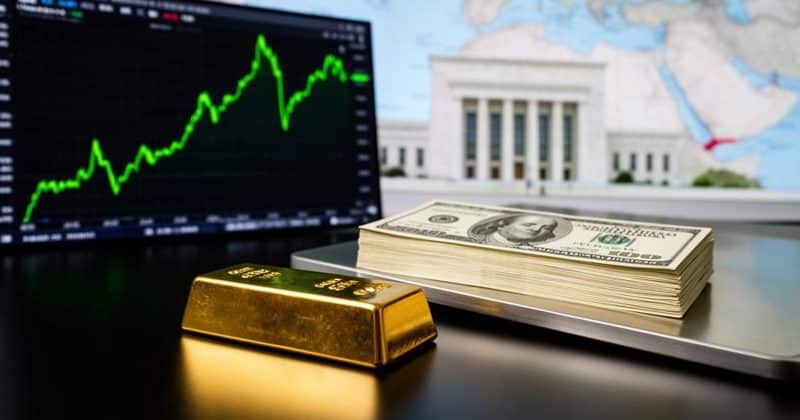
Gold enters bear market for first time since 2022 as prices crater from January highs
A 20% plunge from all-time highs near $5,600 marks gold's first official bear market in over three years, with rising yields and a strong dollar doing the damage.
Gold officially crossed into bear market territory on June 9, falling more than 20% from its January peak. It’s the first time the yellow metal has earned that grim label since 2022, and it comes just months after gold was the trade that could do no wrong.
The decline took gold from an all-time high near $5,600 per ounce in late January to a range of roughly $4,100 to $4,300 by mid-June.
What triggered the selloff
On June 9 alone, gold spot prices dropped 3.2%, snapping a remarkable streak of 660 consecutive days trading above the 200-day moving average.
A strengthening US dollar has made gold more expensive for international buyers. Rising real yields, meaning the returns on government bonds after accounting for inflation, have made the opportunity cost of holding a non-yielding asset like gold significantly steeper.
Robust US jobs data have also played a starring role. Strong employment numbers have shifted market expectations away from rate cuts and toward renewed predictions of potential Federal Reserve rate hikes.
Geopolitical tensions in the Middle East have driven oil prices higher, feeding inflation expectations. But when those fears also raise the probability of tighter monetary policy, the net effect on gold can turn negative.
From all-time highs to bear market in five months
Gold touched roughly $5,598 to $5,608 per ounce in January, a level that would have seemed absurd even a year prior. Central bank buying had been a relentless tailwind, with sovereign institutions around the world adding bullion to their reserves at a historic pace throughout 2024 and 2025. That institutional demand, combined with geopolitical uncertainty and expectations of looser monetary policy, drove a 70% rally from mid-2025 lows.
The last time gold entered bear market territory was 2022, when the Federal Reserve’s aggressive rate hiking cycle punished virtually every asset class.
What this means for investors
Several analysts have reportedly downgraded their short-term gold targets. Long-term outlooks from institutions like J.P. Morgan remain optimistic for later in 2026, suggesting gold may recapture some strength as markets stabilize and inflation remains a concern.
Gold’s traditional support from central bank purchases hasn’t disappeared entirely, and historical patterns suggest that sovereign buying tends to provide a floor during extended selloffs.
Bitcoin has shown relative resilience while gold has been under pressure from tightening liquidity conditions, forcing investors to question long-held assumptions about how these assets behave in different macro regimes.