
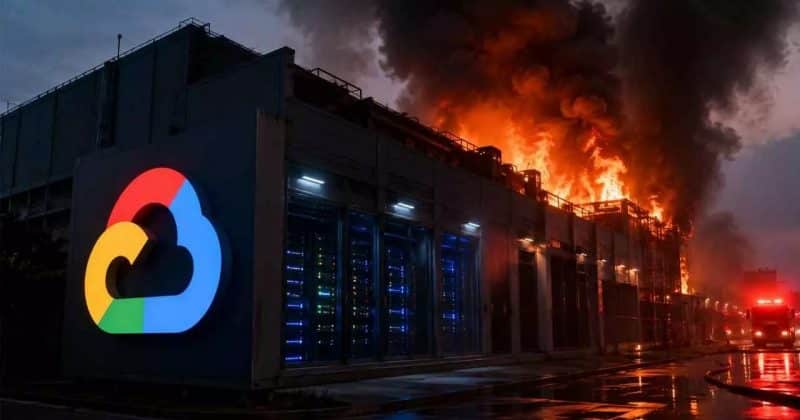
Google Cloud outage in India triggered by third-party data center fire
A fire at a Delhi colocation facility knocked out networking equipment, causing elevated latency across major Indian metro areas, but crypto infrastructure emerged unscathed.
A fire at a third-party data center in Delhi forced an emergency power shutdown on June 9, knocking out networking equipment that serves Google Cloud’s asia-south2 region. The result: intermittent latency spikes and possible packet loss for users across Delhi, Chennai, Mumbai, and surrounding areas.
Google Cloud acknowledged the disruption on its service health dashboard, noting reduced network capacity in the region. The incident began at approximately 11:22 AM US/Pacific and isolated what Google describes as a non-compute local Point of Presence, or POP. In English: a networking node that helps route traffic efficiently got cut off, but the actual compute servers stayed online.
What actually went down
Companies like Google frequently lease space in third-party colocation facilities, essentially shared data centers operated by other companies, to optimize connectivity in specific regions. When those third-party facilities have problems, the ripple effects can be surprisingly targeted. In this case, the fire triggered an emergency power shutdown that took out networking gear at a single POP.
The disruption was real but narrowly scoped. Google was careful to characterize the impact as intermittent, not a full service outage. Compute layers, meaning the actual processing power customers pay for, remained operational.
The news moving money, markets, and the world—before your day starts.
Daily. Free. Join 34,000+ readers across crypto, finance, and policy.
Why crypto didn’t flinch
An extensive review of both general and crypto-focused reporting, including CoinDesk and The Block, turned up zero instances of blockchain nodes, exchanges, or web3 services being affected by the outage. No DeFi protocols reported issues. No exchanges flagged downtime. No tokens moved on panic.
The bigger picture for cloud dependency
Google Cloud, a subsidiary of Alphabet, has been expanding its presence in South Asia, including establishing the asia-south2 region centered in Delhi to cater to rising demand for cloud services. That growth often means leaning on colocation partners rather than building every facility from scratch. When that partner’s building catches fire, you’re along for the ride.
For crypto companies evaluating cloud providers, the dependency chain this incident exposed is real. A DeFi protocol running validator nodes on Google Cloud in asia-south2 might not have been affected by this particular fire, but reliance on third-party physical infrastructure remains a vulnerability. Physical diversity, meaning nodes spread across genuinely independent facilities, remains the gold standard for resilience.