
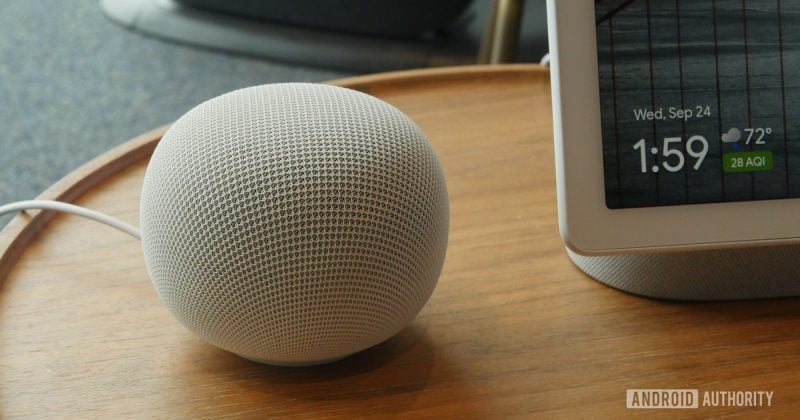
Google unveils new Home speaker featuring Gemini chatbot integration
The $99.99 smart speaker marks Google's first dedicated home audio hardware in six years, betting big on conversational AI to compete with Apple and Amazon.
Google is jumping back into the standalone smart speaker game after a roughly six-year hiatus, and this time it’s bringing its most advanced AI along for the ride. The new Google Home Speaker, priced at $99.99, is built from the ground up around the company’s Gemini AI models, designed to make talking to your house feel less like barking commands at a vending machine.
The device features 360-degree audio and deep integration with the Gemini for Home platform, Google’s initiative to bring genuinely conversational AI into the smart home environment.
What Google actually built
At $99.99, it slots in well below Apple’s current HomePod, which retails for $299.
The Gemini for Home platform started rolling out enhancements to existing Nest speakers and displays in late 2025, essentially serving as a proving ground for the conversational AI tech now baked into this new hardware.
Retailer leaks point to a launch date around June 25, 2026, though Google’s own store lists the slightly vaguer “Spring 2026” window.
AI, tech, and the markets they move—in one daily briefing.
Daily. Free. Join 34,000+ readers across crypto, finance, and policy.
The AI arms race in your living room
The Gemini integration matters because it changes the fundamental interaction model. Traditional smart speakers operate on a command-response basis. Gemini-powered conversations can theoretically maintain context across multiple exchanges, understand follow-up questions, and handle ambiguity without short-circuiting.
What this means for investors
Google’s announcement makes no mention of Web3 integration, token-gated features, or any of the buzzwords that characterized the 2021-2022 era of “put blockchain in everything.”
Major tech companies are choosing to invest their AI budgets in centralized, proprietary platforms rather than decentralized alternatives. Google isn’t building Gemini for Home on a blockchain. It’s not using decentralized compute. It’s not issuing tokens to incentivize smart home data sharing. Every dollar Alphabet spends on proprietary AI infrastructure is a dollar not spent exploring decentralized AI models, which is the kind of competitive dynamic that projects like Fetch.ai, Ocean Protocol, and other decentralized AI tokens are trying to disrupt.
Privacy-conscious users may find the idea of a Gemini-powered always-listening device in their kitchen less than appealing. Google’s data collection practices have been a recurring concern, and adding a more capable AI to a home speaker means more capable data processing.