
Hamas dissolves government, transfers power to technocratic administration as crypto enforcement legacy lingers
The governance shake-up in Gaza carries limited immediate crypto market impact, but the group's history with Bitcoin fundraising and US enforcement actions adds a layer worth watching.
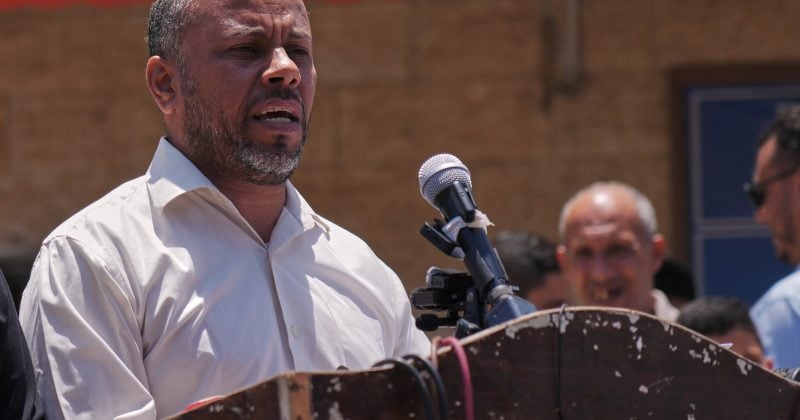
Hamas officially dissolved its Emergency Committee on July 6, 2026, ending nearly two decades of direct governance in Gaza and ceding civilian administrative authority to a new technocratic body. The resignation of Emergency Committee head Mohammed al-Farra accompanied the announcement. Power is being handed to the National Committee for the Administration of Gaza, known as the NCAG, a Palestinian technocratic body established under a US-mediated peace initiative earlier this year.
What the NCAG actually is, and why it matters
The NCAG was established in January 2026 under U.N. Security Council Resolution 2803 to manage day-to-day civilian affairs in Gaza. Hamas is dissolving its governmental apparatus, but it has not agreed to disarm. Israel has blocked the NCAG from actually entering Gaza, creating a governance vacuum that exists on paper but not yet in practice.
The Bitcoin connection: a history lesson worth remembering
Hamas-linked entities have solicited Bitcoin donations since at least 2019. In 2023, the US Treasury sanctioned BuyCash, a Gaza-based exchange, for facilitating transactions linked to Hamas. That same year, public Bitcoin fundraising by Hamas-linked groups was suspended in April 2023 due to concerns about donor safety. A 2025 civil forfeiture action targeted approximately $2 million in digital currency connected to Hamas fundraising campaigns. Current enforcement actions appear focused on historical schemes rather than anything connected to the governance transition.
Market impact: mostly crickets, but with caveats
As of July 10, 2026, the cryptocurrency market has shown no notable reaction to the governance change in Gaza. No spike in volume, no unusual wallet activity linked to sanctioned entities, no protocol-level disruptions.
The news moving money, markets, and the world—before your day starts.
Daily. Free. Join 34,000+ readers across crypto, finance, and policy.
The 2023 BuyCash sanctions and the 2025 forfeiture action are exactly the kind of precedents that regulators cite when arguing for broader authority over crypto markets. The Office of Foreign Assets Control has demonstrated a willingness to pursue enforcement actions years after the underlying transactions occurred, meaning that the compliance risks from Hamas-era crypto activity could surface in unexpected places for years to come.