
Geoffrey Hinton predicts AI will surpass humans in mathematics within 10 years
The Nobel laureate and 'Godfather of AI' sees math as just another game for machines to master, drawing parallels to chess and Go
Geoffrey Hinton, the researcher widely regarded as the “Godfather of AI,” thinks machines will be better at mathematics than any living human within the next decade. For a field that has defined human intellectual achievement for millennia, that’s a rather bold claim. But Hinton isn’t exactly known for hedging.
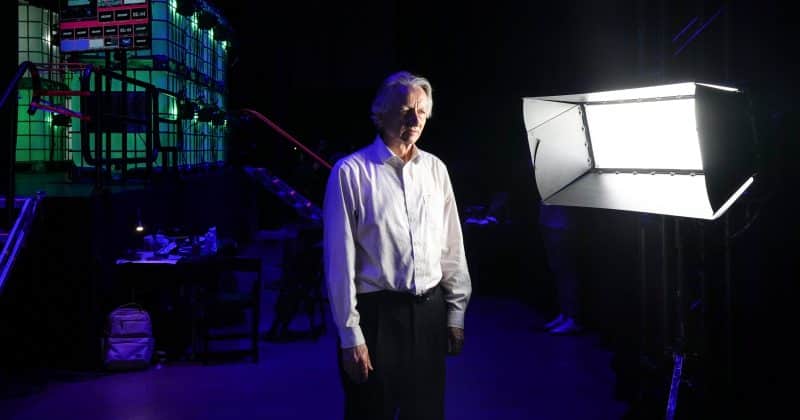
Speaking at the Sana AI Summit, Hinton laid out a deceptively simple argument: mathematics is, at its core, a closed system. Like chess. Like Go. And we already know how those stories ended for human players.
Math as a game board
Here’s the thing about closed systems. They have defined rules, clear objectives, and verifiable outcomes. When DeepMind’s AlphaGo defeated the world’s best Go player back in 2016, it did so partly by discovering moves that no human had considered in thousands of years of play. Hinton’s argument is that mathematics operates on fundamentally similar principles.
In English: if you give an AI system a set of axioms and let it explore conjectures and proofs on its own, it doesn’t need human-generated examples to get better. It can teach itself. The same way AlphaZero learned chess by playing millions of games against itself, AI could potentially navigate the landscape of mathematical proof by brute-force exploration combined with pattern recognition.
A shifted timeline and growing unease
What makes this prediction particularly notable is how dramatically Hinton has revised his own expectations. He previously believed artificial general intelligence, the point at which AI matches or exceeds human cognitive ability across domains, was decades away. That timeline has compressed significantly.
AI, tech, and the markets they move—in one daily briefing.
Daily. Free. Join 34,000+ readers across crypto, finance, and policy.
Hinton now estimates a 50% chance of AGI developing within the next two decades. For context, a coin-flip probability on something that would fundamentally reshape civilization is not exactly comforting. Hinton himself doesn’t seem comforted by it.
He resigned from Google in 2023, citing concerns over AI safety. The move was striking not because a researcher left a tech company, but because of who was leaving and why. Hinton had spent years helping build the very neural network architectures that power modern AI. Walking away was less a career decision and more a public statement about existential risk.
His work on neural networks earned him the Nobel Prize in Physics in 2024, shared with John Hopfield, recognition that underscored just how foundational his contributions have been. He had previously received the Turing Award in 2018.
During the summit, Hinton revealed that he now believes superintelligent systems may emerge within his lifetime. This represents a dramatic departure from his earlier positions and reflects a broader pattern among senior AI researchers. The goalposts for AGI keep moving closer, not because researchers are getting more optimistic, but because the technology keeps surprising them.