
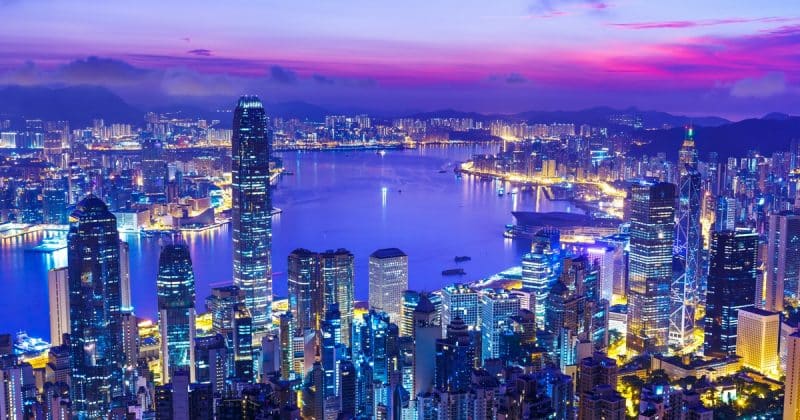
Hong Kong overtakes Switzerland as top offshore wealth hub amid China crackdown concerns

Hong Kong overtakes Switzerland as top offshore wealth hub amid China crackdown concerns

Boston Consulting Group's latest report crowns Hong Kong the world's leading cross-border wealth center, but Chinese regulatory pressure threatens the throne before it's even warm

For the first time ever, Hong Kong has dethroned Switzerland as the world’s premier offshore wealth hub.

According to Boston Consulting Group’s Global Wealth Report 2026, cross-border wealth booked in Hong Kong reached approximately $2.9 trillion in 2025, narrowly surpassing Switzerland’s $2.94 trillion. That 10.7% annual growth rate was powered overwhelmingly by one source: Chinese money flowing south through the only legal gateway available.

The China factor cuts both ways

Roughly 60% of its offshore assets originate from mainland China. The city’s “one country, two systems” framework has long made it the default destination for wealthy Chinese families looking to park capital outside the mainland. A surge in IPOs and strong equity market performance in 2025 accelerated the trend, pulling enough capital to finally tip the scales against Switzerland’s centuries-old banking dominance.

But Chinese regulators are now tightening the spigot. A crackdown on brokers facilitating cross-border capital flows has raised serious questions about whether Hong Kong can hold this position.

Advertisement

The global picture offers useful context. Total cross-border wealth hit $15.7 trillion in 2025, growing 8.4% year over year.

Asia’s rise, Europe’s fade

BCG’s report identifies two distinct hub networks emerging in global wealth management: an Asia-focused cluster anchored by Hong Kong and Singapore, and a more traditional grouping centered on Europe, the US, and the UK.

Switzerland built its dominance on banking secrecy laws and a client base spanning dozens of countries. Hong Kong built its position on proximity to the world’s second-largest economy and a legal system that, at least on paper, operates independently from Beijing. Switzerland’s secrecy advantage eroded over the past decade as international tax transparency agreements took hold.

Singapore is the obvious beneficiary of any instability in Hong Kong’s position. Wealthy Chinese families are reportedly diversifying their offshore holdings across Singapore, Switzerland, and Dubai, hedging against the possibility that Beijing’s regulatory reach extends further into Hong Kong’s financial plumbing.

What this means for investors

Hong Kong’s rise signals that Asian financial infrastructure is now mature enough to compete head-to-head with European incumbents. The volume of capital flowing through Hong Kong creates demand for everything from custody services to alternative investment platforms.

China’s crackdown on brokers isn’t happening in a vacuum. The fact that nearly $1.8 trillion in offshore wealth (60% of Hong Kong’s total) traces back to the mainland makes this a policy priority, not a passing concern. Any significant escalation in regulatory enforcement could reverse Hong Kong’s gains faster than they accumulated.

The diversification trend among wealthy Chinese families toward Singapore and Dubai also suggests that sophisticated capital allocators are already pricing in this risk.

Disclosure: This article was edited by Editorial Team. For more information on how we create and review content, see our Editorial Policy.

Hong Kong overtakes Switzerland as top offshore wealth hub amid China crackdown concerns

Hong Kong overtakes Switzerland as top offshore wealth hub amid China crackdown concerns

Boston Consulting Group's latest report crowns Hong Kong the world's leading cross-border wealth center, but Chinese regulatory pressure threatens the throne before it's even warm

For the first time ever, Hong Kong has dethroned Switzerland as the world’s premier offshore wealth hub.

According to Boston Consulting Group’s Global Wealth Report 2026, cross-border wealth booked in Hong Kong reached approximately $2.9 trillion in 2025, narrowly surpassing Switzerland’s $2.94 trillion. That 10.7% annual growth rate was powered overwhelmingly by one source: Chinese money flowing south through the only legal gateway available.

The China factor cuts both ways

Roughly 60% of its offshore assets originate from mainland China. The city’s “one country, two systems” framework has long made it the default destination for wealthy Chinese families looking to park capital outside the mainland. A surge in IPOs and strong equity market performance in 2025 accelerated the trend, pulling enough capital to finally tip the scales against Switzerland’s centuries-old banking dominance.

But Chinese regulators are now tightening the spigot. A crackdown on brokers facilitating cross-border capital flows has raised serious questions about whether Hong Kong can hold this position.

Advertisement

The global picture offers useful context. Total cross-border wealth hit $15.7 trillion in 2025, growing 8.4% year over year.

Asia’s rise, Europe’s fade

BCG’s report identifies two distinct hub networks emerging in global wealth management: an Asia-focused cluster anchored by Hong Kong and Singapore, and a more traditional grouping centered on Europe, the US, and the UK.

Switzerland built its dominance on banking secrecy laws and a client base spanning dozens of countries. Hong Kong built its position on proximity to the world’s second-largest economy and a legal system that, at least on paper, operates independently from Beijing. Switzerland’s secrecy advantage eroded over the past decade as international tax transparency agreements took hold.

Singapore is the obvious beneficiary of any instability in Hong Kong’s position. Wealthy Chinese families are reportedly diversifying their offshore holdings across Singapore, Switzerland, and Dubai, hedging against the possibility that Beijing’s regulatory reach extends further into Hong Kong’s financial plumbing.

What this means for investors

Hong Kong’s rise signals that Asian financial infrastructure is now mature enough to compete head-to-head with European incumbents. The volume of capital flowing through Hong Kong creates demand for everything from custody services to alternative investment platforms.

China’s crackdown on brokers isn’t happening in a vacuum. The fact that nearly $1.8 trillion in offshore wealth (60% of Hong Kong’s total) traces back to the mainland makes this a policy priority, not a passing concern. Any significant escalation in regulatory enforcement could reverse Hong Kong’s gains faster than they accumulated.

The diversification trend among wealthy Chinese families toward Singapore and Dubai also suggests that sophisticated capital allocators are already pricing in this risk.

Disclosure: This article was edited by Editorial Team. For more information on how we create and review content, see our Editorial Policy.