
Four oil tankers turn back from Strait of Hormuz after attacks, and Iran is reportedly demanding Bitcoin for transit

Four oil tankers turn back from Strait of Hormuz after attacks, and Iran is reportedly demanding Bitcoin for transit

Iran-linked forces struck commercial vessels in the world's most critical oil chokepoint, driving crude prices higher and raising questions about crypto's role in sanctions evasion.

Four oil and gas tankers reversed course from the Strait of Hormuz this week after Iran-linked forces attacked at least three commercial vessels, marking a dangerous escalation in a waterway that handles roughly 20% of the world’s traded oil. Oil prices jumped more than 3% in the aftermath, and the US responded with airstrikes on Iranian targets.

But here’s the part that should make crypto investors sit up: Iran is reportedly demanding transit fees in Bitcoin and Tether from vessels navigating restricted movement periods. The intersection of naval warfare and stablecoin payments is not a scenario anyone had on their 2026 bingo card.

What happened in the Strait

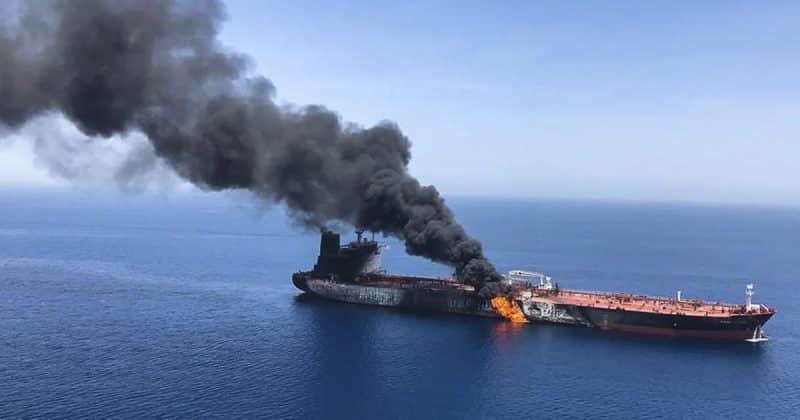
On July 7-8, projectiles struck multiple commercial ships transiting the narrow waterway between Iran and Oman. Among the confirmed targets were the Qatari LNG carrier Al Rekayyat and the Saudi oil tanker Wedyan.

At least one vessel caught fire during the incidents. UK Maritime Trade Operations and other monitoring agencies confirmed the attacks, prompting shipping risk assessments in the region to spike.

Advertisement

The four tankers that turned back represent a pattern. In April 2026, a similar number of vessels reversed course after Iran announced potential closures of the strait tied to escalating tensions with Washington. This time, the provocations went beyond threats and into live fire.

The US response was swift and forceful. Washington executed airstrikes on dozens of Iranian targets and revoked an Iranian oil export license that had been connected to ongoing ceasefire negotiations.

The crypto angle nobody expected

Reports have emerged that Iran has been demanding tolls or transit fees payable in Bitcoin and Tether from commercial vessels during these periods of restricted movement.

The logic, from Iran’s perspective, is straightforward. Traditional financial channels are largely closed off due to sanctions. The SWIFT system is a non-starter. But crypto wallets don’t care about your geopolitical status. A Bitcoin transaction clears regardless of whether the sender’s flag state recognizes the receiver’s government.

For the crypto industry, this cuts both ways. On one hand, it validates the thesis that digital assets are genuinely useful as a medium of exchange in environments where traditional finance breaks down. On the other hand, it hands regulators around the world a prime example of exactly why they want tighter controls on crypto flows.

Why 20% of global oil matters to your portfolio

The Strait of Hormuz is roughly 21 miles wide at its narrowest point. Through that gap flows oil from Saudi Arabia, Iraq, Kuwait, the UAE, and Qatar, along with massive quantities of liquefied natural gas.

The more-than-3% jump in oil prices following these attacks is significant but not unprecedented. What makes this episode different is the layered nature of the response: kinetic military action, sanctions escalation, and the crypto dimension all happening simultaneously.

What investors should watch

For crypto-specific implications, the Bitcoin-as-toll-payment story deserves close monitoring. If this practice becomes more widely documented, expect regulatory responses. OFAC, the US Treasury’s sanctions enforcement arm, would likely view facilitation of these payments as sanctions evasion. That could mean new designations targeting wallet addresses, exchanges, or even specific Tether issuances.

Tether’s involvement is particularly notable. USDT is already the dominant stablecoin in regions with limited banking access, from Turkey to Nigeria to Southeast Asia. If it becomes the de facto currency for sanctioned maritime transit fees, the pressure on Tether Limited to implement more aggressive compliance measures would intensify dramatically.

Disclosure: This article was edited by Editorial Team. For more information on how we create and review content, see our Editorial Policy.

Four oil tankers turn back from Strait of Hormuz after attacks, and Iran is reportedly demanding Bitcoin for transit

Four oil tankers turn back from Strait of Hormuz after attacks, and Iran is reportedly demanding Bitcoin for transit

Iran-linked forces struck commercial vessels in the world's most critical oil chokepoint, driving crude prices higher and raising questions about crypto's role in sanctions evasion.

Four oil and gas tankers reversed course from the Strait of Hormuz this week after Iran-linked forces attacked at least three commercial vessels, marking a dangerous escalation in a waterway that handles roughly 20% of the world’s traded oil. Oil prices jumped more than 3% in the aftermath, and the US responded with airstrikes on Iranian targets.

But here’s the part that should make crypto investors sit up: Iran is reportedly demanding transit fees in Bitcoin and Tether from vessels navigating restricted movement periods. The intersection of naval warfare and stablecoin payments is not a scenario anyone had on their 2026 bingo card.

What happened in the Strait

On July 7-8, projectiles struck multiple commercial ships transiting the narrow waterway between Iran and Oman. Among the confirmed targets were the Qatari LNG carrier Al Rekayyat and the Saudi oil tanker Wedyan.

At least one vessel caught fire during the incidents. UK Maritime Trade Operations and other monitoring agencies confirmed the attacks, prompting shipping risk assessments in the region to spike.

Advertisement

The four tankers that turned back represent a pattern. In April 2026, a similar number of vessels reversed course after Iran announced potential closures of the strait tied to escalating tensions with Washington. This time, the provocations went beyond threats and into live fire.

The US response was swift and forceful. Washington executed airstrikes on dozens of Iranian targets and revoked an Iranian oil export license that had been connected to ongoing ceasefire negotiations.

The crypto angle nobody expected

Reports have emerged that Iran has been demanding tolls or transit fees payable in Bitcoin and Tether from commercial vessels during these periods of restricted movement.

The logic, from Iran’s perspective, is straightforward. Traditional financial channels are largely closed off due to sanctions. The SWIFT system is a non-starter. But crypto wallets don’t care about your geopolitical status. A Bitcoin transaction clears regardless of whether the sender’s flag state recognizes the receiver’s government.

For the crypto industry, this cuts both ways. On one hand, it validates the thesis that digital assets are genuinely useful as a medium of exchange in environments where traditional finance breaks down. On the other hand, it hands regulators around the world a prime example of exactly why they want tighter controls on crypto flows.

Why 20% of global oil matters to your portfolio

The Strait of Hormuz is roughly 21 miles wide at its narrowest point. Through that gap flows oil from Saudi Arabia, Iraq, Kuwait, the UAE, and Qatar, along with massive quantities of liquefied natural gas.

The more-than-3% jump in oil prices following these attacks is significant but not unprecedented. What makes this episode different is the layered nature of the response: kinetic military action, sanctions escalation, and the crypto dimension all happening simultaneously.

What investors should watch

For crypto-specific implications, the Bitcoin-as-toll-payment story deserves close monitoring. If this practice becomes more widely documented, expect regulatory responses. OFAC, the US Treasury’s sanctions enforcement arm, would likely view facilitation of these payments as sanctions evasion. That could mean new designations targeting wallet addresses, exchanges, or even specific Tether issuances.

Tether’s involvement is particularly notable. USDT is already the dominant stablecoin in regions with limited banking access, from Turkey to Nigeria to Southeast Asia. If it becomes the de facto currency for sanctioned maritime transit fees, the pressure on Tether Limited to implement more aggressive compliance measures would intensify dramatically.

Disclosure: This article was edited by Editorial Team. For more information on how we create and review content, see our Editorial Policy.