
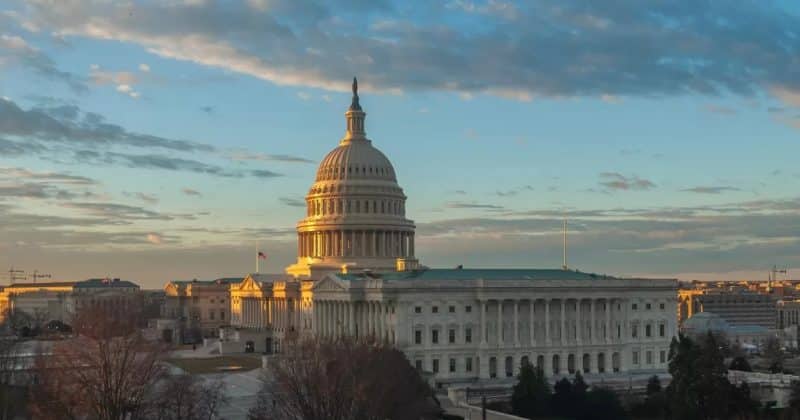
US House lawmakers raise concerns over crypto tax bills progress
Seven draft tax bills covering de minimis exemptions, staking rewards, and stablecoin rules face skepticism from committee members ahead of a June 9 hearing.
The House Ways and Means Committee is preparing to debate seven draft tax bills targeting cryptocurrency transactions, but lawmakers on the committee are already signaling that the proposals need significant work before they can move forward.
Chairman Jason Smith has scheduled a full committee hearing for June 9, where industry witnesses from Fidelity Investments and Coinbase are expected to testify. The drafts cover a wide range of digital asset tax issues, from de minimis exemptions for small transactions to the tax treatment of staking and mining rewards, stablecoin regulations, and lending rules.
What the bills actually propose
The de minimis exemption is arguably the most consumer-facing proposal of the bunch. Right now, every single crypto transaction, even buying a $5 coffee with Bitcoin, technically triggers a taxable event. The proposed exemption would set a threshold below which small transactions simply don’t count.
The staking and mining question addresses how new tokens generated as rewards should be taxed. Should staking rewards be taxed as income the moment they’re received? Or only when they’re sold? The IRS has offered some guidance, but it’s been inconsistent enough that both individual stakers and institutional validators have been operating in a gray zone.
The stablecoin and lending provisions round out the package, addressing two additional areas where the drafts seek to provide clarity.
Democrats pump the brakes
Committee members, particularly Democrats, have raised reservations about several provisions in the drafts. The concerns suggest that these proposals are still very much in draft form, requiring substantial refinement before they could advance to markup or a floor vote.
The news moving money, markets, and the world—before your day starts.
Daily. Free. Join 34,000+ readers across crypto, finance, and policy.
One bipartisan bright spot is the Digital Asset PARITY Act, introduced on May 19 by Representatives Max Miller and Steven Horsford. The bill has informed several of the committee’s drafts and provides a template for how bipartisan crypto legislation can work.
The committee is also making a deliberate choice to pursue tax-focused legislation independently of broader market-structure proposals like the CLARITY Act (H.R. 3633).
Why Fidelity and Coinbase testimony matters
Fidelity manages trillions in assets and has been steadily building out its digital asset offerings. Coinbase is the largest publicly traded crypto exchange in the US. Their testimony will likely focus on practical implementation concerns including tax software compatibility, reporting requirements, and the operational burden of tracking every micro-transaction.
What this means for investors
The de minimis exemption alone would remove one of the biggest friction points for using crypto as an actual medium of exchange rather than just a speculative asset. Right now, the tax reporting burden effectively discourages anyone from spending their Bitcoin on anything.
Clearer rules around staking and mining rewards would also reduce uncertainty for the growing number of investors who participate in proof-of-stake networks. Institutional allocators in particular tend to avoid strategies where the tax treatment is ambiguous.
The concerns raised by committee members suggest these bills won’t sail through unchallenged. The June 9 hearing will establish a public record and set the terms of debate, but markup and floor votes could be months away.