
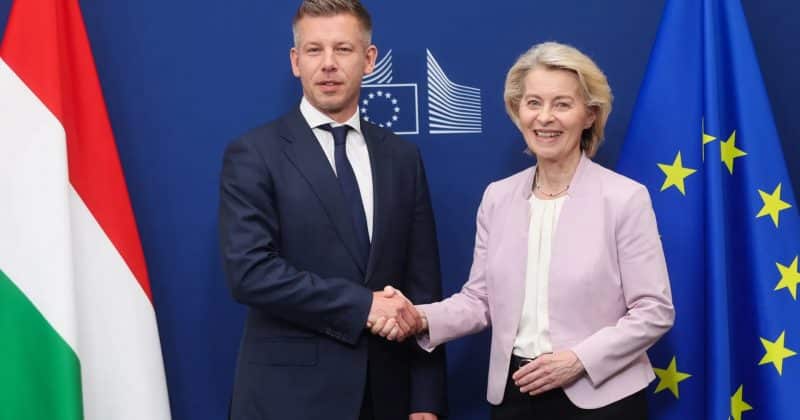
Hungary secures deal to unlock €16.4 billion in frozen EU funds after sweeping reform package
Prime Minister Péter Magyar calls the agreement a 'historic breakthrough' as Hungary commits to anti-corruption and judicial reforms by August 2026.
Hungary just cleared one of the biggest financial logjams in recent European history. On May 29, the Hungarian government struck a deal with the European Commission to release €16.4 billion, roughly $19 billion, in EU funds that had been frozen for years over governance and rule-of-law concerns.
Prime Minister Péter Magyar framed the agreement in blunt terms: Hungary and its people are getting their money back, and they didn’t have to give up anything significant to do it. The main concession, he said, was simply ending the corruption practices of the previous Orbán administration.
What’s in the package
The €16.4 billion breaks down into three buckets. Approximately €10 billion comes from the EU’s recovery and resilience facility. Another €4.2 billion is tied to rule-of-law conditionality. The remaining €2.2 billion is linked to fundamental rights and academic freedom initiatives.
That last category carries a practical bonus: it reinstates Hungary’s participation in the Erasmus educational exchange program, reconnecting Hungarian students and universities to a Europe-wide academic network they’d been effectively cut off from.
In exchange, Hungary has committed to completing a slate of legislative reforms by August 31, 2026. These cover judicial independence, government transparency, and a particularly notable commitment: joining the European Public Prosecutor’s Office, known as EPPO.
EPPO is the EU’s independent body for investigating and prosecuting fraud against the bloc’s financial interests. Hungary under Viktor Orbán had refused to join. The reversal is more than symbolic. It effectively puts a European-level watchdog in the room for how Budapest spends EU money going forward.
The news moving money, markets, and the world—before your day starts.
Daily. Free. Join 34,000+ readers across crypto, finance, and policy.
Magyar described the agreement as a “historic breakthrough,” emphasizing that the funds would flow back to Hungary without requiring concessions beyond addressing past governance failures.
Years of frozen funding under Orbán
The backstory here matters. Under Viktor Orbán’s government, Hungary saw substantial EU funding frozen as Brussels grew increasingly frustrated with what it viewed as democratic backsliding. The disputes centered on judicial independence, media freedom, anti-corruption safeguards, and the treatment of academic institutions.
The European Commission had used its relatively new conditionality mechanism, essentially the ability to withhold funds from member states that fail to meet governance standards, to keep the money on ice. It was the most significant deployment of this tool against any EU member state, turning Hungary into a test case for whether Brussels could actually enforce its values through financial leverage.
The August 31 deadline for completing reforms gives Hungary about three months to push through legislation covering anti-corruption frameworks, judicial reform, and EPPO accession.
What this means for investors and the broader crypto landscape
The EU is in the process of implementing its Markets in Crypto-Assets regulation, or MiCA, across member states. Hungary’s commitment to judicial reform and enhanced transparency aligns with the kind of institutional infrastructure that MiCA compliance requires. A Hungary that is fully integrated into EU governance frameworks is a Hungary that can participate more effectively in the bloc’s regulated digital asset ecosystem.
There’s a risk dimension too. The August deadline is tight, and legislative processes rarely run on schedule. If Hungary misses the mark, the funds could remain partially frozen, and the political goodwill built with Brussels could evaporate quickly.