
Nexo Earn with Nexo
Hungary’s World Cup squad spotlights NB I talent as crypto crossover opportunities linger

Hungary’s World Cup squad spotlights NB I talent as crypto crossover opportunities linger

Three current and three former domestic league players made the cut for the 2026 FIFA World Cup, while Hungary's shifting political landscape could reshape its crypto-sports intersection.

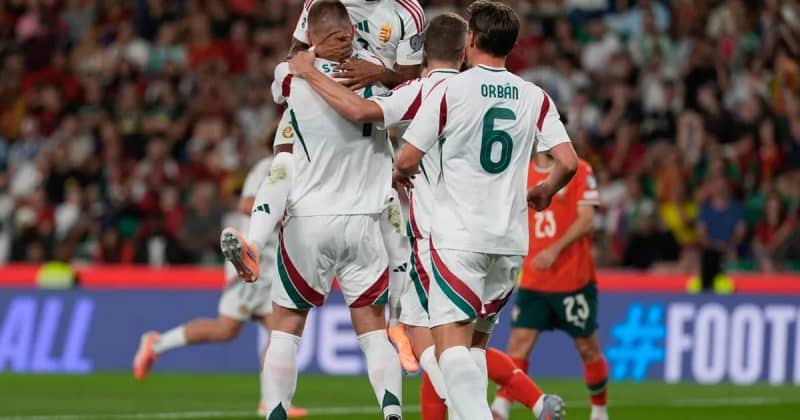
Hungary is heading to the 2026 FIFA World Cup with a squad that leans meaningfully on its domestic football pipeline. Three players currently competing in the NB I, Hungary’s top-flight league, earned roster spots alongside three former NB I alumni.

The selection lands at an interesting moment for Hungarian sports and digital assets alike. A recent change in government, combined with one of Europe’s most prominent football clubs already experimenting with Web3, sets up a scenario where the World Cup could become a catalyst for crypto-adjacent fan engagement in a country that has, until now, largely stayed on the sidelines.

On the pitch: a squad built on domestic foundations

Hungary’s World Cup qualifying campaign offered enough reasons for optimism to justify the squad construction. The team opened with a 2-2 draw against Ireland and followed it with a victory over Armenia.

Advertisement

Having six players with NB I ties, whether current or historical, is notable for a country whose best talent often migrates to Western European leagues early. It suggests the domestic league’s development infrastructure is producing players capable of performing on the sport’s biggest stage.

Ferencváros, Binance, and Hungary’s Web3 experiment

The crypto angle here is not hypothetical. Ferencváros, Hungary’s most decorated football club, partnered with Binance back in August 2023 to roll out Web3 fan engagement experiences built on blockchain technology.

Despite Ferencváros blazing that trail, Hungary’s national football team still has no dedicated fan token. Countries like Italy and Brazil have launched successful fan tokens on the Chiliz platform, creating tradeable digital assets that give holders voting rights on minor team decisions and access to exclusive content. Hungary has nothing comparable.

A new government, a new regulatory posture

The political backdrop makes this even more interesting. Péter Magyar’s Tisza Party won Hungary’s April 2026 elections, ending Viktor Orbán’s extended tenure in power. The new government is widely expected to align more closely with the European Union’s Markets in Crypto-Assets (MiCA) framework, the comprehensive regulatory structure that aims to standardize crypto rules across the bloc.

What this means for crypto investors

The convergence of a World Cup appearance, an established club-level Binance partnership, and a government transition creates a specific kind of opportunity window. A Hungary national team fan token launch, timed around the World Cup, would have a built-in marketing moment that most projects spend millions trying to manufacture.

Investors should watch for two things. First, any movement from the Magyar administration on MiCA implementation timelines. Regulatory clarity is the prerequisite for everything else: exchanges listing Hungarian sports tokens, domestic startups building fan engagement platforms, and international players like Chiliz or Socios entering the market.

Second, look at whether Ferencváros expands its Binance partnership or whether other Hungarian clubs follow suit. If the Ferencváros experiment generated meaningful engagement metrics, it becomes a template that the Hungarian Football Federation could replicate at the national team level.

Disclosure: This article was edited by Editorial Team. For more information on how we create and review content, see our Editorial Policy.

Hungary’s World Cup squad spotlights NB I talent as crypto crossover opportunities linger

Hungary’s World Cup squad spotlights NB I talent as crypto crossover opportunities linger

Three current and three former domestic league players made the cut for the 2026 FIFA World Cup, while Hungary's shifting political landscape could reshape its crypto-sports intersection.

Hungary is heading to the 2026 FIFA World Cup with a squad that leans meaningfully on its domestic football pipeline. Three players currently competing in the NB I, Hungary’s top-flight league, earned roster spots alongside three former NB I alumni.

The selection lands at an interesting moment for Hungarian sports and digital assets alike. A recent change in government, combined with one of Europe’s most prominent football clubs already experimenting with Web3, sets up a scenario where the World Cup could become a catalyst for crypto-adjacent fan engagement in a country that has, until now, largely stayed on the sidelines.

On the pitch: a squad built on domestic foundations

Hungary’s World Cup qualifying campaign offered enough reasons for optimism to justify the squad construction. The team opened with a 2-2 draw against Ireland and followed it with a victory over Armenia.

Advertisement

Having six players with NB I ties, whether current or historical, is notable for a country whose best talent often migrates to Western European leagues early. It suggests the domestic league’s development infrastructure is producing players capable of performing on the sport’s biggest stage.

Ferencváros, Binance, and Hungary’s Web3 experiment

The crypto angle here is not hypothetical. Ferencváros, Hungary’s most decorated football club, partnered with Binance back in August 2023 to roll out Web3 fan engagement experiences built on blockchain technology.

Despite Ferencváros blazing that trail, Hungary’s national football team still has no dedicated fan token. Countries like Italy and Brazil have launched successful fan tokens on the Chiliz platform, creating tradeable digital assets that give holders voting rights on minor team decisions and access to exclusive content. Hungary has nothing comparable.

A new government, a new regulatory posture

The political backdrop makes this even more interesting. Péter Magyar’s Tisza Party won Hungary’s April 2026 elections, ending Viktor Orbán’s extended tenure in power. The new government is widely expected to align more closely with the European Union’s Markets in Crypto-Assets (MiCA) framework, the comprehensive regulatory structure that aims to standardize crypto rules across the bloc.

What this means for crypto investors

The convergence of a World Cup appearance, an established club-level Binance partnership, and a government transition creates a specific kind of opportunity window. A Hungary national team fan token launch, timed around the World Cup, would have a built-in marketing moment that most projects spend millions trying to manufacture.

Investors should watch for two things. First, any movement from the Magyar administration on MiCA implementation timelines. Regulatory clarity is the prerequisite for everything else: exchanges listing Hungarian sports tokens, domestic startups building fan engagement platforms, and international players like Chiliz or Socios entering the market.

Second, look at whether Ferencváros expands its Binance partnership or whether other Hungarian clubs follow suit. If the Ferencváros experiment generated meaningful engagement metrics, it becomes a template that the Hungarian Football Federation could replicate at the national team level.

Disclosure: This article was edited by Editorial Team. For more information on how we create and review content, see our Editorial Policy.