
Nexo Earn with Nexo
IAEA warns of nuclear risks after drone strike on UAE facility

IAEA warns of nuclear risks after drone strike on UAE facility

A drone attack on the Barakah Nuclear Power Plant damaged an external generator, prompting the IAEA to warn that a direct hit on an operating reactor could trigger a catastrophic radioactive release.

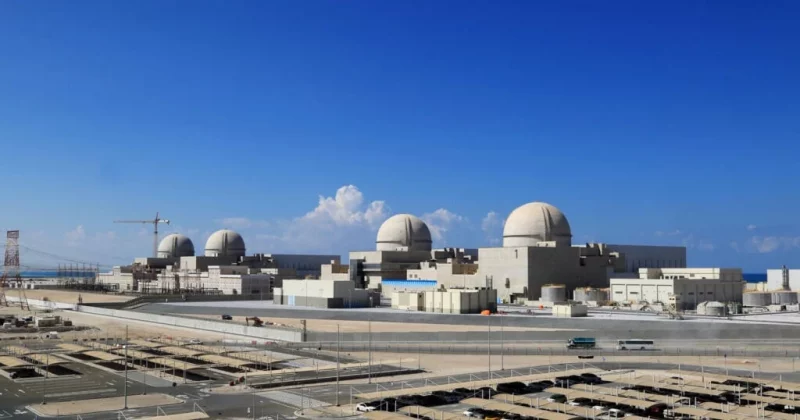
A drone struck the Barakah Nuclear Power Plant in Abu Dhabi on May 17, hitting an electrical generator outside the facility’s inner perimeter and igniting a fire. No radiation was released, no one was injured, and the plant’s reactors were not directly affected.

IAEA Director General Rafael Grossi described the incident as a “carefully planned attack” and warned that a direct strike on an operational reactor could have caused “a very high release of radioactivity.”

What happened at Barakah

Three drones targeted the Barakah facility. Air defense systems intercepted two of them. The third made it through and struck an external electrical generator, starting a fire but staying outside the plant’s inner security perimeter.

Advertisement

UAE authorities quickly restored off-site power to the affected Unit 3. Radiation monitoring showed levels remained normal throughout the incident and in its aftermath. The UAE government characterized the strike as a terrorist attack.

Barakah is the first and only operational nuclear facility in the Arab world, developed by the Emirates Nuclear Energy Corporation. It currently provides up to a quarter of the UAE’s total electricity needs.

Grossi visited the site in early June 2026. The IAEA has since extended technical assistance to UAE authorities, helping to evaluate safety protocols and bolster defenses against future threats. The agency described its support as both technical and moral.

Why this matters beyond the Middle East

The Zaporizhzhia Nuclear Power Plant in Ukraine has been a recurring flashpoint since Russia’s invasion in 2022, with repeated shelling near reactor buildings and the IAEA stationing monitors on-site for years. But Barakah represents something different. This was not a facility caught in the crossfire of a conventional war between two state militaries. This was a targeted strike, using commercially or militarily available drone technology, against a civilian nuclear installation in a country not engaged in an active armed conflict with a recognized state adversary.

The fact that two of three drones were intercepted is reassuring in one sense. But a 66% interception rate against a three-drone attack is a very different equation than a 66% rate against a thirty-drone swarm. And the cost asymmetry is brutal: a drone capable of reaching a target like Barakah costs a fraction of what a single air defense interceptor costs.

What this means for investors

The UAE has not publicly attributed the attack to a specific group or state sponsor beyond calling it terrorism.

The IAEA’s response signals that the agency views this as a watershed moment for nuclear security doctrine. Grossi’s personal visit and the agency’s extension of technical support suggest this is not being treated as an isolated incident but as a category of threat that demands systemic response.

Disclosure: This article was edited by Editorial Team. For more information on how we create and review content, see our Editorial Policy.

IAEA warns of nuclear risks after drone strike on UAE facility

IAEA warns of nuclear risks after drone strike on UAE facility

A drone attack on the Barakah Nuclear Power Plant damaged an external generator, prompting the IAEA to warn that a direct hit on an operating reactor could trigger a catastrophic radioactive release.

A drone struck the Barakah Nuclear Power Plant in Abu Dhabi on May 17, hitting an electrical generator outside the facility’s inner perimeter and igniting a fire. No radiation was released, no one was injured, and the plant’s reactors were not directly affected.

IAEA Director General Rafael Grossi described the incident as a “carefully planned attack” and warned that a direct strike on an operational reactor could have caused “a very high release of radioactivity.”

What happened at Barakah

Three drones targeted the Barakah facility. Air defense systems intercepted two of them. The third made it through and struck an external electrical generator, starting a fire but staying outside the plant’s inner security perimeter.

Advertisement

UAE authorities quickly restored off-site power to the affected Unit 3. Radiation monitoring showed levels remained normal throughout the incident and in its aftermath. The UAE government characterized the strike as a terrorist attack.

Barakah is the first and only operational nuclear facility in the Arab world, developed by the Emirates Nuclear Energy Corporation. It currently provides up to a quarter of the UAE’s total electricity needs.

Grossi visited the site in early June 2026. The IAEA has since extended technical assistance to UAE authorities, helping to evaluate safety protocols and bolster defenses against future threats. The agency described its support as both technical and moral.

Why this matters beyond the Middle East

The Zaporizhzhia Nuclear Power Plant in Ukraine has been a recurring flashpoint since Russia’s invasion in 2022, with repeated shelling near reactor buildings and the IAEA stationing monitors on-site for years. But Barakah represents something different. This was not a facility caught in the crossfire of a conventional war between two state militaries. This was a targeted strike, using commercially or militarily available drone technology, against a civilian nuclear installation in a country not engaged in an active armed conflict with a recognized state adversary.

The fact that two of three drones were intercepted is reassuring in one sense. But a 66% interception rate against a three-drone attack is a very different equation than a 66% rate against a thirty-drone swarm. And the cost asymmetry is brutal: a drone capable of reaching a target like Barakah costs a fraction of what a single air defense interceptor costs.

What this means for investors

The UAE has not publicly attributed the attack to a specific group or state sponsor beyond calling it terrorism.

The IAEA’s response signals that the agency views this as a watershed moment for nuclear security doctrine. Grossi’s personal visit and the agency’s extension of technical support suggest this is not being treated as an isolated incident but as a category of threat that demands systemic response.

Disclosure: This article was edited by Editorial Team. For more information on how we create and review content, see our Editorial Policy.