
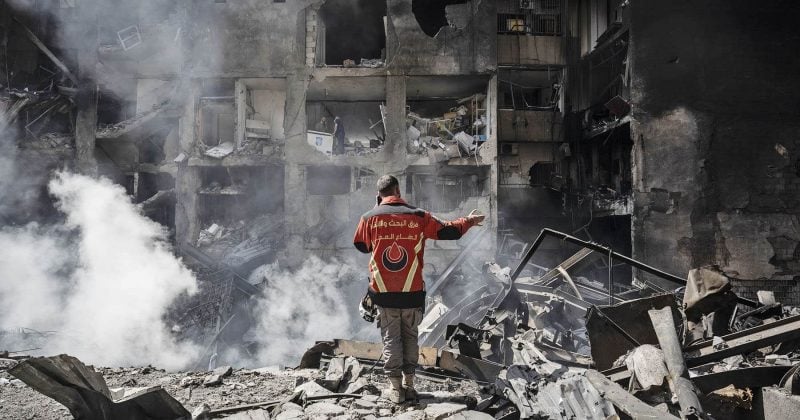
IDF reinforces defenses as Iran threatens retaliation after Israeli airstrike on Beirut
Iran launched multiple ballistic missiles toward northern Israel following IDF strikes on Hezbollah targets in Beirut's southern suburbs, shattering the fragile April ceasefire.
The Israeli Defense Forces are on high alert and reinforcing defensive systems after conducting airstrikes on Hezbollah command centers in Beirut’s southern suburbs on June 7, a move that has triggered the most serious escalation between Israel and Iran since their April 2026 ceasefire.
Iran responded by launching multiple ballistic missiles toward northern Israel, marking the first direct Iranian missile attack since that US-brokered ceasefire was established. Israeli defenses intercepted the projectiles, which largely impacted open areas.
What happened in Beirut
The IDF struck Hezbollah sites in the Dahiyeh neighborhood of southern Beirut, a densely populated area that has long served as the militant group’s operational base. The strikes were framed as retaliation for rocket fire directed at northern Israel.
Lebanese reports put the toll at 2 dead and 11 injured.
A partial ceasefire had been established in early June 2026, part of a broader effort to regulate military activities across the region. That arrangement lasted roughly a week before the situation unraveled.
Iran’s response and the missile threat
Iranian parliamentarian Ebrahim Rezaei warned of a “decisive and painful response” to what Tehran characterized as a violation of ceasefire understandings.
That warning materialized as multiple ballistic missiles fired toward northern Israel on June 7-8. The IDF reported successful interceptions, and no significant casualties have been reported from the Iranian salvo.
The IDF stated it was reinforcing defensive systems and preparing for additional Iranian missile scenarios.
The geopolitical picture
US President Donald Trump expressed frustration over the escalation and urged both parties to exercise restraint.
Iran’s framing of the Beirut strike as a ceasefire violation gives Tehran political cover for its missile response, even as Israel maintains it was targeting Hezbollah infrastructure in response to provocations.
The partial ceasefire established in early June was supposed to build on the April framework. The June 7 events tested its limits and found them wanting.
What this means for markets and investors
Energy markets are the first transmission mechanism. Any sustained conflict involving Iran raises the specter of disrupted oil flows through the Strait of Hormuz, which handles roughly a fifth of global oil transit.
Investors should watch three things in the next 48 hours. First, whether the IDF launches retaliatory strikes on Iranian soil. Second, whether US diplomatic efforts produce any tangible de-escalation framework. Third, whether Hezbollah increases its rocket fire from southern Lebanon.