
Nexo Earn with Nexo
IEM Cologne Major draws esports attention but crypto integration remains absent

IEM Cologne Major draws esports attention but crypto integration remains absent

HLTV.org's No Comment series covers the $1.25 million tournament as prediction markets offer the only blockchain-adjacent angle

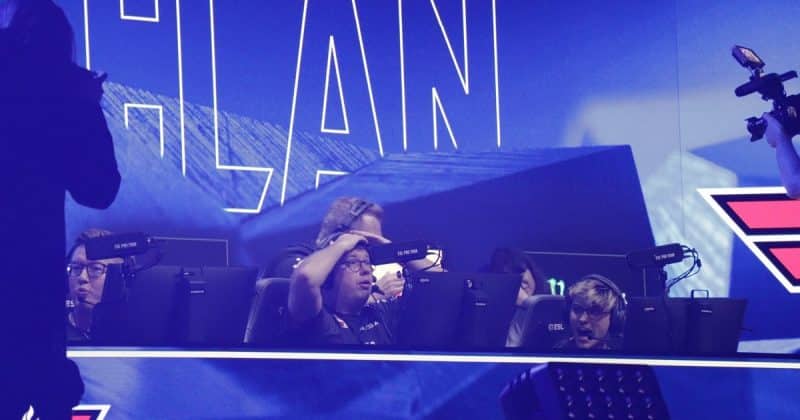
HLTV.org has dropped the latest episode of its “No Comment” video series, recapping Day 3 of Stage 3 at the IEM Cologne Major 2026. The episode covers matches from June 13, offering behind-the-scenes content and player highlights from one of competitive Counter-Strike’s premier tournaments.

What’s actually happening at IEM Cologne

The IEM Cologne Major 2026 features 16 teams competing in a Swiss-system format for a $1.25 million prize pool. Stage 3 runs from June 11 through June 15, with matches played in a best-of-three format.

The top eight teams from this stage advance to the playoff bracket. Those playoffs are scheduled for June 18 to 21 at the LANXESS Arena in Cologne, Germany.

Advertisement

HLTV.org has been releasing daily “No Comment” episodes since the stage began on June 11. The series functions as a companion to the main broadcast, capturing moments that traditional match coverage typically misses: player reactions, team dynamics, and the general chaos of a live tournament environment.

The crypto angle, or lack thereof

Valve, the company behind Counter-Strike, introduced in-game sticker “tokens” for the event with dynamic pricing. But these are traditional in-game items, not blockchain-based assets.

The closest thing to a blockchain connection is the existence of prediction markets on platforms like Polymarket, where users can speculate on match outcomes. But that’s a function of Polymarket covering virtually every major event, not evidence of crypto-esports convergence.

For crypto projects targeting the gaming sector, this represents both an opportunity and a warning sign. Counter-Strike players have been trading digital skins for real money for over a decade. Despite years of Web3 gaming hype, major esports organizations and tournament operators haven’t adopted blockchain technology in any meaningful way. Valve itself has been openly hostile toward NFTs and crypto integrations on its Steam platform.

Watch for signals from tournament organizers like ESL, which runs IEM, and publishers like Valve before assuming that the gaming-crypto convergence is imminent.

Disclosure: This article was edited by Editorial Team. For more information on how we create and review content, see our Editorial Policy.

IEM Cologne Major draws esports attention but crypto integration remains absent

IEM Cologne Major draws esports attention but crypto integration remains absent

HLTV.org's No Comment series covers the $1.25 million tournament as prediction markets offer the only blockchain-adjacent angle

HLTV.org has dropped the latest episode of its “No Comment” video series, recapping Day 3 of Stage 3 at the IEM Cologne Major 2026. The episode covers matches from June 13, offering behind-the-scenes content and player highlights from one of competitive Counter-Strike’s premier tournaments.

What’s actually happening at IEM Cologne

The IEM Cologne Major 2026 features 16 teams competing in a Swiss-system format for a $1.25 million prize pool. Stage 3 runs from June 11 through June 15, with matches played in a best-of-three format.

The top eight teams from this stage advance to the playoff bracket. Those playoffs are scheduled for June 18 to 21 at the LANXESS Arena in Cologne, Germany.

Advertisement

HLTV.org has been releasing daily “No Comment” episodes since the stage began on June 11. The series functions as a companion to the main broadcast, capturing moments that traditional match coverage typically misses: player reactions, team dynamics, and the general chaos of a live tournament environment.

The crypto angle, or lack thereof

Valve, the company behind Counter-Strike, introduced in-game sticker “tokens” for the event with dynamic pricing. But these are traditional in-game items, not blockchain-based assets.

The closest thing to a blockchain connection is the existence of prediction markets on platforms like Polymarket, where users can speculate on match outcomes. But that’s a function of Polymarket covering virtually every major event, not evidence of crypto-esports convergence.

For crypto projects targeting the gaming sector, this represents both an opportunity and a warning sign. Counter-Strike players have been trading digital skins for real money for over a decade. Despite years of Web3 gaming hype, major esports organizations and tournament operators haven’t adopted blockchain technology in any meaningful way. Valve itself has been openly hostile toward NFTs and crypto integrations on its Steam platform.

Watch for signals from tournament organizers like ESL, which runs IEM, and publishers like Valve before assuming that the gaming-crypto convergence is imminent.

Disclosure: This article was edited by Editorial Team. For more information on how we create and review content, see our Editorial Policy.