
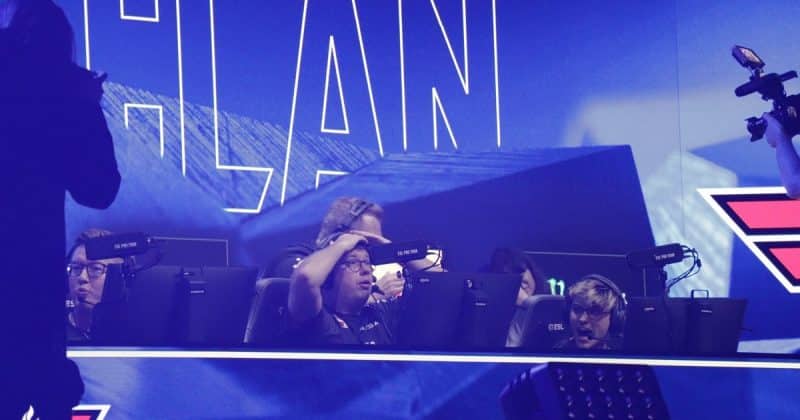
Team GER Esports crushes Team POL Esports 13-3 in IEM Cologne Major showmatch
The lopsided Counter-Strike 2 national showmatch highlights a broader shift: crypto sponsors are nowhere to be found at one of esports' biggest events
Team GER Esports put together a dominant performance against Team POL Esports on June 21, 2026, winning their national showmatch 13-3 during the IEM Cologne Major 2026 playoffs. The match, held at the Lanxess Arena in Cologne, Germany, wasn’t exactly a nail-biter.
But the scoreline isn’t the most interesting thing that happened at this tournament. The real story is what’s missing from the event entirely: crypto sponsors.
A blowout in Cologne
Among the German roster were Elias “s1n” Stein and Fritz “slaxz-” Dietrich, both players from M80. That name matters for crypto watchers. M80 is a Web3-native esports organization, meaning it was built from the ground up with blockchain and crypto integrations as part of its identity.
M80 had a solid tournament beyond the showmatch too, progressing from Stage 1 to Stage 2 of the main IEM Cologne Major competition.
The crypto sponsorship drought
The IEM Cologne Major 2026 is the first edition in recent memory to feature zero cryptocurrency sponsors or Web3 integrations in its branding. Not a single one.
The news moving money, markets, and the world—before your day starts.
Daily. Free. Join 34,000+ readers across crypto, finance, and policy.
The irony of M80 players starring in a showmatch at a crypto-sponsor-free event isn’t lost on anyone paying attention. M80 was designed to operate at the intersection of competitive gaming and Web3. Its continued competitive success proves the org can survive on gameplay merit alone, but the sponsorship environment around it has shifted dramatically.
What this means for crypto-esports crossover
The disappearance of crypto sponsors from a flagship event like IEM Cologne suggests that relationship is being re-evaluated. M80’s existence as a functioning, competitive Web3 org proves the crypto-esports connection is not entirely dead. But the era of crypto companies carpet-bombing esports events with sponsorship dollars appears to be winding down.
Sponsorship deals were one of the most visible ways crypto companies reached non-crypto audiences. When those deals dry up, it removes a marketing channel that was once considered essential for building brand awareness among younger demographics.