
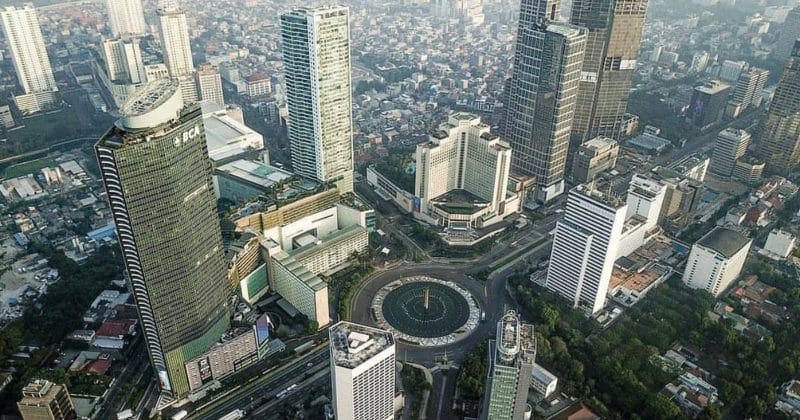
Indonesia risks losing emerging market status, jeopardizing billions in investment

Indonesia risks losing emerging market status, jeopardizing billions in investment

MSCI's potential downgrade of Indonesia to frontier market status could trigger up to $60 billion in foreign capital outflows

Indonesia, Southeast Asia’s largest economy, is staring down a classification crisis that could reshape its relationship with global capital markets. MSCI Inc. warned on January 28, 2026 that it may downgrade Indonesia from emerging market to frontier market status, a move that sent the Jakarta Composite Index into freefall and wiped out over $80 billion in market capitalization within days.

The damage so far

The Jakarta Composite Index, known locally as IHSG, dropped between 7% and 12% in the days following MSCI’s announcement.

Analysts estimate that a full downgrade to frontier status could trigger foreign capital outflows ranging from $7.8 billion on the conservative end to as much as $60 billion on the dire end.

Advertisement

MSCI has extended its assessment period through June 2026, giving Indonesia a window to demonstrate meaningful progress on the governance and transparency issues that triggered the warning in the first place. Among the specific reforms on the table: doubling the minimum free float requirement to 15%.

What went wrong

The regulatory response from Indonesian authorities has been swift, if somewhat belated. New rules tightening market governance have been introduced in the wake of the sell-off.

FTSE Russell maintained Indonesia’s Secondary Emerging status in April 2026. If both providers downgrade, the outflow estimates on the higher end of that $7.8 billion to $60 billion range start looking a lot more plausible.

What this means for investors

Despite Indonesia’s high rates of cryptocurrency adoption, the digital asset market in the country is not tied to MSCI or FTSE classifications. Crypto markets operate on entirely different rails.

The June 2026 review is the date circled on every calendar that matters. Between now and then, Indonesia’s government has to convince the world’s most influential index provider that its market deserves to stay in the club.

Disclosure: This article was edited by Editorial Team. For more information on how we create and review content, see our Editorial Policy.

Indonesia risks losing emerging market status, jeopardizing billions in investment

Indonesia risks losing emerging market status, jeopardizing billions in investment

MSCI's potential downgrade of Indonesia to frontier market status could trigger up to $60 billion in foreign capital outflows

Indonesia, Southeast Asia’s largest economy, is staring down a classification crisis that could reshape its relationship with global capital markets. MSCI Inc. warned on January 28, 2026 that it may downgrade Indonesia from emerging market to frontier market status, a move that sent the Jakarta Composite Index into freefall and wiped out over $80 billion in market capitalization within days.

The damage so far

The Jakarta Composite Index, known locally as IHSG, dropped between 7% and 12% in the days following MSCI’s announcement.

Analysts estimate that a full downgrade to frontier status could trigger foreign capital outflows ranging from $7.8 billion on the conservative end to as much as $60 billion on the dire end.

Advertisement

MSCI has extended its assessment period through June 2026, giving Indonesia a window to demonstrate meaningful progress on the governance and transparency issues that triggered the warning in the first place. Among the specific reforms on the table: doubling the minimum free float requirement to 15%.

What went wrong

The regulatory response from Indonesian authorities has been swift, if somewhat belated. New rules tightening market governance have been introduced in the wake of the sell-off.

FTSE Russell maintained Indonesia’s Secondary Emerging status in April 2026. If both providers downgrade, the outflow estimates on the higher end of that $7.8 billion to $60 billion range start looking a lot more plausible.

What this means for investors

Despite Indonesia’s high rates of cryptocurrency adoption, the digital asset market in the country is not tied to MSCI or FTSE classifications. Crypto markets operate on entirely different rails.

The June 2026 review is the date circled on every calendar that matters. Between now and then, Indonesia’s government has to convince the world’s most influential index provider that its market deserves to stay in the club.

Disclosure: This article was edited by Editorial Team. For more information on how we create and review content, see our Editorial Policy.