
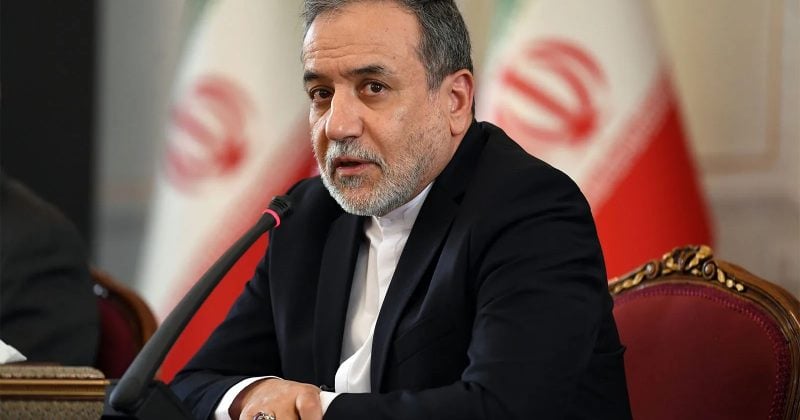
Iran’s FM Abbas Araghchi confirms US ceasefire applies to Lebanon
Tehran insists any deal with Washington must halt Israeli military operations against Hezbollah, linking regional diplomacy to a broader truce framework.
Iran’s Foreign Minister Abbas Araghchi has confirmed that the ceasefire agreement between Tehran and Washington covers all fronts, including Lebanon. The declaration cements what Iranian officials have been pushing for weeks: no deal with the US that doesn’t address Israeli military operations against Hezbollah.
From ultimatum to confirmation
Araghchi has been building toward this moment since at least April 2026. Back then, he framed the situation as a binary choice for the US: either commit to a genuine truce or continue backing Israeli operations in Lebanon. You can’t do both, was the message.
On May 23, Araghchi took that position directly to Hezbollah’s secretary-general, emphasizing that any agreements with Washington must be explicitly linked to a cessation of hostilities in Lebanon.
The confirmation that the ceasefire now covers Lebanon follows a 45-day ceasefire extension between Israel and Lebanon that was announced around mid-May 2026. That extension came amid active US-Iran negotiations, suggesting the two diplomatic tracks were running in parallel, if not directly intertwined.
Pakistan has served as a mediator for Tehran’s truce proposal, adding another layer to an already crowded diplomatic landscape.
Macro, rates, and crypto—what moved markets and what matters next.
Daily. Free. Join 34,000+ readers across crypto, finance, and policy.
The Strait of Hormuz factor
Earlier statements from Araghchi in April suggested that reopening the Strait of Hormuz for commercial traffic is also a significant condition tied to the ceasefire framework.
Roughly a fifth of the world’s oil supply passes through the Strait of Hormuz on any given day. The inclusion of the Strait as a bargaining chip demonstrates that Iran isn’t treating this as a narrow, issue-specific ceasefire, leveraging the moment across military, economic, and geopolitical domains.
What this means for crypto markets
During April 2026, Bitcoin rallied toward the $72,000 to $74,650 range, with price spikes correlating directly to ceasefire-related announcements.
Around $51 million in opposing leveraged bets were placed against Bitcoin in connection with ceasefire headlines in April. Big players were betting both for and against Bitcoin simultaneously, hedging their exposure to an unpredictable news cycle.
Any disruption to oil flows through the Strait would send energy prices surging, which historically creates a mixed bag for crypto. Higher energy costs increase mining expenses while simultaneously driving inflation fears that sometimes push capital into Bitcoin as a hedge.