
Tanker Trackers reports resumption of Iranian crude exports after two-month blockade

Tanker Trackers reports resumption of Iranian crude exports after two-month blockade

Two tankers carrying 3.8 million barrels of crude have departed Iran, marking the first successful exports since April 2026

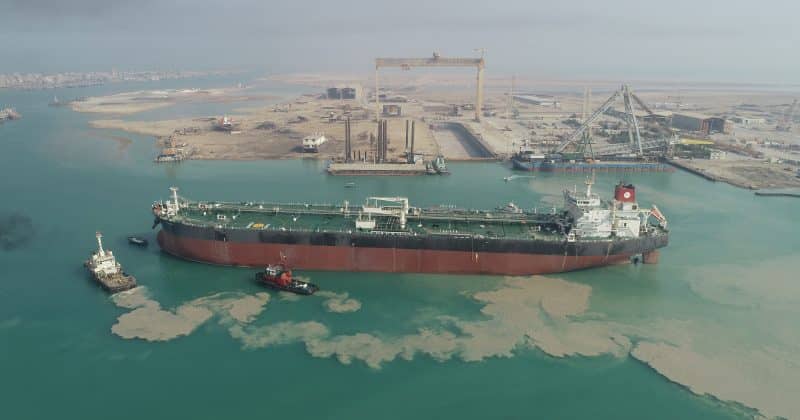
After two months of near-total shutdown, Iranian crude oil is moving again. Maritime intelligence firm TankerTrackers reported that two tankers have left Iran carrying a combined 3.8 million barrels of crude, the first successful exports since the US imposed a naval blockade on April 13, 2026.

Iran’s oil exports in May 2026 had collapsed by over 90% year-over-year, cratering to roughly 65,000 barrels per day. Two tankers sneaking through doesn’t exactly signal a return to business as usual.

The blockade’s stranglehold on Iranian oil

The US naval blockade, which began in mid-April, has been devastatingly effective. TankerTrackers has estimated that approximately 60 million barrels of Iranian crude have been stranded as a result, unable to cross the blockade perimeter in the Gulf of Oman.

Advertisement

The maritime intelligence community measures “successful exports” by whether tankers actually pass beyond that perimeter. During May, not a single barrel of crude made it through. Iran tried workarounds, including ship-to-ship transfers near Indonesia and vessels disabling their Automatic Identification System (AIS) transponders to go dark.

The specific vessels involved haven’t been named in TankerTrackers’ reporting, their destinations haven’t been confirmed publicly, and whether these vessels have actually cleared the blockade line remains an open question. Against 60 million barrels sitting stranded, 3.8 million barrels represents roughly 6% of the backlog.

Bitcoin enters the sanctions playbook

Perhaps the more interesting development for crypto markets is the reported exploration of Bitcoin as a payment method for transit fees in the Strait of Hormuz. Iran, facing a financial system increasingly walled off by sanctions, appears to be looking at digital currencies as a way to keep money flowing when traditional banking rails are blocked.

What this means for energy and crypto markets

Global oil consumption runs at roughly 100 million barrels per day. If Iran finds a repeatable path through the blockade, traders will start pricing in the possibility of those 60 million stranded barrels eventually reaching buyers, putting downward pressure on oil prices and complicating OPEC+’s ongoing efforts to manage production cuts and price stability.

The volumes remain far below Iran’s historical export levels of between 1 and 2 million barrels per day, and the blockade clearly hasn’t been lifted. What’s changed is that Iran appears to have found at least a narrow channel through it.

Disclosure: This article was edited by Editorial Team. For more information on how we create and review content, see our Editorial Policy.

Tanker Trackers reports resumption of Iranian crude exports after two-month blockade

Tanker Trackers reports resumption of Iranian crude exports after two-month blockade

Two tankers carrying 3.8 million barrels of crude have departed Iran, marking the first successful exports since April 2026

After two months of near-total shutdown, Iranian crude oil is moving again. Maritime intelligence firm TankerTrackers reported that two tankers have left Iran carrying a combined 3.8 million barrels of crude, the first successful exports since the US imposed a naval blockade on April 13, 2026.

Iran’s oil exports in May 2026 had collapsed by over 90% year-over-year, cratering to roughly 65,000 barrels per day. Two tankers sneaking through doesn’t exactly signal a return to business as usual.

The blockade’s stranglehold on Iranian oil

The US naval blockade, which began in mid-April, has been devastatingly effective. TankerTrackers has estimated that approximately 60 million barrels of Iranian crude have been stranded as a result, unable to cross the blockade perimeter in the Gulf of Oman.

Advertisement

The maritime intelligence community measures “successful exports” by whether tankers actually pass beyond that perimeter. During May, not a single barrel of crude made it through. Iran tried workarounds, including ship-to-ship transfers near Indonesia and vessels disabling their Automatic Identification System (AIS) transponders to go dark.

The specific vessels involved haven’t been named in TankerTrackers’ reporting, their destinations haven’t been confirmed publicly, and whether these vessels have actually cleared the blockade line remains an open question. Against 60 million barrels sitting stranded, 3.8 million barrels represents roughly 6% of the backlog.

Bitcoin enters the sanctions playbook

Perhaps the more interesting development for crypto markets is the reported exploration of Bitcoin as a payment method for transit fees in the Strait of Hormuz. Iran, facing a financial system increasingly walled off by sanctions, appears to be looking at digital currencies as a way to keep money flowing when traditional banking rails are blocked.

What this means for energy and crypto markets

Global oil consumption runs at roughly 100 million barrels per day. If Iran finds a repeatable path through the blockade, traders will start pricing in the possibility of those 60 million stranded barrels eventually reaching buyers, putting downward pressure on oil prices and complicating OPEC+’s ongoing efforts to manage production cuts and price stability.

The volumes remain far below Iran’s historical export levels of between 1 and 2 million barrels per day, and the blockade clearly hasn’t been lifted. What’s changed is that Iran appears to have found at least a narrow channel through it.

Disclosure: This article was edited by Editorial Team. For more information on how we create and review content, see our Editorial Policy.