
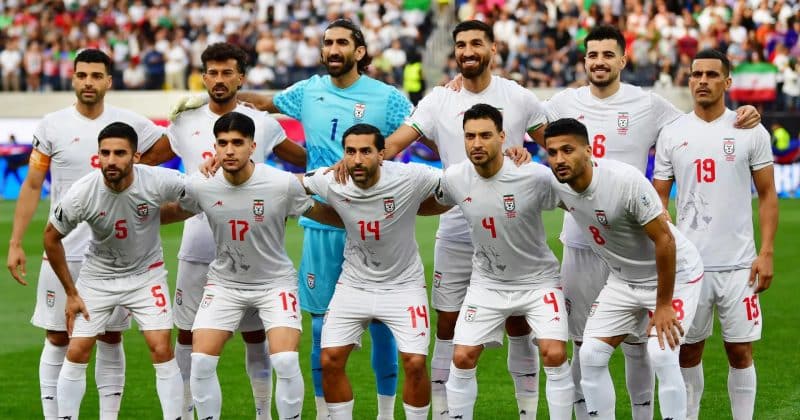
Iran faces Egypt in World Cup match amid US-Iran tensions

Iran faces Egypt in World Cup match amid US-Iran tensions

A June 2026 group stage clash in Seattle carries diplomatic weight far beyond the pitch

The FIFA World Cup is supposed to be about soccer. But when Iran and Egypt kick off at Seattle’s Lumen Field on June 26, 2026, the match will arrive loaded with geopolitical baggage that most group stage fixtures don’t carry.

US-Iran tensions, ongoing peace negotiations, travel restrictions, and a Pride weekend venue collision have turned what should be a straightforward group stage qualifier into one of the more complicated sporting events the 2026 World Cup will produce.

The logistics problem nobody wanted

Getting the Iranian national team into the United States for a World Cup match has not been simple.

US authorities originally imposed strict travel restrictions on the Iranian squad, limiting their permitted stay to just a few hours on either side of their matches. That policy was later amended specifically for this fixture, allowing the Iranian team to arrive two days before the June 26 kickoff, given the significance of the match.

Advertisement

The White House has flagged the match as a logistical and diplomatic concern, with officials paying close attention to how the Iranian team’s travel plans intersect with broader US-Iran diplomatic activity.

The match falls in Group G and carries direct consequences for both sides. A win or a loss here has direct implications for which team advances to the round of 32.

Seattle Pride, FIFA flags, and two unhappy federations

The date creates a second layer of complexity. June 26, 2026, falls during Seattle Pride weekend.

FIFA responded to the timing by permitting rainbow symbols to be displayed at Lumen Field for the match. That decision drew formal protests from both the Iranian and Egyptian football federations, whose home governments maintain policies that are directly hostile to LGBTQ+ rights.

Neither the Iranian nor Egyptian federation’s protest changed the outcome. The symbols will be present at the venue regardless.

What the broader context looks like

Active peace negotiations between Washington and Tehran are running in the background of all of this, which helps explain why the US amended its travel restrictions for the Iranian squad rather than holding firm on the original hours-only window.

The Iranian national team has operated under significant domestic political scrutiny since the 2022 World Cup in Qatar, where several players made gestures interpreted as expressions of solidarity with protesters back home during Iran’s crackdown on demonstrations.

The 2026 FIFA World Cup is co-hosted by the United States, Canada, and Mexico. While teams from other countries enjoy standard travel arrangements, the Iranian squad has been subject to strict protocols, often residing in Mexico and traveling to matches in the US under tight entry regulations.

Lumen Field seats roughly 69,000 people. Seattle itself has a large Iranian-American and Arab-American community, meaning the crowd dynamics inside the stadium will add another layer to what is already an unusual fixture.

Disclosure: This article was edited by Editorial Team. For more information on how we create and review content, see our Editorial Policy.

Iran faces Egypt in World Cup match amid US-Iran tensions

Iran faces Egypt in World Cup match amid US-Iran tensions

A June 2026 group stage clash in Seattle carries diplomatic weight far beyond the pitch

The FIFA World Cup is supposed to be about soccer. But when Iran and Egypt kick off at Seattle’s Lumen Field on June 26, 2026, the match will arrive loaded with geopolitical baggage that most group stage fixtures don’t carry.

US-Iran tensions, ongoing peace negotiations, travel restrictions, and a Pride weekend venue collision have turned what should be a straightforward group stage qualifier into one of the more complicated sporting events the 2026 World Cup will produce.

The logistics problem nobody wanted

Getting the Iranian national team into the United States for a World Cup match has not been simple.

US authorities originally imposed strict travel restrictions on the Iranian squad, limiting their permitted stay to just a few hours on either side of their matches. That policy was later amended specifically for this fixture, allowing the Iranian team to arrive two days before the June 26 kickoff, given the significance of the match.

Advertisement

The White House has flagged the match as a logistical and diplomatic concern, with officials paying close attention to how the Iranian team’s travel plans intersect with broader US-Iran diplomatic activity.

The match falls in Group G and carries direct consequences for both sides. A win or a loss here has direct implications for which team advances to the round of 32.

Seattle Pride, FIFA flags, and two unhappy federations

The date creates a second layer of complexity. June 26, 2026, falls during Seattle Pride weekend.

FIFA responded to the timing by permitting rainbow symbols to be displayed at Lumen Field for the match. That decision drew formal protests from both the Iranian and Egyptian football federations, whose home governments maintain policies that are directly hostile to LGBTQ+ rights.

Neither the Iranian nor Egyptian federation’s protest changed the outcome. The symbols will be present at the venue regardless.

What the broader context looks like

Active peace negotiations between Washington and Tehran are running in the background of all of this, which helps explain why the US amended its travel restrictions for the Iranian squad rather than holding firm on the original hours-only window.

The Iranian national team has operated under significant domestic political scrutiny since the 2022 World Cup in Qatar, where several players made gestures interpreted as expressions of solidarity with protesters back home during Iran’s crackdown on demonstrations.

The 2026 FIFA World Cup is co-hosted by the United States, Canada, and Mexico. While teams from other countries enjoy standard travel arrangements, the Iranian squad has been subject to strict protocols, often residing in Mexico and traveling to matches in the US under tight entry regulations.

Lumen Field seats roughly 69,000 people. Seattle itself has a large Iranian-American and Arab-American community, meaning the crowd dynamics inside the stadium will add another layer to what is already an unusual fixture.

Disclosure: This article was edited by Editorial Team. For more information on how we create and review content, see our Editorial Policy.