
Iran warns Gulf states of infrastructure strikes unless they expel US forces, pushing Bitcoin into geopolitical spotlight
Tehran's threats against Saudi, UAE, and Qatari energy facilities are accelerating Iran's pivot toward Bitcoin-settled trade platforms and reshaping crypto's role in sanctions evasion.
Iran’s Foreign Minister Abbas Araghchi has delivered an ultimatum to Gulf Arab nations: remove American military forces by June 2026, or face strikes on critical energy infrastructure. The threat, directed at Saudi Arabia, the UAE, Qatar, Bahrain, and Kuwait, marks a sharp escalation in a regional confrontation that’s already spilling into crypto markets and digital finance.
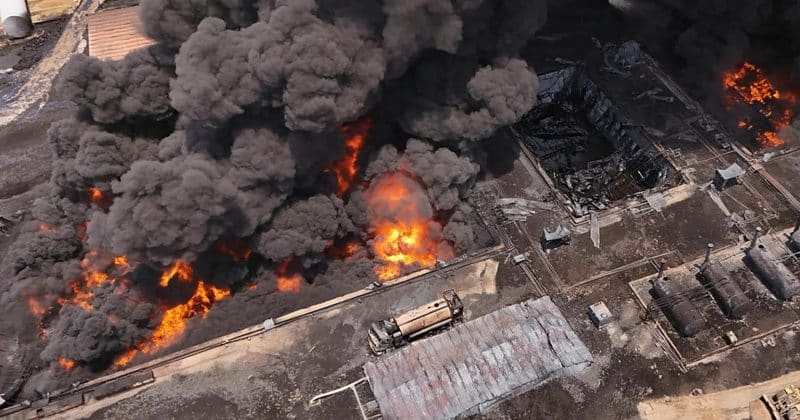
The Islamic Revolutionary Guard Corps has backed the warning with action. Throughout 2026, Iran has targeted US-linked military bases and energy infrastructure across all five Gulf states, hitting facilities that house American assets. Among the sites reportedly at risk are Saudi Arabia’s Samref Refinery and Jubail Petrochemical Complex, the UAE’s Al Hasan Gas Field, and various Qatari installations.
Energy infrastructure meets digital finance
The Strait of Hormuz, that narrow waterway separating Iran from the Arabian Peninsula, handles roughly a fifth of global oil transit.
Iran has been exploring Bitcoin-settled financial alternatives designed to sidestep Western sanctions. The most ambitious project is the proposed Hormuz Safe platform, a marine insurance system that would handle payments exceeding $10 billion annually, roughly 130,000 BTC at current valuations.
The US has noticed. On May 27, 2026, the Treasury Department imposed sanctions on Nobitex and other Iranian crypto platforms, accusing them of facilitating sanctions evasion.
The news moving money, markets, and the world—before your day starts.
Daily. Free. Join 34,000+ readers across crypto, finance, and policy.
The IRGC’s calculus and Gulf state pressure
The IRGC has framed its threats in explicitly political terms, arguing that Gulf states bear responsibility for halting US-Israeli military actions conducted from bases on their soil.
The targeting of petrochemical complexes and refineries is particularly significant. Damage to facilities like Jubail, one of the world’s largest petrochemical complexes, would ripple through commodity markets for months.
What this means for crypto investors
The Hormuz Safe proposal, if it materializes, would represent one of the largest real-world Bitcoin use cases ever attempted. Over $10 billion in annual maritime insurance transactions flowing through a Bitcoin-based system would create sustained demand anchored to one of the most essential functions of global commerce.
The Treasury’s sanctions against Nobitex and affiliated platforms show that Washington is prepared to aggressively target crypto infrastructure tied to Iranian sanctions evasion. Any platform, protocol, or token that touches Iranian-linked transactions could find itself in regulatory crosshairs.
Traders should watch three specific triggers. First, any Iranian strike on major Saudi or Emirati energy facilities would likely cause a sharp spike in oil prices and corresponding turbulence across all risk assets, including crypto. Second, further US sanctions targeting crypto platforms could create sudden liquidity disruptions on exchanges with exposure to Middle Eastern trading volumes. Third, concrete progress on the Hormuz Safe platform, or similar Bitcoin-settled trade mechanisms, would signal that nation-state adoption of crypto for sanctions evasion is moving from theory to practice.