
Iran asserts authority over parts of Strait of Hormuz, raising crypto sanctions questions

Iran asserts authority over parts of Strait of Hormuz, raising crypto sanctions questions

Tehran's formal claim to the UN shipping agency over the world's most critical oil chokepoint has triggered a chain reaction touching everything from energy markets to Bitcoin sanctions enforcement.

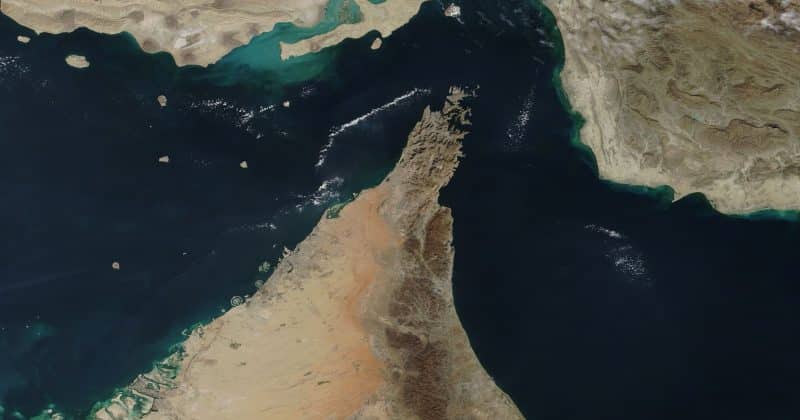
Iran formally told the United Nations’ International Maritime Organization that it holds authority over parts of the Strait of Hormuz, the narrow waterway that roughly 20% of the world’s oil supply passes through every single day.

The notification, delivered around March 22, 2026, declared an innocent passage regime through the strait while denying broader transit rights to vessels. In English: Iran is saying ships can pass through, but only on Iran’s terms, not under the international transit passage rules that have governed the waterway for decades.

From declaration to toll booth

Iran didn’t stop at paperwork. By May 2026, Tehran had established the Persian Gulf Strait Authority, a body designed to manage transit approvals and collect tolls from vessels passing through waters Iran now claims to control.

Reports indicate the initial toll was set at approximately $1 per barrel.

Advertisement

Reports have surfaced suggesting these tolls could potentially be payable in cryptocurrencies, including Bitcoin. The logic from Iran’s perspective isn’t hard to follow: when you’re one of the most sanctioned nations on earth, traditional banking rails aren’t exactly rolling out the welcome mat.

However, blockchain analytics firms have so far reported minimal confirmed on-chain transactions that can be directly linked to Hormuz toll payments.

The sanctions hammer drops

The US Treasury sanctioned Nobitex, Iran’s largest digital asset exchange, on June 2, 2026. The stated reason: sanctions evasion linked to Hormuz toll collection.

Nobitex was the primary on-ramp and off-ramp for Iranian crypto users, and sanctioning it sends a clear message that any exchange facilitating toll-related payments will face the full weight of US financial enforcement.

The humanitarian cost and maritime chaos

As of late June 2026, the IMO paused efforts to evacuate over 11,000 stranded seafarers and hundreds of vessels caught in the disruption zone.

Iran’s selective vessel passage denials, particularly targeting ships linked to the US and its allies, have turned the strait into something resembling a geopolitical checkpoint. Maritime insurers have responded predictably, with war risk premiums climbing for vessels transiting the region.

What this means for crypto investors

The Nobitex sanctions represent an expansion of the Treasury’s willingness to target crypto infrastructure based on geopolitical, not just financial crime, rationale. That’s a meaningful evolution in how OFAC approaches digital asset enforcement. Exchanges that previously viewed sanctions compliance as primarily a know-your-customer exercise now need to consider geopolitical exposure mapping.

The mere narrative of a sanctioned state potentially using Bitcoin for international toll collection, even if the evidence is thin, gives ammunition to regulatory hawks who argue crypto enables sanctions evasion at the state level. That narrative risk could surface in upcoming legislative debates, particularly in the US and EU, where digital asset regulation frameworks are still being finalized.

Disclosure: This article was edited by Editorial Team. For more information on how we create and review content, see our Editorial Policy.

Iran asserts authority over parts of Strait of Hormuz, raising crypto sanctions questions

Iran asserts authority over parts of Strait of Hormuz, raising crypto sanctions questions

Tehran's formal claim to the UN shipping agency over the world's most critical oil chokepoint has triggered a chain reaction touching everything from energy markets to Bitcoin sanctions enforcement.

Iran formally told the United Nations’ International Maritime Organization that it holds authority over parts of the Strait of Hormuz, the narrow waterway that roughly 20% of the world’s oil supply passes through every single day.

The notification, delivered around March 22, 2026, declared an innocent passage regime through the strait while denying broader transit rights to vessels. In English: Iran is saying ships can pass through, but only on Iran’s terms, not under the international transit passage rules that have governed the waterway for decades.

From declaration to toll booth

Iran didn’t stop at paperwork. By May 2026, Tehran had established the Persian Gulf Strait Authority, a body designed to manage transit approvals and collect tolls from vessels passing through waters Iran now claims to control.

Reports indicate the initial toll was set at approximately $1 per barrel.

Advertisement

Reports have surfaced suggesting these tolls could potentially be payable in cryptocurrencies, including Bitcoin. The logic from Iran’s perspective isn’t hard to follow: when you’re one of the most sanctioned nations on earth, traditional banking rails aren’t exactly rolling out the welcome mat.

However, blockchain analytics firms have so far reported minimal confirmed on-chain transactions that can be directly linked to Hormuz toll payments.

The sanctions hammer drops

The US Treasury sanctioned Nobitex, Iran’s largest digital asset exchange, on June 2, 2026. The stated reason: sanctions evasion linked to Hormuz toll collection.

Nobitex was the primary on-ramp and off-ramp for Iranian crypto users, and sanctioning it sends a clear message that any exchange facilitating toll-related payments will face the full weight of US financial enforcement.

The humanitarian cost and maritime chaos

As of late June 2026, the IMO paused efforts to evacuate over 11,000 stranded seafarers and hundreds of vessels caught in the disruption zone.

Iran’s selective vessel passage denials, particularly targeting ships linked to the US and its allies, have turned the strait into something resembling a geopolitical checkpoint. Maritime insurers have responded predictably, with war risk premiums climbing for vessels transiting the region.

What this means for crypto investors

The Nobitex sanctions represent an expansion of the Treasury’s willingness to target crypto infrastructure based on geopolitical, not just financial crime, rationale. That’s a meaningful evolution in how OFAC approaches digital asset enforcement. Exchanges that previously viewed sanctions compliance as primarily a know-your-customer exercise now need to consider geopolitical exposure mapping.

The mere narrative of a sanctioned state potentially using Bitcoin for international toll collection, even if the evidence is thin, gives ammunition to regulatory hawks who argue crypto enables sanctions evasion at the state level. That narrative risk could surface in upcoming legislative debates, particularly in the US and EU, where digital asset regulation frameworks are still being finalized.

Disclosure: This article was edited by Editorial Team. For more information on how we create and review content, see our Editorial Policy.