
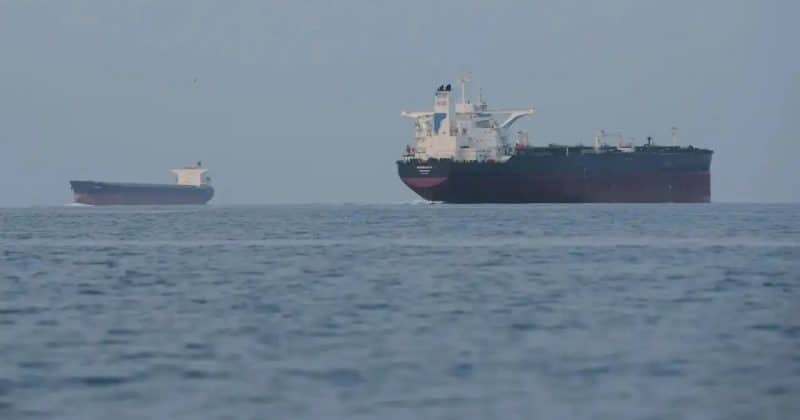
Iran claims US deal allows fees for maritime services in Strait of Hormuz, with tolls reportedly payable in Bitcoin
Tehran says a memorandum of understanding gives it the right to charge ships transiting the world's most critical oil chokepoint, with some payments allegedly already flowing in crypto
Iran’s state-run Fars News Agency dropped a geopolitical bombshell on Monday, citing a “knowledgeable source” who claims a US-Iran memorandum of understanding includes Washington’s acceptance of Tehran’s right to collect fees for maritime services in the Strait of Hormuz. If true, it would mark a historic shift in the status of one of the world’s most strategically vital waterways, one that handles roughly 20% of global oil exports.
American officials, including President Trump and Vice President JD Vance, have publicly stated the agreement ensures long-term toll-free passage through the strait. Iran, meanwhile, is telling its domestic audience something quite different.
Tolls, tankers, and Tether
Reports indicate that Iran has already begun implementing informal tolls on ships transiting the strait, with charges ranging from $1 per barrel of oil to approximately $2 million per tanker. These tolls are reportedly being collected in Bitcoin, Tether (USDT), or Chinese yuan.
Iran has been under heavy international sanctions for years. Traditional banking rails are effectively closed to Tehran for most international commerce. Accepting BTC and USDT for maritime fees lets Iran collect revenue outside the reach of SWIFT and the US dollar-dominated financial system.
The MoU reportedly frames these fees as covering security, environmental, and insurance costs associated with strait transit. An initial 60-day free passage period is apparently included, after which Iran would begin formally charging. The agreement also reportedly establishes joint management of the strait by Iran and Oman, aimed at regional economic development.
Macro, rates, and crypto—what moved markets and what matters next.
Daily. Free. Join 34,000+ readers across crypto, finance, and policy.
Why this matters for energy and crypto markets
The Strait of Hormuz handled more than a fifth of the world’s oil exports before the onset of heightened tensions in 2026. Adding tolls to strait transit would function as a de facto tax on a significant chunk of global oil supply.
For crypto markets, confirmed adoption of Bitcoin and USDT for state-level transactions validates real-world demand for censorship-resistant money. However, this is also exactly the kind of use case that invites regulatory crackdowns. US Treasury officials and lawmakers have long flagged sanctions evasion as a primary concern with cryptocurrency.
The diplomatic disconnect
The US says toll-free access. Iran says it has a newly recognized right to charge fees. One plausible reading is that the MoU grants Iran the theoretical right to charge for services after the free passage window expires, while the US interprets the agreement as ensuring that window effectively never closes.
If Iran continues collecting informal tolls in crypto, each transaction and each tanker that pays establishes a precedent. Because the payments flow through decentralized or semi-decentralized channels, enforcement becomes difficult for sanctions authorities. If the US treats these crypto-denominated tolls as a material sanctions violation, enforcement actions could land fast and hit stablecoin issuers particularly hard.