
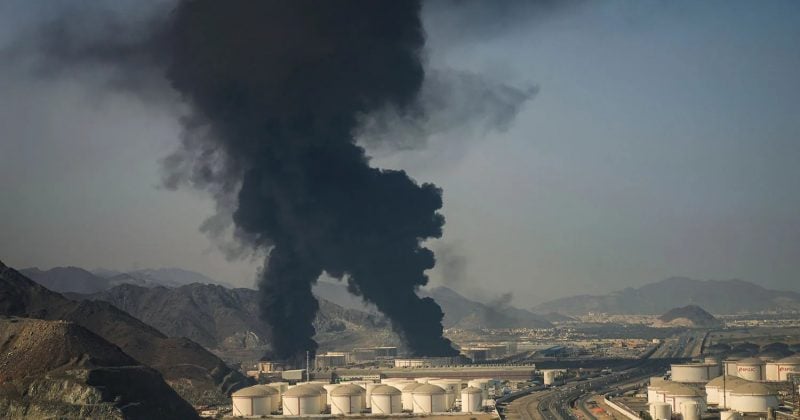
US strikes hit Iran’s oil heartland as energy markets brace for supply shock
Projectile strikes on Hendijan, Mahshahr, and Abadan threaten Iran's petrochemical and refinery infrastructure, with ripple effects already reaching crypto and commodity markets.
Explosions rocked three cities in Iran’s oil-rich Khuzestan Province this week, with Deputy Governor Valiollah Hayati confirming that enemy projectiles struck Hendijan, Mahshahr, and Abadan. The targets tell a story on their own: these aren’t random coordinates on a map. They’re the beating heart of Iran’s energy export machine.
Mahshahr hosts some of Iran’s largest petrochemical complexes. Abadan is home to one of the oldest and most strategically important oil refineries in the Middle East.
The escalation timeline
Attack incidents in Khuzestan have been reported since early April 2026, with a significant escalation through May and into July. The pattern suggests a deliberate campaign targeting Iran’s industrial base, specifically its energy infrastructure.
Hayati has confirmed at least one death in recent incidents near Mahshahr. Separate strikes near Ahvaz, also in Khuzestan, reportedly resulted in three deaths and several injuries in July 2026. Both military facilities and civilian areas have been directly impacted.
The strikes have been attributed to US and US-Israeli forces, part of the broader 2026 Iran conflict.
What investors should watch
The immediate variable is oil. Brent crude futures are the first place this conflict shows up in tradeable form. Any sustained disruption to Iranian refining or petrochemical output adds supply-side pressure to an already tight market. Traders should watch whether these strikes actually knock production offline or whether Iran manages to keep facilities operational despite the damage.
The second variable is escalation scope. Khuzestan is Iran’s most strategically valuable province from an energy perspective. If the campaign expands to target export terminals or pipeline infrastructure, the supply implications multiply significantly.