
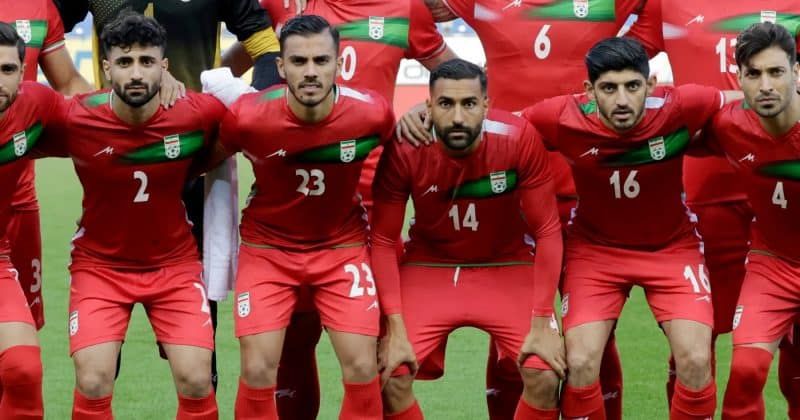
Iran faces travel restrictions, draws with New Zealand in World Cup opener

Iran faces travel restrictions, draws with New Zealand in World Cup opener

Team Melli is commuting to its own World Cup matches from Mexico thanks to a Trump-era travel ban, and the Iranian Football Federation is not happy about it

Iran opened its 2026 FIFA World Cup campaign with a 2-2 draw against New Zealand on June 15 at SoFi Stadium in California.

The Iranian national team, known as Team Melli, is not staying in the United States for the tournament it’s playing in. Instead, the squad has set up its base camp across the border in Tijuana, Mexico, forced there by US travel restrictions that require Iranian nationals to arrive just one day before matches and leave the same day.

Advertisement

A match played under unusual circumstances

On the pitch, Iran showed resilience. Ramin Rezaeian and Mohammad Mohebi found the net for Team Melli, while New Zealand’s Elijah Just scored both goals for his side to earn the draw.

The travel restrictions stem from a Trump-era ban that has severely curtailed Iranian nationals’ ability to enter the US. Some Iranian support staff have been denied US visas entirely, meaning the team’s full operational apparatus, the physios, analysts, and backroom personnel who keep a modern football squad functioning, has been compromised. Iran has also seen a significant reduction in ticket allocations for its fans.

Iran prepares formal FIFA complaint

The Iranian Football Federation, known as FFIRI, has announced plans to lodge a formal complaint with FIFA over the treatment of its team. The argument is straightforward: the travel and visa arrangements subject Iran to conditions that no other participating nation faces.

Iran qualified for the 2026 World Cup through a critical match against Uzbekistan in March 2025, earning their place through the same competitive pathway as everyone else. The federation’s position is that qualification should guarantee equal participation conditions, regardless of the geopolitical baggage between a team’s home country and the host nation.

Disclosure: This article was edited by Editorial Team. For more information on how we create and review content, see our Editorial Policy.

Iran faces travel restrictions, draws with New Zealand in World Cup opener

Iran faces travel restrictions, draws with New Zealand in World Cup opener

Team Melli is commuting to its own World Cup matches from Mexico thanks to a Trump-era travel ban, and the Iranian Football Federation is not happy about it

Iran opened its 2026 FIFA World Cup campaign with a 2-2 draw against New Zealand on June 15 at SoFi Stadium in California.

The Iranian national team, known as Team Melli, is not staying in the United States for the tournament it’s playing in. Instead, the squad has set up its base camp across the border in Tijuana, Mexico, forced there by US travel restrictions that require Iranian nationals to arrive just one day before matches and leave the same day.

Advertisement

A match played under unusual circumstances

On the pitch, Iran showed resilience. Ramin Rezaeian and Mohammad Mohebi found the net for Team Melli, while New Zealand’s Elijah Just scored both goals for his side to earn the draw.

The travel restrictions stem from a Trump-era ban that has severely curtailed Iranian nationals’ ability to enter the US. Some Iranian support staff have been denied US visas entirely, meaning the team’s full operational apparatus, the physios, analysts, and backroom personnel who keep a modern football squad functioning, has been compromised. Iran has also seen a significant reduction in ticket allocations for its fans.

Iran prepares formal FIFA complaint

The Iranian Football Federation, known as FFIRI, has announced plans to lodge a formal complaint with FIFA over the treatment of its team. The argument is straightforward: the travel and visa arrangements subject Iran to conditions that no other participating nation faces.

Iran qualified for the 2026 World Cup through a critical match against Uzbekistan in March 2025, earning their place through the same competitive pathway as everyone else. The federation’s position is that qualification should guarantee equal participation conditions, regardless of the geopolitical baggage between a team’s home country and the host nation.

Disclosure: This article was edited by Editorial Team. For more information on how we create and review content, see our Editorial Policy.