
Nexo Earn with Nexo
Iran outlines draft agreement with US on sanctions relief, nuclear program, and $300B reconstruction funding

Iran outlines draft agreement with US on sanctions relief, nuclear program, and $300B reconstruction funding

A leaked draft framework proposes lifting sanctions, ending the naval blockade, and channeling $300 billion into Iranian reconstruction, with massive implications for global oil markets and crypto infrastructure.

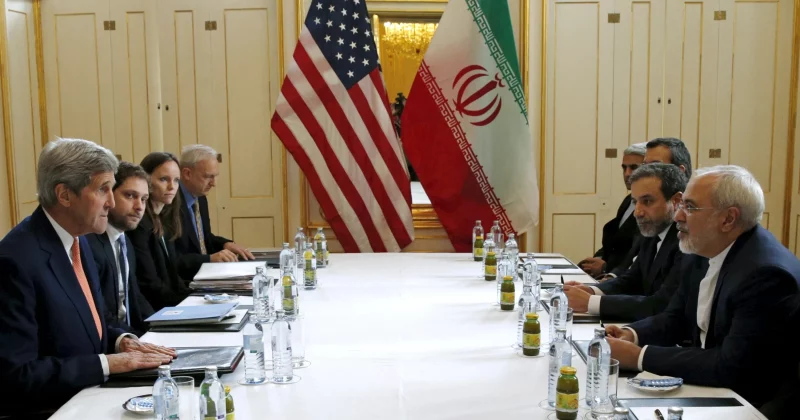
A draft outline of a potential Iran-US agreement has surfaced, proposing the lifting of sanctions on Iran, an end to the naval blockade, and a $300 billion reconstruction plan for the Islamic Republic.

The proposal arrives after months of negotiations that began in April 2025, aimed at replacing the expired 2015 Joint Comprehensive Plan of Action, better known as the JCPOA. That original deal, which limited Iran’s uranium enrichment and slashed its stockpile, effectively ceased to function after it expired on October 18, 2025.

What the draft framework includes

The reported outline covers three major pillars: sanctions relief, a restructured nuclear framework, and the $300 billion reconstruction package.

Under the original JCPOA, Iran was limited to enriching uranium to 3.67%, and its stockpile was drastically reduced. Those constraints bought nonproliferation experts what they call “breakout time,” the period needed to produce enough weapons-grade fissile material for a bomb. By late 2024, Iran’s breakout window had shrunk to roughly one week, down from over a year when the JCPOA was functioning.

Advertisement

One controversial proposal on the table involves moving Iran’s enrichment activities outside the country entirely.

The sanctions relief component would potentially reopen Iran’s access to global financial systems. Iran sits on some of the world’s largest proven oil reserves, and any path back to full export capacity would reshape supply dynamics.

The $300 billion reconstruction number is roughly equivalent to the entire GDP of Colombia. The funding would theoretically be directed toward rebuilding Iranian economic infrastructure that has deteriorated under years of isolation.

Why this matters for markets and crypto

No finalized agreement currently includes the $300 billion reconstruction package or the end of naval blockades. These are documents tied to ongoing negotiations, not signed treaties.

Iran returning to full export capacity would add significant supply to global markets at a time when OPEC+ is already managing delicate production quotas.

Iran has been a notable player in Bitcoin mining, partly because sanctions pushed economic activity toward decentralized systems that don’t rely on traditional banking rails. If Iranians regain access to global financial systems, the urgency to use crypto as a sanctions workaround diminishes. On the other hand, $300 billion in reconstruction funding flowing into a country would likely modernize its digital infrastructure, potentially creating a more robust environment for legitimate crypto businesses and blockchain applications.

The long road from draft to deal

The JCPOA took years of painstaking multilateral negotiation before it was signed in 2015. It then took a single presidential decision to effectively kill it when the US withdrew in 2018.

Negotiations since April 2025 have been focused on creating an entirely new structure, not simply reviving the old one. Iran’s enrichment capabilities are far more advanced than they were a decade ago, and any agreement would need to account for that reality.

Disclosure: This article was edited by Editorial Team. For more information on how we create and review content, see our Editorial Policy.

Iran outlines draft agreement with US on sanctions relief, nuclear program, and $300B reconstruction funding

Iran outlines draft agreement with US on sanctions relief, nuclear program, and $300B reconstruction funding

A leaked draft framework proposes lifting sanctions, ending the naval blockade, and channeling $300 billion into Iranian reconstruction, with massive implications for global oil markets and crypto infrastructure.

A draft outline of a potential Iran-US agreement has surfaced, proposing the lifting of sanctions on Iran, an end to the naval blockade, and a $300 billion reconstruction plan for the Islamic Republic.

The proposal arrives after months of negotiations that began in April 2025, aimed at replacing the expired 2015 Joint Comprehensive Plan of Action, better known as the JCPOA. That original deal, which limited Iran’s uranium enrichment and slashed its stockpile, effectively ceased to function after it expired on October 18, 2025.

What the draft framework includes

The reported outline covers three major pillars: sanctions relief, a restructured nuclear framework, and the $300 billion reconstruction package.

Under the original JCPOA, Iran was limited to enriching uranium to 3.67%, and its stockpile was drastically reduced. Those constraints bought nonproliferation experts what they call “breakout time,” the period needed to produce enough weapons-grade fissile material for a bomb. By late 2024, Iran’s breakout window had shrunk to roughly one week, down from over a year when the JCPOA was functioning.

Advertisement

One controversial proposal on the table involves moving Iran’s enrichment activities outside the country entirely.

The sanctions relief component would potentially reopen Iran’s access to global financial systems. Iran sits on some of the world’s largest proven oil reserves, and any path back to full export capacity would reshape supply dynamics.

The $300 billion reconstruction number is roughly equivalent to the entire GDP of Colombia. The funding would theoretically be directed toward rebuilding Iranian economic infrastructure that has deteriorated under years of isolation.

Why this matters for markets and crypto

No finalized agreement currently includes the $300 billion reconstruction package or the end of naval blockades. These are documents tied to ongoing negotiations, not signed treaties.

Iran returning to full export capacity would add significant supply to global markets at a time when OPEC+ is already managing delicate production quotas.

Iran has been a notable player in Bitcoin mining, partly because sanctions pushed economic activity toward decentralized systems that don’t rely on traditional banking rails. If Iranians regain access to global financial systems, the urgency to use crypto as a sanctions workaround diminishes. On the other hand, $300 billion in reconstruction funding flowing into a country would likely modernize its digital infrastructure, potentially creating a more robust environment for legitimate crypto businesses and blockchain applications.

The long road from draft to deal

The JCPOA took years of painstaking multilateral negotiation before it was signed in 2015. It then took a single presidential decision to effectively kill it when the US withdrew in 2018.

Negotiations since April 2025 have been focused on creating an entirely new structure, not simply reviving the old one. Iran’s enrichment capabilities are far more advanced than they were a decade ago, and any agreement would need to account for that reality.

Disclosure: This article was edited by Editorial Team. For more information on how we create and review content, see our Editorial Policy.