
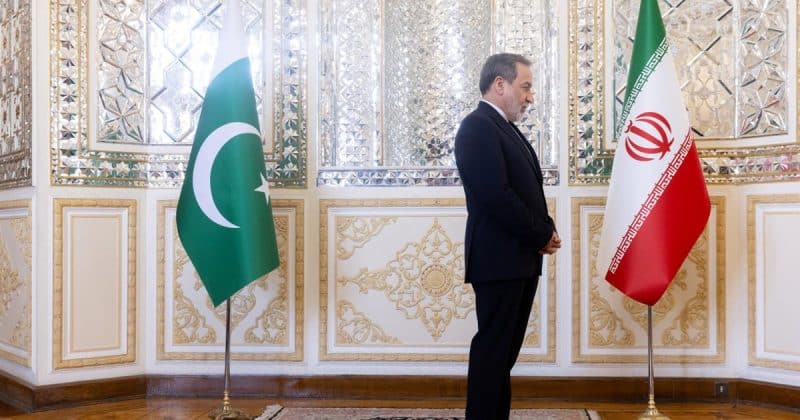
Iran secures changes in US memorandum, guarantees for Lebanon
Last-minute negotiations yielded Iranian sovereignty guarantees over the Strait of Hormuz and a ceasefire framework covering Lebanon, with crypto markets reacting to the geopolitical shift
Iran and the United States have reached a memorandum of understanding that reshapes the balance of power in the Middle East, at least on paper. The deal, set to be signed on June 19 in Switzerland, includes provisions Iran fought hard to secure: sovereignty guarantees over the Strait of Hormuz, toll-free commercial shipping through the waterway, and a ceasefire framework that extends to Lebanon.
What the deal actually says
The MOU establishes a 60-day ceasefire that covers not just the direct US-Iran theater but also military operations in Lebanon. Lebanon has been caught in the crossfire of broader regional tensions, and an explicit guarantee of its sovereignty as part of a US-Iran agreement marks a notable diplomatic concession.
On the maritime front, the Strait of Hormuz, through which roughly a fifth of the world’s oil passes daily, will reopen toll-free for commercial shipping immediately. The US naval blockade of Iranian ports will also be lifted as part of the agreement.
Iran secured guarantees affirming its sovereignty, alongside Oman’s, over the Strait of Hormuz. The deal also includes a conditional sanctions relief arrangement, meaning Iran has to demonstrate compliance before the economic pressure eases in any meaningful way.
This MOU is explicitly designed as an interim step. It does not resolve Iran’s nuclear program. It doesn’t even directly address it. Instead, it sets the stage for future nuclear negotiations, which means the hardest conversations haven’t even started yet.
Macro, rates, and crypto—what moved markets and what matters next.
Daily. Free. Join 34,000+ readers across crypto, finance, and policy.
How we got here
The backdrop to this agreement is a military escalation that began on February 28, 2026, involving Iran, the US, and Israel. Pakistan and Qatar played crucial mediation roles in getting both sides to the table. Iran’s earlier negotiating demands included the release of frozen assets and a comprehensive ceasefire framework that went well beyond bilateral issues. The fact that Lebanon ended up in the final text suggests Iran successfully expanded the scope of the agreement beyond what Washington initially intended.
What this means for crypto investors
Bitcoin has been trading in a range between $64,000 and $74,000 as investors try to price in the uncertainty created by the US-Iran conflict, with fund outflows tracking closely to escalation headlines.
A signed MOU could provide a brief window of stability. If the Strait of Hormuz reopens smoothly and commercial shipping normalizes, one significant source of global economic uncertainty gets dialed down. But the 60-day ceasefire is just that: 60 days. Conditional sanctions relief means the next two months will be filled with compliance checkpoints, each of which could reignite volatility.
The nuclear question looms over everything. This MOU is a ceasefire, not a peace treaty. The moment nuclear negotiations begin in earnest, expect the geopolitical risk premium to reassert itself in crypto markets.
For now, the smart move is to watch the June 19 signing closely and monitor the first compliance milestones within that 60-day window.