
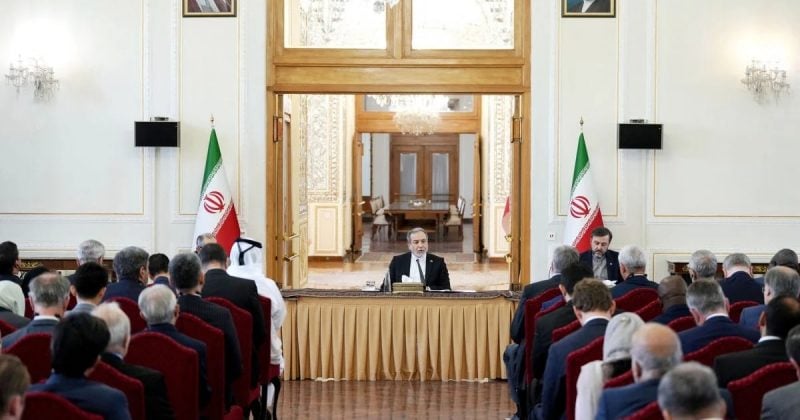
Iran and US head to Switzerland for critical meeting on 14-point memorandum of understanding

Iran and US head to Switzerland for critical meeting on 14-point memorandum of understanding

The diplomatic agreement covers everything from the Strait of Hormuz to nuclear frameworks, and crypto markets are already reacting.

Iran and the United States are preparing for a pivotal face-to-face meeting in Switzerland to formally sign a 14-point memorandum of understanding that could reshape geopolitical dynamics across energy, sanctions, and digital asset markets.

The MoU, which was drafted around June 15, has already received electronic signatures from President Donald Trump, Vice President JD Vance, and Iranian Foreign Minister Abbas Araghchi.

What the memorandum covers

The 14-point framework includes an immediate end to hostilities, the reopening of the Strait of Hormuz, a pathway toward easing sanctions, and a structured approach to addressing Iran’s nuclear ambitions. The broad strokes are agreed upon, but the real negotiation happens during the 60-day window of technical discussions that the MoU establishes.

Advertisement

Pakistan and Qatar are serving as mediators, adding layers of regional stakeholder involvement that echo, but also diverge from, past diplomatic frameworks like the 2015 JCPOA. Where that agreement focused narrowly on nuclear enrichment limits, this MoU casts a wider net, covering energy routes, conflict de-escalation, and financial restrictions simultaneously.

A US official has indicated that Iran and the US may cancel the memorandum signed on Friday, with talks instead focusing on what steps need to happen to move forward.

The sanctions wrinkle

US Treasury sanctions targeting Iranian exchanges, imposed on June 2, remain firmly in place. Those sanctions landed just weeks before preliminary agreements were reached, creating a peculiar diplomatic sequence in which Washington was simultaneously tightening financial pressure on Iran’s crypto infrastructure while opening a channel for broader de-escalation talks.

The Strait of Hormuz angle is equally significant for markets. Roughly 20% of global oil flows through that chokepoint. A reopened Strait would ease energy supply concerns that have been quietly inflating risk premiums across commodity and financial markets.

How crypto markets are reading this

Bitcoin climbed above $66,000 amid optimism surrounding the diplomatic progress. Sanctions on Iranian exchanges directly affect digital asset flows in the region, and any easing of those restrictions during the 60-day negotiation window would have immediate implications for trading volumes and adoption patterns in sanctioned jurisdictions.

Traders should be careful about front-running a resolution. The 60-day negotiation window is exactly the kind of timeline that produces headline-driven volatility. One leaked disagreement over nuclear inspection protocols or sanctions sequencing could reverse sentiment overnight.

Disclosure: This article was edited by Editorial Team. For more information on how we create and review content, see our Editorial Policy.

Iran and US head to Switzerland for critical meeting on 14-point memorandum of understanding

Iran and US head to Switzerland for critical meeting on 14-point memorandum of understanding

The diplomatic agreement covers everything from the Strait of Hormuz to nuclear frameworks, and crypto markets are already reacting.

Iran and the United States are preparing for a pivotal face-to-face meeting in Switzerland to formally sign a 14-point memorandum of understanding that could reshape geopolitical dynamics across energy, sanctions, and digital asset markets.

The MoU, which was drafted around June 15, has already received electronic signatures from President Donald Trump, Vice President JD Vance, and Iranian Foreign Minister Abbas Araghchi.

What the memorandum covers

The 14-point framework includes an immediate end to hostilities, the reopening of the Strait of Hormuz, a pathway toward easing sanctions, and a structured approach to addressing Iran’s nuclear ambitions. The broad strokes are agreed upon, but the real negotiation happens during the 60-day window of technical discussions that the MoU establishes.

Advertisement

Pakistan and Qatar are serving as mediators, adding layers of regional stakeholder involvement that echo, but also diverge from, past diplomatic frameworks like the 2015 JCPOA. Where that agreement focused narrowly on nuclear enrichment limits, this MoU casts a wider net, covering energy routes, conflict de-escalation, and financial restrictions simultaneously.

A US official has indicated that Iran and the US may cancel the memorandum signed on Friday, with talks instead focusing on what steps need to happen to move forward.

The sanctions wrinkle

US Treasury sanctions targeting Iranian exchanges, imposed on June 2, remain firmly in place. Those sanctions landed just weeks before preliminary agreements were reached, creating a peculiar diplomatic sequence in which Washington was simultaneously tightening financial pressure on Iran’s crypto infrastructure while opening a channel for broader de-escalation talks.

The Strait of Hormuz angle is equally significant for markets. Roughly 20% of global oil flows through that chokepoint. A reopened Strait would ease energy supply concerns that have been quietly inflating risk premiums across commodity and financial markets.

How crypto markets are reading this

Bitcoin climbed above $66,000 amid optimism surrounding the diplomatic progress. Sanctions on Iranian exchanges directly affect digital asset flows in the region, and any easing of those restrictions during the 60-day negotiation window would have immediate implications for trading volumes and adoption patterns in sanctioned jurisdictions.

Traders should be careful about front-running a resolution. The 60-day negotiation window is exactly the kind of timeline that produces headline-driven volatility. One leaked disagreement over nuclear inspection protocols or sanctions sequencing could reverse sentiment overnight.

Disclosure: This article was edited by Editorial Team. For more information on how we create and review content, see our Editorial Policy.