
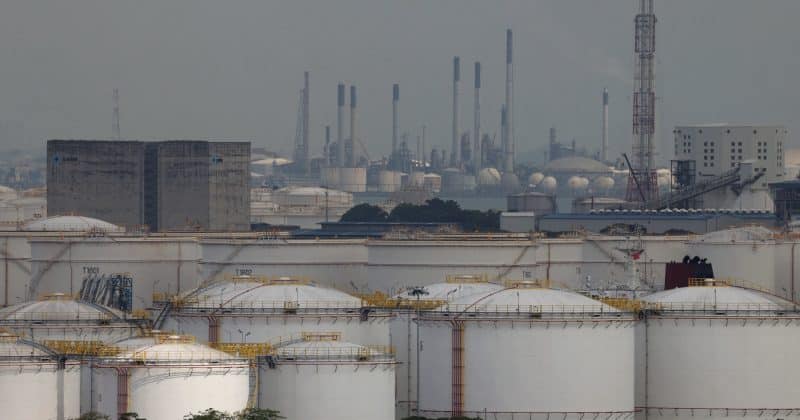
Middlemen offer Iranian oil to Indian refiners after US waiver
Discounted Iranian crude is back on the table for India's refiners, but the clock is ticking and the payment logistics are anything but simple
Iranian oil is knocking on India’s door again. Middlemen and representatives from the National Iranian Oil Company (NIOC) have started reaching out directly to Indian refiners with offers of discounted crude, following a 60-day general license issued by the US Treasury that permits Iranian oil sales until August 21, 2026.
The offers reportedly come with discounts of $3 to $4 per barrel, a meaningful price break designed to help Tehran move through its oil stockpiles while it has a legal window to do so. Tankers are already positioned nearby, suggesting Iran is eager to close deals fast.
Indian refiners aren’t rushing to sign on the dotted line, though. They’re taking time to evaluate payment terms and figure out which banking channels can actually handle these transactions.
A narrow window with a complicated history
Before sanctions gutted the trade, India was importing as much as 518,000 barrels per day of Iranian crude. That volume dropped to essentially zero as US enforcement tightened.
Two cargoes of Iranian crude already arrived in India in April 2026 under earlier, smaller-scale waivers. Those shipments were modest, more of a toe-dip than a cannonball.
One wrinkle that illustrates just how fractured the payment infrastructure has become: earlier small-scale purchases of Iranian oil under waivers were sometimes settled in Chinese yuan. When you’re paying for oil in a third country’s currency because your own banking system can’t touch the deal, that tells you something about the complexity of the plumbing involved.
The current outreach effort is broader and more aggressive than those earlier transactions. NIOC isn’t just waiting for buyers to come calling. It’s actively deploying middlemen and its own representatives to pitch Indian refiners.
Why India matters in the Iranian oil equation
India is the world’s third-largest oil importer. Before sanctions, Iranian oil was a staple of Indian refinery feedstocks, prized for its quality and competitive pricing.
The $3 to $4 per barrel discount being offered is significant enough to catch the attention of cost-conscious Indian refiners. For context, a $4 discount on 518,000 barrels per day, the historic high-water mark, would represent more than $2 million per day in savings.
The payment infrastructure question is arguably the most important variable. Without reliable banking channels that can process these transactions without exposing Indian financial institutions to secondary sanctions risk, all the barrel discounts in the world won’t close the deal. Previous workarounds involving yuan settlement suggest that conventional dollar-denominated channels remain largely off-limits, adding friction and cost that eat into the headline discount.
The August 21 deadline creates a natural pressure point. Deals that don’t get done before that date may not get done at all, depending on whether the waiver is extended, modified, or allowed to expire.