
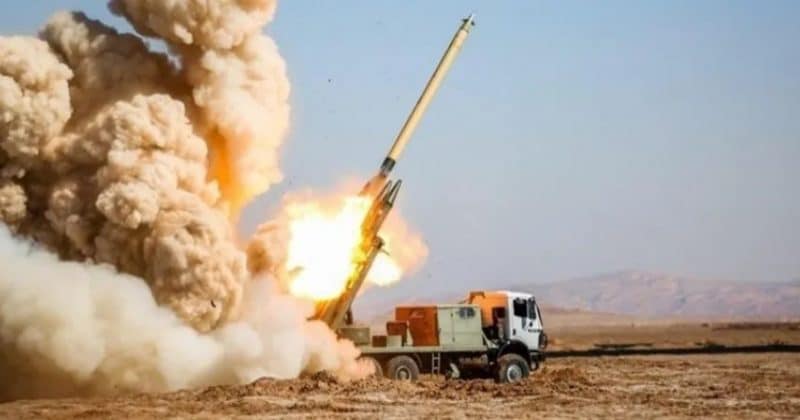
IRGC launches missile and drone attacks on US bases, military escalation rattles crypto markets
Iran's Islamic Revolutionary Guard Corps struck 22 US military targets across the Middle East, triggering immediate volatility in Bitcoin and digital asset markets.
Iran’s Islamic Revolutionary Guard Corps launched missile and drone strikes against 22 US military targets on June 10, 2026, hitting facilities across Jordan, Bahrain, and Kuwait. The al-Azraq airbase in Jordan and the US Fifth Fleet headquarters in Bahrain were among the sites targeted in what represents a dramatic escalation of hostilities between Washington and Tehran.
What happened and why
The IRGC’s strikes were reportedly retaliation for earlier US attacks on Iranian infrastructure. On June 3, 2026, the US hit locations including Jask, Sirik, and Qeshm Island, damaging key facilities such as communications towers and water supply systems.
An Iranian military drone was spotted over Iraqi airspace as the operation unfolded, signaling that the strike package was coordinated across multiple vectors. Missiles and drones were launched in tandem, a combination that complicates air defense responses.
Bitcoin’s war reflex
Prior incidents in the 2026 US-Iran military exchange cycle resulted in around $1 billion in Bitcoin liquidations. Bitcoin dropped to multi-week lows following those earlier military exchanges, consistent with how the asset has behaved during previous US-Iran escalations. Investor sentiment shifted firmly to risk-off as prices swung markedly amid the geopolitical unrest.
The news moving money, markets, and the world—before your day starts.
Daily. Free. Join 34,000+ readers across crypto, finance, and policy.
Iran, sanctions, and crypto’s uncomfortable role
Iran has long used cryptocurrency as a mechanism to circumvent international sanctions. The country maintains significant operations in crypto mining, which provides a pathway to generate revenue outside the traditional banking system that Western sanctions have largely cut it off from.
What this means for investors
The $1 billion in liquidations from earlier 2026 incidents happened during what were, in hindsight, smaller escalations than this one. The IRGC striking 22 targets across three countries represents a step-change in the conflict’s intensity.
Beyond the immediate volatility, oil prices tend to spike during US-Iran conflicts, which feeds into inflation expectations, which in turn influences Federal Reserve policy decisions. Bitcoin’s price is sensitive to rate expectations, so a sustained oil price shock could create headwinds for crypto that persist well beyond the initial military exchange.