
IRGC claims cruise missile interception near Khorramabad as Iran’s crypto war machine draws fresh scrutiny

IRGC claims cruise missile interception near Khorramabad as Iran’s crypto war machine draws fresh scrutiny

The Revolutionary Guard controls roughly half of Iran's crypto activity, making every military escalation a blockchain story too

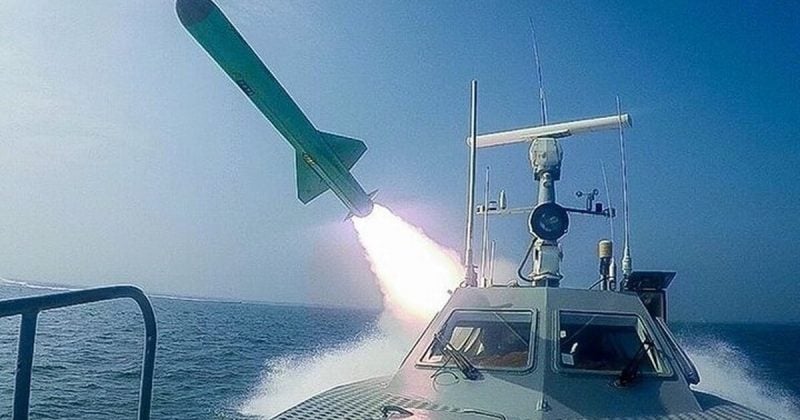
Reports emerged that Iran’s Islamic Revolutionary Guard Corps intercepted an enemy cruise missile near Khorramabad in the western province of Lorestan. The claim arrives against a backdrop of sustained military tension between Iran and the US-Israeli axis, with Khorramabad already in the spotlight after confirmed strikes on the Imam Ali Missile Base earlier this year.

The IRGC isn’t just Iran’s military backbone. It’s also one of the largest state-linked actors in global cryptocurrency, controlling approximately 50% of the country’s crypto activity.

The IRGC’s crypto footprint is enormous

In the fourth quarter of 2025, IRGC-affiliated addresses received over $3 billion in cryptocurrency flows.

In July 2026, Israeli authorities sanctioned 37 crypto wallets linked to the IRGC, collectively valued at around $8 million. That sounds impressive until you compare it to the $3 billion quarterly flow. It’s roughly 0.27% of one quarter’s activity.

Advertisement

Every sanctioned address creates a compliance obligation for exchanges, DeFi protocols, and OTC desks worldwide. Miss one flagged wallet and you’re potentially facilitating terrorism financing, a designation that carries serious legal consequences in virtually every jurisdiction.

Khorramabad’s military significance

The city of Khorramabad sits in western Iran, home to the Imam Ali Missile Base, one of the country’s key ballistic missile installations. Satellite imagery from March 2026 confirmed that US-Israeli strikes had targeted the facility.

Iran’s state media has amplified the interception claim, framing it as evidence of defensive strength. Independent confirmation of the event remains absent.

What this means for crypto investors

Bitcoin has been trading around $63,000 and has shown limited immediate reaction to the escalation.

Every time a new batch of IRGC-linked wallets gets sanctioned, compliance teams at exchanges tighten their screening. OFAC designations expand. Travel rule enforcement gets stricter. KYC requirements ratchet up at on-ramps and off-ramps.

No specific crypto assets are tied to the reported missile interception event.

The IRGC’s $3 billion quarterly crypto flow represents real demand for digital assets. Sanctions enforcement that successfully disrupts those channels could remove meaningful buy pressure from certain markets, particularly stablecoins and privacy-focused tokens that serve as intermediary vehicles in sanctions evasion schemes.

Disclosure: This article was edited by Editorial Team. For more information on how we create and review content, see our Editorial Policy.

IRGC claims cruise missile interception near Khorramabad as Iran’s crypto war machine draws fresh scrutiny

IRGC claims cruise missile interception near Khorramabad as Iran’s crypto war machine draws fresh scrutiny

The Revolutionary Guard controls roughly half of Iran's crypto activity, making every military escalation a blockchain story too

Reports emerged that Iran’s Islamic Revolutionary Guard Corps intercepted an enemy cruise missile near Khorramabad in the western province of Lorestan. The claim arrives against a backdrop of sustained military tension between Iran and the US-Israeli axis, with Khorramabad already in the spotlight after confirmed strikes on the Imam Ali Missile Base earlier this year.

The IRGC isn’t just Iran’s military backbone. It’s also one of the largest state-linked actors in global cryptocurrency, controlling approximately 50% of the country’s crypto activity.

The IRGC’s crypto footprint is enormous

In the fourth quarter of 2025, IRGC-affiliated addresses received over $3 billion in cryptocurrency flows.

In July 2026, Israeli authorities sanctioned 37 crypto wallets linked to the IRGC, collectively valued at around $8 million. That sounds impressive until you compare it to the $3 billion quarterly flow. It’s roughly 0.27% of one quarter’s activity.

Advertisement

Every sanctioned address creates a compliance obligation for exchanges, DeFi protocols, and OTC desks worldwide. Miss one flagged wallet and you’re potentially facilitating terrorism financing, a designation that carries serious legal consequences in virtually every jurisdiction.

Khorramabad’s military significance

The city of Khorramabad sits in western Iran, home to the Imam Ali Missile Base, one of the country’s key ballistic missile installations. Satellite imagery from March 2026 confirmed that US-Israeli strikes had targeted the facility.

Iran’s state media has amplified the interception claim, framing it as evidence of defensive strength. Independent confirmation of the event remains absent.

What this means for crypto investors

Bitcoin has been trading around $63,000 and has shown limited immediate reaction to the escalation.

Every time a new batch of IRGC-linked wallets gets sanctioned, compliance teams at exchanges tighten their screening. OFAC designations expand. Travel rule enforcement gets stricter. KYC requirements ratchet up at on-ramps and off-ramps.

No specific crypto assets are tied to the reported missile interception event.

The IRGC’s $3 billion quarterly crypto flow represents real demand for digital assets. Sanctions enforcement that successfully disrupts those channels could remove meaningful buy pressure from certain markets, particularly stablecoins and privacy-focused tokens that serve as intermediary vehicles in sanctions evasion schemes.

Disclosure: This article was edited by Editorial Team. For more information on how we create and review content, see our Editorial Policy.