
IRGC fires 10 ballistic missiles at Jordan’s Al-Azraq base as US-Iran tensions hit crypto markets
Iran's missile strikes on US-linked military infrastructure coincide with Treasury sanctions on the country's largest crypto exchange, sending Bitcoin volatility surging
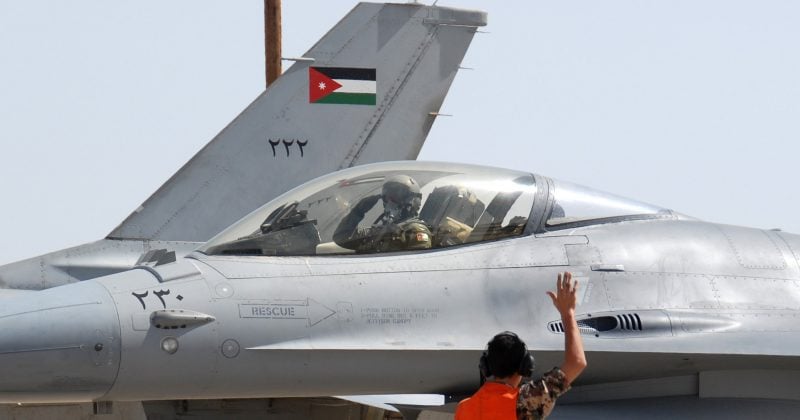
The Islamic Revolutionary Guard Corps launched ballistic missiles at Jordan’s Al-Azraq Air Base, targeting US-linked military infrastructure in what the IRGC described as retaliation for previous American airstrikes. The group warned that additional US bases in the region could be next.
Jordan’s military intercepted five of the incoming missiles aimed at the Al-Azraq site. The IRGC claimed its strikes hit strategic infrastructure at the base, including command centers and F-35 hangars, though independent verification of damage remains limited.
The escalation landed alongside US Treasury sanctions on Nobitex, Iran’s largest cryptocurrency exchange, creating a convergence of geopolitical risk that sent digital asset markets into sharp volatility.
Military escalation meets crypto sanctions
On June 2, the US Treasury sanctioned Nobitex for facilitating transactions linked to the Revolutionary Guard Corps, effectively cutting off the exchange that handles the majority of Iran’s crypto transaction volume from the global financial system.
Nobitex processes the bulk of cryptocurrency transactions inside Iran, making it a critical piece of the country’s financial infrastructure, particularly as traditional banking channels have been squeezed by years of international sanctions. The IRGC also issued threats against US military installations in Kuwait and Bahrain, broadening the scope of potential conflict across the Persian Gulf.
The news moving money, markets, and the world—before your day starts.
Daily. Free. Join 34,000+ readers across crypto, finance, and policy.
Bitcoin’s geopolitical stress test
Bitcoin trading approached $63,000 during the escalation. Over $1 billion in liquidations swept through crypto markets as the military tensions intensified, catching leveraged traders on both sides of the trade.
What distinguishes this episode is the direct intersection of the conflict with crypto-specific sanctions. The Nobitex action and the missile strikes represent two fronts of the same geopolitical confrontation, with crypto markets caught between them.
What this means for investors
The Nobitex sanctions carry implications beyond Iran. They establish a template for how the US government can target crypto exchanges that serve as financial infrastructure for sanctioned states. Any exchange operating in jurisdictions under US sanctions, or facilitating transactions with sanctioned entities, should be reading the Nobitex enforcement action carefully.
The $1 billion liquidation event is a reminder that leverage in geopolitically sensitive periods carries acute risk. Markets can gap through protective orders when missile launches hit the news cycle.
If the conflict escalates further, with IRGC threats against bases in Kuwait and Bahrain materializing, additional volatility spikes are a direct risk. Crypto exchanges operating in the Gulf region could face new scrutiny as the intersection of military conflict, sanctions enforcement, and digital asset markets continues to tighten.