
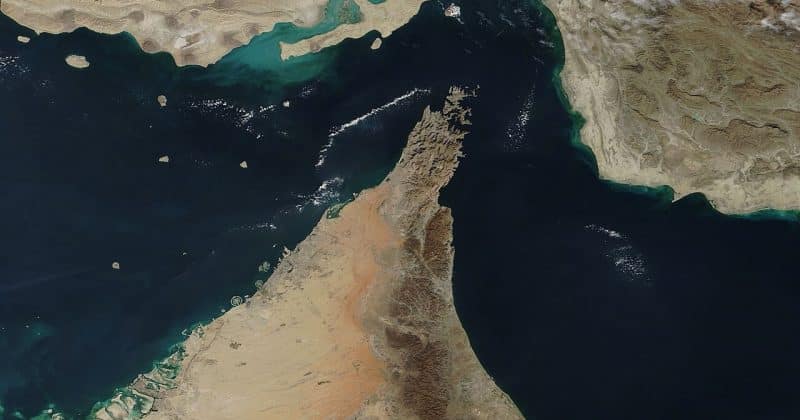
IRGC fires missiles at commercial ships near Strait of Hormuz, rattling oil and crypto markets
Iran's escalating aggression in the world's most critical oil chokepoint is raising uncomfortable questions about sanctions evasion, shipping tolls paid in Bitcoin, and what happens when geopolitics meets crypto.
The Iranian Revolutionary Guard Corps fired projectiles at commercial vessels near the Strait of Hormuz on June 25, hitting the Singapore-flagged container ship M/V Ever Lovely near the Omani coast. The vessel sustained damage to its bridge and upper deck but reported no casualties and continued its transit.
The Strait of Hormuz typically facilitates 20-25% of global seaborne oil trade.
What happened and why it’s escalating
The attack on the Ever Lovely, struck approximately 7.5 nautical miles southeast of Dahit, Oman, represents a significant escalation in an IRGC campaign that has been building since February 2026. Over the past several months, Iran has progressively asserted control over commercial shipping through the strait, boarding vessels, issuing warnings that unauthorized transits are “illegal,” and deploying gunboats that have fired on ships between April and June.
The US military responded with retaliatory strikes targeting Iranian missile and drone facilities. Shipping routes are being rerouted and insurance premiums are spiking.
The crypto toll booth in the Persian Gulf
Reports have emerged that Iran is attempting to monetize the crisis by demanding tolls from oil tankers transiting the strait. The reported ask is roughly $1 per barrel for passage, with payment accepted in Bitcoin, stablecoins, or yuan through intermediaries.
The news moving money, markets, and the world—before your day starts.
Daily. Free. Join 34,000+ readers across crypto, finance, and policy.
Substantial evidence of large-scale crypto payments actually flowing through this system remains limited. The difference between “Iran wants to collect tolls in Bitcoin” and “Iran is successfully collecting tolls in Bitcoin” is significant.
If the toll system gains any real traction, it would represent a consequential real-world use case for cryptocurrency by a state actor. A functioning toll system would give regulators in Washington, Brussels, and London ammunition to push harder on compliance frameworks, with potential implications including renewed scrutiny on stablecoin issuers, potential blacklisting of wallet addresses tied to intermediaries, and louder calls for KYC requirements on peer-to-peer transactions.
Market ripple effects
The Strait of Hormuz crisis has contributed to intermittent volatility in Bitcoin prices, though direct causation is difficult to isolate. Any credible reporting on Iran successfully transacting in Bitcoin or stablecoins for shipping tolls could spark short-term trading activity. If the US Treasury’s Office of Foreign Assets Control starts aggressively designating addresses and intermediaries connected to Iranian toll payments, it could create compliance headaches for exchanges and DeFi protocols alike.
What crypto investors should watch
Watch for concrete evidence of crypto payments flowing through Iran’s toll system. On-chain analytics firms will likely be the first to identify suspicious patterns if they exist.
Oil prices remain the connective tissue between this geopolitical crisis and broader market conditions. Sustained crude price increases driven by Hormuz disruptions would feed inflation concerns, potentially delaying rate cuts and tightening financial conditions.