
Iran’s IRGC fires ballistic missiles at US air base in Jordan as crypto markets brace for volatility

Iran’s IRGC fires ballistic missiles at US air base in Jordan as crypto markets brace for volatility

Bitcoin held near $63K as 10 ballistic missiles targeted the Al-Azraq Air Base, with Jordan intercepting most of the incoming projectiles.

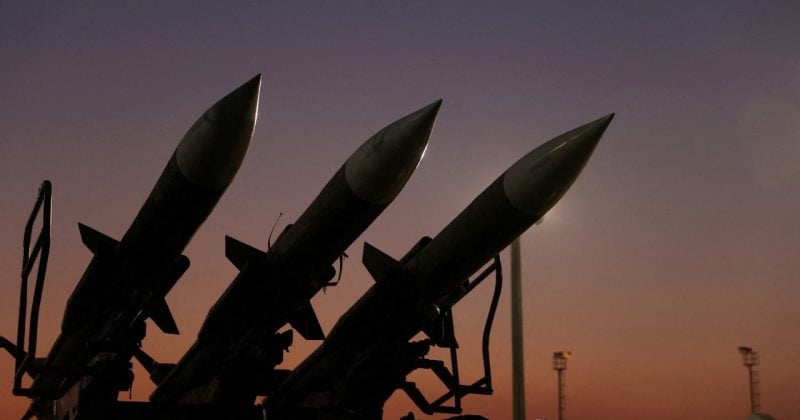
Iran’s Islamic Revolutionary Guard Corps launched 10 ballistic missiles at the Al-Azraq Air Base in Jordan on July 9, a facility known to host US military forces and a command-and-control center. Jordan’s missile defense systems intercepted eight of the 10 projectiles, and no casualties were reported.

The strike landed around 2:20 pm local time. Bitcoin was trading near $63,000 in the aftermath.

What happened on the ground

The IRGC’s aerospace forces claimed responsibility for the attack, specifically naming the US Prince Hassan Air Base (also referred to as Al-Azraq) as their target. Jordan moved quickly to emphasize the effectiveness of its air defense systems, noting that eight of the 10 missiles were successfully intercepted before reaching their destination.

This strike came shortly after a ceasefire agreement that was supposed to de-escalate hostilities between Washington and Tehran.

Advertisement

The IRGC has a track record of targeting US military assets with ballistic missiles. The most notable precedent came in January 2020, when Iran struck the Al-Asad Air Base in Iraq in retaliation for the US assassination of General Qasem Soleimani. That strike also resulted in no immediate fatalities, though dozens of US service members later reported traumatic brain injuries.

How crypto markets responded

Bitcoin’s reaction, or lack thereof, tells an interesting story. Trading near $63,000 after the strikes, the largest cryptocurrency showed modest resilience in a moment that might have triggered a sharper selloff even a year ago.

The broader crypto market did exhibit volatility linked to the escalation. Risk-off sentiment was palpable across both traditional and digital asset markets.

The sanctions evasion angle

Iran has been identified as one of the most active state-level users of digital assets for sanctions evasion. Tehran has moved billions through cryptocurrency exchanges, predominantly using stablecoins like USDT.

Tether has historically cooperated with law enforcement requests to freeze addresses linked to sanctioned entities. But the sheer volume of USDT moving through decentralized and semi-regulated channels makes comprehensive enforcement a game of whack-a-mole.

What investors should watch

For crypto-specific traders, watch the correlation between Bitcoin and traditional safe-haven assets like gold and US Treasuries. In genuine risk-off environments, Bitcoin has historically traded more like a tech stock than digital gold.

Events that spotlight Iran’s use of crypto for sanctions evasion tend to accelerate legislative timelines. If this strike becomes a major political story in Washington, expect renewed scrutiny of stablecoin issuers, exchange KYC practices, and the broader question of whether digital assets are enabling adversarial states.

Disclosure: This article was edited by Editorial Team. For more information on how we create and review content, see our Editorial Policy.

Iran’s IRGC fires ballistic missiles at US air base in Jordan as crypto markets brace for volatility

Iran’s IRGC fires ballistic missiles at US air base in Jordan as crypto markets brace for volatility

Bitcoin held near $63K as 10 ballistic missiles targeted the Al-Azraq Air Base, with Jordan intercepting most of the incoming projectiles.

Iran’s Islamic Revolutionary Guard Corps launched 10 ballistic missiles at the Al-Azraq Air Base in Jordan on July 9, a facility known to host US military forces and a command-and-control center. Jordan’s missile defense systems intercepted eight of the 10 projectiles, and no casualties were reported.

The strike landed around 2:20 pm local time. Bitcoin was trading near $63,000 in the aftermath.

What happened on the ground

The IRGC’s aerospace forces claimed responsibility for the attack, specifically naming the US Prince Hassan Air Base (also referred to as Al-Azraq) as their target. Jordan moved quickly to emphasize the effectiveness of its air defense systems, noting that eight of the 10 missiles were successfully intercepted before reaching their destination.

This strike came shortly after a ceasefire agreement that was supposed to de-escalate hostilities between Washington and Tehran.

Advertisement

The IRGC has a track record of targeting US military assets with ballistic missiles. The most notable precedent came in January 2020, when Iran struck the Al-Asad Air Base in Iraq in retaliation for the US assassination of General Qasem Soleimani. That strike also resulted in no immediate fatalities, though dozens of US service members later reported traumatic brain injuries.

How crypto markets responded

Bitcoin’s reaction, or lack thereof, tells an interesting story. Trading near $63,000 after the strikes, the largest cryptocurrency showed modest resilience in a moment that might have triggered a sharper selloff even a year ago.

The broader crypto market did exhibit volatility linked to the escalation. Risk-off sentiment was palpable across both traditional and digital asset markets.

The sanctions evasion angle

Iran has been identified as one of the most active state-level users of digital assets for sanctions evasion. Tehran has moved billions through cryptocurrency exchanges, predominantly using stablecoins like USDT.

Tether has historically cooperated with law enforcement requests to freeze addresses linked to sanctioned entities. But the sheer volume of USDT moving through decentralized and semi-regulated channels makes comprehensive enforcement a game of whack-a-mole.

What investors should watch

For crypto-specific traders, watch the correlation between Bitcoin and traditional safe-haven assets like gold and US Treasuries. In genuine risk-off environments, Bitcoin has historically traded more like a tech stock than digital gold.

Events that spotlight Iran’s use of crypto for sanctions evasion tend to accelerate legislative timelines. If this strike becomes a major political story in Washington, expect renewed scrutiny of stablecoin issuers, exchange KYC practices, and the broader question of whether digital assets are enabling adversarial states.

Disclosure: This article was edited by Editorial Team. For more information on how we create and review content, see our Editorial Policy.