
IRGC strikes US logistics facilities at Oman’s Duqm port in third retaliation round

IRGC strikes US logistics facilities at Oman’s Duqm port in third retaliation round

Iranian drone attacks on a key US naval hub raise the stakes for energy markets and Gulf shipping routes

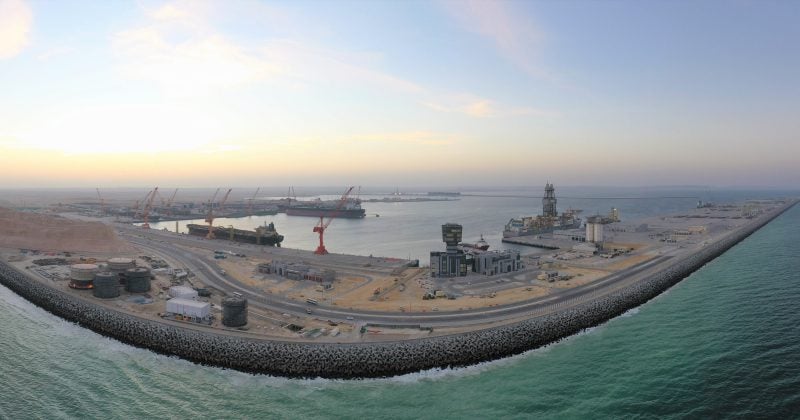
Iran’s Revolutionary Guards have struck US military logistics and refueling facilities at Duqm port in Oman, marking a significant escalation in the ongoing confrontation between Tehran and Washington. The attacks, which took place on March 1 and March 3, 2026, targeted one of the most strategically consequential ports outside the Persian Gulf.

This is the third round of Iranian retaliation following US and Israeli strikes on Iranian positions beginning February 28, 2026.

What happened at Duqm

The March 1 strike involved two Iranian drones. One hit a mobile workers’ housing unit at the port, injuring one expatriate worker. The second was intercepted, though debris landed near fuel storage tanks.

Advertisement

Two days later, multiple drones returned. This time they targeted a fuel storage tank directly. Damage was contained and no additional casualties were reported.

Duqm sits roughly 500 km south of the Strait of Hormuz. The US secured logistics access to the port through a 2019 agreement with Oman, specifically to enable naval operations that don’t depend on transiting the Strait. Roll-on/roll-off ship operations and refueling capabilities at Duqm give the US Navy a meaningful fallback outside the Strait.

The broader context

These strikes are part of a wider Iranian campaign targeting regional ports and energy infrastructure. The IRGC has framed the attacks as direct retaliation for the US-Israeli strikes on Iranian territory that began on February 28.

Oman has historically served as a back-channel between Washington and Tehran. The fact that Iran chose to strike facilities on Omani soil signals either a willingness to strain that relationship or a calculation that hitting US assets matters more than preserving diplomatic courtesy.

The Duqm Special Economic Zone was also developed with significant Chinese and South Korean investment, making it a genuinely multinational commercial hub. Drone strikes on fuel storage infrastructure at a port that handles commercial shipping create spillover risks that extend beyond US military logistics.

What this means for markets

For commodity and shipping markets, any escalation that meaningfully threatens freedom of navigation near the Strait of Hormuz or the Gulf of Oman would ripple through freight rates, insurance premiums, and the cost of goods moving through one of the world’s busiest maritime corridors. Roughly a fifth of global oil supply transits through the Strait of Hormuz.

Investors watching this situation should track whether Oman formally protests the strikes and whether that changes Iranian targeting calculus, whether the US responds with additional military action, and whether any commercial shipping at Duqm is affected in subsequent strikes, which would transform this from a military confrontation into a direct commodity market event.

Disclosure: This article was edited by Editorial Team. For more information on how we create and review content, see our Editorial Policy.

IRGC strikes US logistics facilities at Oman’s Duqm port in third retaliation round

IRGC strikes US logistics facilities at Oman’s Duqm port in third retaliation round

Iranian drone attacks on a key US naval hub raise the stakes for energy markets and Gulf shipping routes

Iran’s Revolutionary Guards have struck US military logistics and refueling facilities at Duqm port in Oman, marking a significant escalation in the ongoing confrontation between Tehran and Washington. The attacks, which took place on March 1 and March 3, 2026, targeted one of the most strategically consequential ports outside the Persian Gulf.

This is the third round of Iranian retaliation following US and Israeli strikes on Iranian positions beginning February 28, 2026.

What happened at Duqm

The March 1 strike involved two Iranian drones. One hit a mobile workers’ housing unit at the port, injuring one expatriate worker. The second was intercepted, though debris landed near fuel storage tanks.

Advertisement

Two days later, multiple drones returned. This time they targeted a fuel storage tank directly. Damage was contained and no additional casualties were reported.

Duqm sits roughly 500 km south of the Strait of Hormuz. The US secured logistics access to the port through a 2019 agreement with Oman, specifically to enable naval operations that don’t depend on transiting the Strait. Roll-on/roll-off ship operations and refueling capabilities at Duqm give the US Navy a meaningful fallback outside the Strait.

The broader context

These strikes are part of a wider Iranian campaign targeting regional ports and energy infrastructure. The IRGC has framed the attacks as direct retaliation for the US-Israeli strikes on Iranian territory that began on February 28.

Oman has historically served as a back-channel between Washington and Tehran. The fact that Iran chose to strike facilities on Omani soil signals either a willingness to strain that relationship or a calculation that hitting US assets matters more than preserving diplomatic courtesy.

The Duqm Special Economic Zone was also developed with significant Chinese and South Korean investment, making it a genuinely multinational commercial hub. Drone strikes on fuel storage infrastructure at a port that handles commercial shipping create spillover risks that extend beyond US military logistics.

What this means for markets

For commodity and shipping markets, any escalation that meaningfully threatens freedom of navigation near the Strait of Hormuz or the Gulf of Oman would ripple through freight rates, insurance premiums, and the cost of goods moving through one of the world’s busiest maritime corridors. Roughly a fifth of global oil supply transits through the Strait of Hormuz.

Investors watching this situation should track whether Oman formally protests the strikes and whether that changes Iranian targeting calculus, whether the US responds with additional military action, and whether any commercial shipping at Duqm is affected in subsequent strikes, which would transform this from a military confrontation into a direct commodity market event.

Disclosure: This article was edited by Editorial Team. For more information on how we create and review content, see our Editorial Policy.