
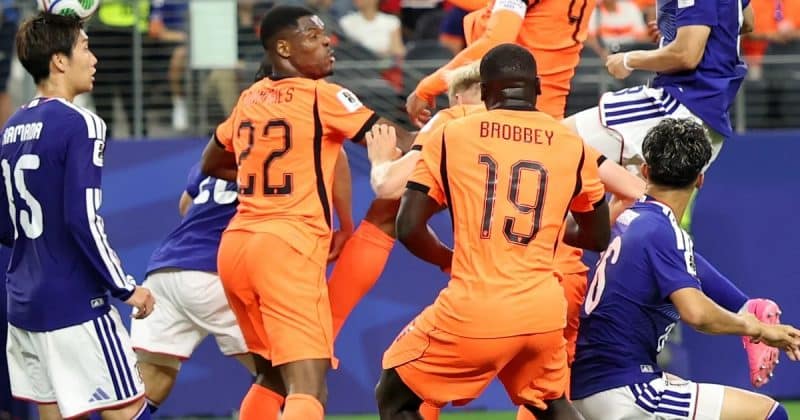
Japan, Germany and the Netherlands knocked out of 2026 FIFA World Cup in Round of 32 upset bonanza
Three football giants fell on the same day as the expanded 48-team format delivers on its promise of chaos
June 30, 2026, will go down as one of the darkest days in the history of three storied football programs. Germany, the Netherlands, and Japan were all eliminated from the FIFA World Cup in the Round of 32, a collective collapse that would have been unthinkable just a few tournament cycles ago.
How each giant fell
Germany’s exit was the most agonizing of the three. Die Mannschaft fought Paraguay to a 1-1 draw through regulation and extra time, only to lose 4-3 in a penalty shootout.
The Netherlands met a similar fate against Morocco. After failing to break the deadlock in normal and extra time, the Dutch were eliminated on penalties. Morocco, which made history by reaching the semifinals at the 2022 World Cup in Qatar, proved that run was no fluke.
Japan’s elimination was arguably the cleanest of the three. Brazil defeated the Samurai Blue 2-1 in a straightforward knockout result.
All three results landed on the same day, creating a rare convergence of upsets that dominated global sports headlines.
The 48-team format is working, for better or worse
The expanded 48-team format, hosted across the US, Canada, and Mexico, was supposed to give more nations a seat at the table. The format change also means that even strong teams face an additional knockout round compared to previous tournaments. Instead of advancing from a group of four into the Round of 16, teams now navigate groups of three before entering a 32-team bracket.
Germany and the Netherlands both fell in shootouts. Japan drew Brazil.
What this means for crypto and fan tokens
None of the three eliminated national teams have official fan tokens on platforms like Socios or Chiliz, which means there was no direct digital asset tied to their World Cup performance.
The Chiliz (CHZ) token, which powers the Socios fan engagement platform, saw an uptick of approximately 28% as anticipation for the tournament built. No substantial market movements were recorded in direct relation to the outcomes of the matches, indicating a broader trend rather than specific team dynamics affecting crypto assets.