
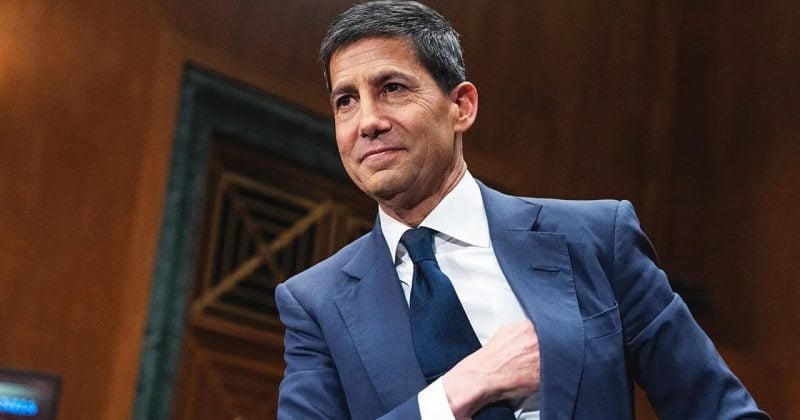
JPMorgan’s Bob Michele surprised by FOMC’s hawkish shift under Warsh

JPMorgan’s Bob Michele surprised by FOMC’s hawkish shift under Warsh

The Fed's new chair is already making his inflation-fighting intentions clear, and fixed income markets are taking notice

The Federal Reserve under new Chair Kevin Warsh just held its first meeting, and the message was unmistakable: inflation control comes first. The FOMC kept the federal funds rate pinned at 3.50%-3.75% during its June 16-17 gathering, a decision that caught even seasoned bond market veterans off guard with its hawkish tone.

Bob Michele, JPMorgan Asset Management’s Global Head of Fixed Income, described the committee as carrying a “hawkish tilt” driven by persistent inflation pressures.

A new sheriff with an old playbook

Warsh’s appointment to succeed Jerome Powell came with a well-known backstory. He previously served at the Fed from 2006 to 2011, a period that included navigating the global financial crisis. His reputation from that era was clear: inflation discipline first, accommodative policy second.

Advertisement

Michele had actually been reading the tea leaves before Warsh’s first meeting. He pointed to unusual dissents among FOMC policymakers at the April 2026 meeting as an early warning sign. In his view, those dissents were critical signals about where the committee was heading under new leadership, essentially telegraphing that the inflation hawks were gaining altitude.

Energy price volatility and broader geopolitical tensions have only reinforced the committee’s caution.

What Michele is actually saying

Michele isn’t saying the hawkish stance is irrational. He’s saying the degree of the shift was sharper than expected.

The prior Fed regime had been gradually leaning toward easing. Rate cuts were a matter of timing, not direction, in the consensus view. Warsh’s arrival has fundamentally reframed that conversation. Instead of asking “when do we cut,” the FOMC appears to be asking “how long do we hold.”

Michele’s observation about the committee’s inflation focus also carries an implicit message about the Fed’s communication strategy under Warsh. Powell was known for a measured, sometimes deliberately ambiguous approach to forward guidance. Early signals suggest Warsh may be more direct, letting the hawkish positioning speak for itself rather than softening it with dovish qualifiers.

What this means for investors

Fixed income is the most obvious pressure point. When the Fed signals that rates are staying elevated, bond prices face headwinds. Yield curves adjust. Duration risk becomes a bigger factor in portfolio construction.

What traders should watch going forward is the Fed’s evolving language around inflation metrics. Warsh’s committee may adopt different benchmarks or communication frameworks than Powell’s, and those shifts in emphasis can move markets before actual policy changes do. The dissent patterns that Michele flagged from April suggest internal debates are ongoing, meaning the committee’s consensus could shift again depending on incoming data.

Disclosure: This article was edited by Editorial Team. For more information on how we create and review content, see our Editorial Policy.

JPMorgan’s Bob Michele surprised by FOMC’s hawkish shift under Warsh

JPMorgan’s Bob Michele surprised by FOMC’s hawkish shift under Warsh

The Fed's new chair is already making his inflation-fighting intentions clear, and fixed income markets are taking notice

The Federal Reserve under new Chair Kevin Warsh just held its first meeting, and the message was unmistakable: inflation control comes first. The FOMC kept the federal funds rate pinned at 3.50%-3.75% during its June 16-17 gathering, a decision that caught even seasoned bond market veterans off guard with its hawkish tone.

Bob Michele, JPMorgan Asset Management’s Global Head of Fixed Income, described the committee as carrying a “hawkish tilt” driven by persistent inflation pressures.

A new sheriff with an old playbook

Warsh’s appointment to succeed Jerome Powell came with a well-known backstory. He previously served at the Fed from 2006 to 2011, a period that included navigating the global financial crisis. His reputation from that era was clear: inflation discipline first, accommodative policy second.

Advertisement

Michele had actually been reading the tea leaves before Warsh’s first meeting. He pointed to unusual dissents among FOMC policymakers at the April 2026 meeting as an early warning sign. In his view, those dissents were critical signals about where the committee was heading under new leadership, essentially telegraphing that the inflation hawks were gaining altitude.

Energy price volatility and broader geopolitical tensions have only reinforced the committee’s caution.

What Michele is actually saying

Michele isn’t saying the hawkish stance is irrational. He’s saying the degree of the shift was sharper than expected.

The prior Fed regime had been gradually leaning toward easing. Rate cuts were a matter of timing, not direction, in the consensus view. Warsh’s arrival has fundamentally reframed that conversation. Instead of asking “when do we cut,” the FOMC appears to be asking “how long do we hold.”

Michele’s observation about the committee’s inflation focus also carries an implicit message about the Fed’s communication strategy under Warsh. Powell was known for a measured, sometimes deliberately ambiguous approach to forward guidance. Early signals suggest Warsh may be more direct, letting the hawkish positioning speak for itself rather than softening it with dovish qualifiers.

What this means for investors

Fixed income is the most obvious pressure point. When the Fed signals that rates are staying elevated, bond prices face headwinds. Yield curves adjust. Duration risk becomes a bigger factor in portfolio construction.

What traders should watch going forward is the Fed’s evolving language around inflation metrics. Warsh’s committee may adopt different benchmarks or communication frameworks than Powell’s, and those shifts in emphasis can move markets before actual policy changes do. The dissent patterns that Michele flagged from April suggest internal debates are ongoing, meaning the committee’s consensus could shift again depending on incoming data.

Disclosure: This article was edited by Editorial Team. For more information on how we create and review content, see our Editorial Policy.