
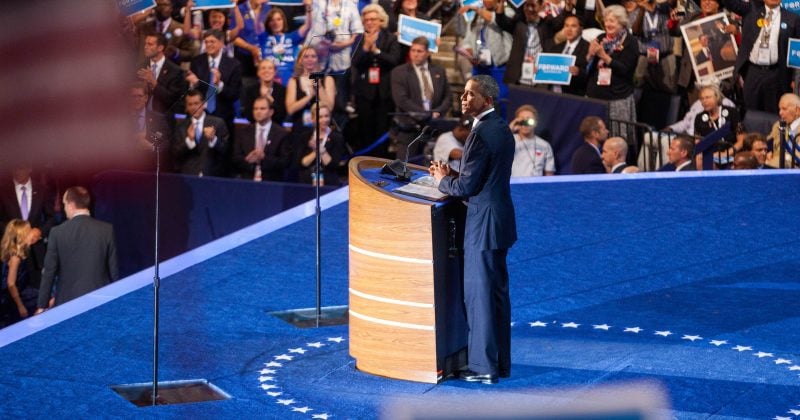
Kalshi investigates White House teleprompter operator for $100K trades on Trump speeches
The first known insider trading case involving a White House staffer and prediction markets has the CFTC's attention, and it could reshape how these platforms operate.
A White House teleprompter operator allegedly turned advance knowledge of President Trump’s speeches into a six-figure payday on Kalshi, and federal regulators are now picking through the receipts.
Gabriel Perez, who has operated Trump’s teleprompter since 2016, is under investigation by the Commodity Futures Trading Commission for reportedly placing strategic bets on Kalshi’s “mention markets,” those contracts that let traders wager on whether specific words or topics will appear in a presidential address. His alleged profits exceeded $100K over a three-month period. Roughly $90K of that is now frozen.
How the scheme allegedly worked
Kalshi’s mention markets are beautifully simple. Will the president say “tariffs” during the State of the Union? Will he mention a specific country? Traders bet yes or no, and the market resolves based on the actual transcript.
Perez allegedly leveraged his access to prepared remarks across more than a dozen speeches between late 2025 and early 2026. Those addresses reportedly included the State of the Union and a Medal of Honor ceremony, events where the text is typically finalized well in advance.
Kalshi’s own surveillance systems are what caught the pattern. The platform flagged the unusual trading activity, froze the funds, and referred the matter to the CFTC.
The prediction market integrity problem
This case is the first known investigation into insider trading on a prediction market involving someone inside the White House.
The news moving money, markets, and the world—before your day starts.
Daily. Free. Join 34,000+ readers across crypto, finance, and policy.
The CFTC has been actively scrutinizing prediction market compliance since at least early 2026. A separate investigation was launched against former Representative George Santos in June 2026 for similar activities on Kalshi.
Kalshi has committed to introducing additional security measures to combat insider trading risks. The company is cooperating with investigators.
What this means for investors and the broader market
Mention markets are particularly vulnerable. Unlike election outcome contracts, where the result is genuinely uncertain, speech content is determined in advance by a small group of people. Every speechwriter, editor, teleprompter operator, and senior advisor who touches that text becomes a potential insider.
For Kalshi specifically, the near-term risk is reputational. Freezing $90K and self-reporting to the CFTC was the right call, but it also publicly confirmed that someone gamed the system for months before getting caught.
If the CFTC decides that certain categories of prediction market contracts are inherently prone to insider manipulation, it could restrict or ban them entirely. Mention markets, which depend on the specific words a public official chooses, are an obvious candidate for that kind of scrutiny.