
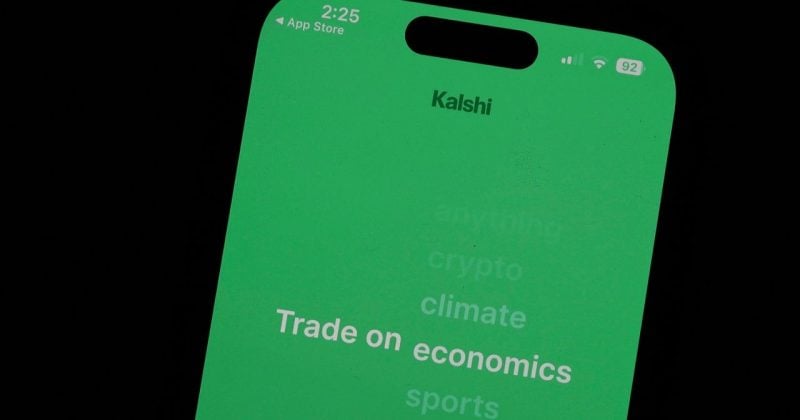
Kalshi loses court bid to block New York’s gambling restrictions
A federal judge ruled that New York can enforce its gambling laws against the prediction market platform, deepening a legal patchwork that affects crypto betting markets nationwide.
Kalshi just hit a wall in New York. On July 7, US District Judge Analisa Torres denied the prediction market platform’s request for a preliminary injunction that would have blocked the state from enforcing its gambling laws against the company. The ruling effectively tells Kalshi that being registered with the Commodity Futures Trading Commission doesn’t make it immune to state-level gambling regulations.
Kalshi filed an appeal to the US Court of Appeals for the Second Circuit the same day. The company clearly has no intention of backing down, but for now, New York regulators have a green light to treat its sports-event contracts as unlicensed gambling.
The state vs. federal tug-of-war
Kalshi argues that because it operates under CFTC oversight as a designated contract market, federal law preempts state gambling regulations. Judge Torres disagreed, concluding that the Commodity Exchange Act does not automatically override state gambling laws when it comes to Kalshi’s event-based contracts. The ruling carves out a clear lane for New York regulators to pursue enforcement actions against prediction market operators that lack state-level gambling licenses.
This wasn’t New York’s first shot across Kalshi’s bow. The New York State Gaming Commission had already issued a cease-and-desist letter to the platform back in October 2025, signaling that the state viewed its operations as unauthorized sports wagering. The court ruling now gives that enforcement posture legal backing.
Other federal courts have reached the opposite conclusion. In New Jersey, courts have sided with Kalshi on the preemption question, ruling that federal regulation does take precedence over state gambling laws. So depending on which state you’re in, the same product from the same company is either a legitimate financial instrument or illegal gambling.
The news moving money, markets, and the world—before your day starts.
Daily. Free. Join 34,000+ readers across crypto, finance, and policy.
Why crypto should be paying attention
Kalshi isn’t a crypto platform, but this ruling sends tremors through the entire prediction market ecosystem, including blockchain-based competitors like Polymarket. If states can individually enforce gambling laws against CFTC-regulated event contracts, the regulatory burden on decentralized prediction markets, which often lack any federal registration at all, becomes exponentially more severe.
Judge Torres is the same judge who presided over the landmark SEC v. Ripple case involving XRP. The CFTC has been pursuing legal arguments in multiple states, including New York, asserting that it holds exclusive jurisdiction over event contracts, but judges aren’t uniformly buying that argument.
For Polymarket, which operates on the Polygon blockchain and has already faced its own regulatory challenges, the New York ruling is a cautionary signal. If a CFTC-registered entity like Kalshi can’t fend off state gambling enforcement, a decentralized platform with no such registration faces an even steeper climb. The practical implication is that prediction markets may need to obtain gambling licenses on a state-by-state basis.
What this means for investors and market participants
The immediate impact is geographic. Kalshi’s ability to serve New York users for certain contract types is now in jeopardy pending the appeal. State officials have already indicated they intend to continue enforcement against unlicensed sports wagering.
The appeal to the Second Circuit will be the real test. If the appellate court upholds Torres’s ruling, it creates binding precedent across New York, Connecticut, and Vermont, all states within the Second Circuit’s jurisdiction. If the Second Circuit reverses the decision, it would bolster Kalshi’s position and potentially create a circuit split, which could eventually prompt the Supreme Court to step in and produce a nationwide answer to the preemption question.