
Kevin Warsh says US should not bail out anyone, including crypto

Kevin Warsh says US should not bail out anyone, including crypto

The new Fed chair's no-safety-net philosophy extends explicitly to digital assets, signaling a market discipline era for crypto investors.

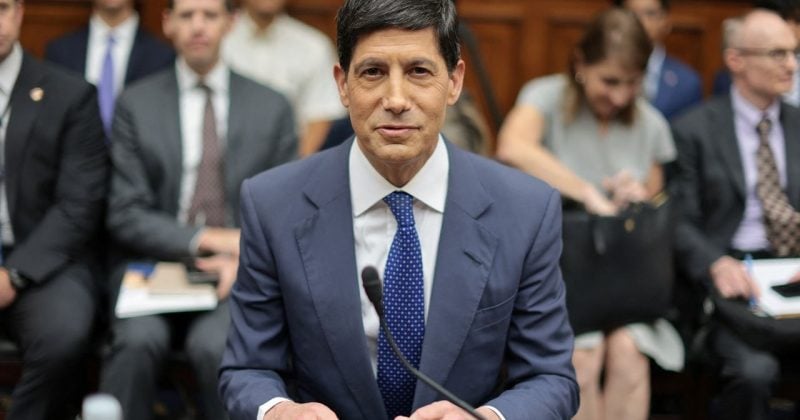
Kevin Warsh, who was sworn in as Federal Reserve Chair on May 15, 2026, has made it unambiguously clear that government bailouts are off the table for everyone. That “everyone” pointedly includes the cryptocurrency industry, which has spent years oscillating between wanting to be treated like traditional finance and wanting to be left alone by regulators.

Warsh presided over his first FOMC meeting in June 2026, and the committee kept its benchmark interest rate steady at 3.50% to 3.75%, with inflation still hovering above the 2% target.

Advertisement

His criticism of the Fed’s prolonged balance sheet expansion after the 2008 financial crisis was well documented during his time as a Fed governor and in subsequent academic and advisory roles. The Fed’s balance sheet currently sits somewhere between $6.5 trillion and $6.74 trillion, a figure Warsh has argued should be significantly smaller.

Bitcoin as a policy thermometer, not a pet project

During his congressional testimony as a nominee, Warsh stated plainly that Bitcoin is “not a substitute for the U.S. dollar.” Warsh has described Bitcoin as a useful indicator for assessing whether monetary policy is properly calibrated, positioning it as a tool for reading market sentiment rather than an asset class deserving of institutional support.

What this means for crypto investors

The no-bailout stance isn’t entirely surprising. Warsh has been consistent on this point for well over a decade. But hearing it come from the sitting Fed Chair, with explicit reference to crypto, changes the weight of the words considerably.

The historical parallel is instructive. After the 2008 crisis, the financial sector received massive government support, and Warsh was among the voices arguing that this created perverse incentives. Warsh’s application of the same logic to crypto suggests he wants to prevent digital assets from developing the same moral hazard.

No specific tokens or market events were linked to Warsh’s bailout comments, reinforcing the perception of policy continuity rather than urgency for new crypto regulations or support measures.

Disclosure: This article was edited by Editorial Team. For more information on how we create and review content, see our Editorial Policy.

Kevin Warsh says US should not bail out anyone, including crypto

Kevin Warsh says US should not bail out anyone, including crypto

The new Fed chair's no-safety-net philosophy extends explicitly to digital assets, signaling a market discipline era for crypto investors.

Kevin Warsh, who was sworn in as Federal Reserve Chair on May 15, 2026, has made it unambiguously clear that government bailouts are off the table for everyone. That “everyone” pointedly includes the cryptocurrency industry, which has spent years oscillating between wanting to be treated like traditional finance and wanting to be left alone by regulators.

Warsh presided over his first FOMC meeting in June 2026, and the committee kept its benchmark interest rate steady at 3.50% to 3.75%, with inflation still hovering above the 2% target.

Advertisement

His criticism of the Fed’s prolonged balance sheet expansion after the 2008 financial crisis was well documented during his time as a Fed governor and in subsequent academic and advisory roles. The Fed’s balance sheet currently sits somewhere between $6.5 trillion and $6.74 trillion, a figure Warsh has argued should be significantly smaller.

Bitcoin as a policy thermometer, not a pet project

During his congressional testimony as a nominee, Warsh stated plainly that Bitcoin is “not a substitute for the U.S. dollar.” Warsh has described Bitcoin as a useful indicator for assessing whether monetary policy is properly calibrated, positioning it as a tool for reading market sentiment rather than an asset class deserving of institutional support.

What this means for crypto investors

The no-bailout stance isn’t entirely surprising. Warsh has been consistent on this point for well over a decade. But hearing it come from the sitting Fed Chair, with explicit reference to crypto, changes the weight of the words considerably.

The historical parallel is instructive. After the 2008 crisis, the financial sector received massive government support, and Warsh was among the voices arguing that this created perverse incentives. Warsh’s application of the same logic to crypto suggests he wants to prevent digital assets from developing the same moral hazard.

No specific tokens or market events were linked to Warsh’s bailout comments, reinforcing the perception of policy continuity rather than urgency for new crypto regulations or support measures.

Disclosure: This article was edited by Editorial Team. For more information on how we create and review content, see our Editorial Policy.