
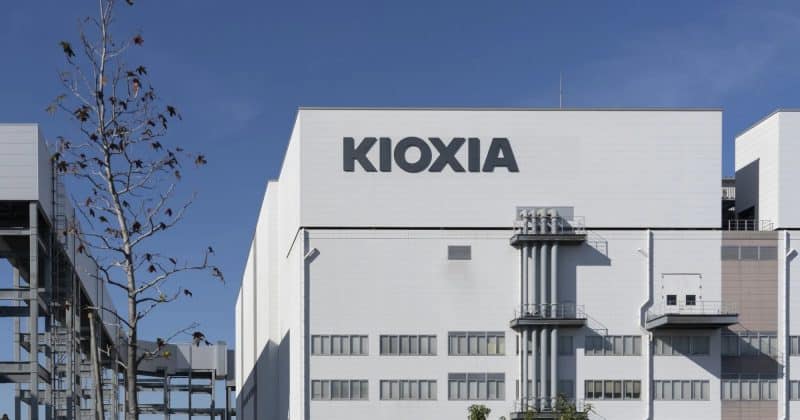
Kioxia’s Topix weighting set to triple as AI-fueled rally makes it Japan’s most valuable company

Kioxia’s Topix weighting set to triple as AI-fueled rally makes it Japan’s most valuable company

The memory chipmaker's 660% surge since its December IPO has briefly dethroned Toyota and reshaped Japan's benchmark index

Six months ago, Kioxia Holdings was a freshly public company finding its footing on the Tokyo Stock Exchange. Today, it’s briefly overtaken Toyota Motor as Japan’s most valuable company, with a market capitalization exceeding 45 trillion JPY, roughly $281 billion.

The Japanese memory chipmaker’s weighting in the Topix index is now set to more than triple, a direct consequence of a stock price that has surged over 660% year-to-date through early June 2026.

From IPO to index heavyweight in record time

Kioxia debuted on the Tokyo Stock Exchange in December 2025. The company’s stock has climbed more than 660% since the start of 2026, pushing its market capitalization to approximately $282.6 billion by July 2026.

That briefly made Kioxia more valuable than Toyota, a company that sells roughly 10 million vehicles per year and has been Japan’s corporate crown jewel for the better part of two decades.

Advertisement

The rally also earned Kioxia a spot in the Nikkei 225 as of March 5, 2026, just three months after its IPO.

Why the Topix weighting matters

The Topix adjusts its constituent weightings based on free-float market capitalization. The result is a more than tripling of Kioxia’s representation in the benchmark, meaning every passive fund, ETF, and institutional mandate benchmarked to the Topix now needs to hold significantly more Kioxia stock.

The sheer scale of the reweighting also reshapes the Topix’s sector composition. What was historically a diversified index tilted toward industrials, financials, and automakers now carries substantially more semiconductor exposure.

The AI storage thesis

Kioxia’s core business is NAND flash memory, the technology that stores data in everything from smartphones to enterprise data centers. The company was spun out of Toshiba’s memory division and has long been one of the world’s largest NAND producers.

The timing of the December 2025 IPO now looks almost suspiciously perfect. The company went public just as the AI infrastructure buildout was entering its most aggressive phase, giving it access to public market capital at precisely the moment investors were hunting for pure-play exposure to the trend.

What this means for investors

For passive investors tracking the Topix, the increased Kioxia weighting means greater exposure to semiconductor cyclicality. NAND flash memory has historically been one of the most boom-and-bust segments in all of tech.

The risk scenario is straightforward: if AI spending decelerates or NAND prices enter a downcycle, a stock with a $282.6 billion valuation and a 660% year-to-date gain has a long way to fall. And because Kioxia’s Topix weighting has tripled, any selloff would drag the broader index down more than it would have just months ago.

Disclosure: This article was edited by Editorial Team. For more information on how we create and review content, see our Editorial Policy.

Kioxia’s Topix weighting set to triple as AI-fueled rally makes it Japan’s most valuable company

Kioxia’s Topix weighting set to triple as AI-fueled rally makes it Japan’s most valuable company

The memory chipmaker's 660% surge since its December IPO has briefly dethroned Toyota and reshaped Japan's benchmark index

Six months ago, Kioxia Holdings was a freshly public company finding its footing on the Tokyo Stock Exchange. Today, it’s briefly overtaken Toyota Motor as Japan’s most valuable company, with a market capitalization exceeding 45 trillion JPY, roughly $281 billion.

The Japanese memory chipmaker’s weighting in the Topix index is now set to more than triple, a direct consequence of a stock price that has surged over 660% year-to-date through early June 2026.

From IPO to index heavyweight in record time

Kioxia debuted on the Tokyo Stock Exchange in December 2025. The company’s stock has climbed more than 660% since the start of 2026, pushing its market capitalization to approximately $282.6 billion by July 2026.

That briefly made Kioxia more valuable than Toyota, a company that sells roughly 10 million vehicles per year and has been Japan’s corporate crown jewel for the better part of two decades.

Advertisement

The rally also earned Kioxia a spot in the Nikkei 225 as of March 5, 2026, just three months after its IPO.

Why the Topix weighting matters

The Topix adjusts its constituent weightings based on free-float market capitalization. The result is a more than tripling of Kioxia’s representation in the benchmark, meaning every passive fund, ETF, and institutional mandate benchmarked to the Topix now needs to hold significantly more Kioxia stock.

The sheer scale of the reweighting also reshapes the Topix’s sector composition. What was historically a diversified index tilted toward industrials, financials, and automakers now carries substantially more semiconductor exposure.

The AI storage thesis

Kioxia’s core business is NAND flash memory, the technology that stores data in everything from smartphones to enterprise data centers. The company was spun out of Toshiba’s memory division and has long been one of the world’s largest NAND producers.

The timing of the December 2025 IPO now looks almost suspiciously perfect. The company went public just as the AI infrastructure buildout was entering its most aggressive phase, giving it access to public market capital at precisely the moment investors were hunting for pure-play exposure to the trend.

What this means for investors

For passive investors tracking the Topix, the increased Kioxia weighting means greater exposure to semiconductor cyclicality. NAND flash memory has historically been one of the most boom-and-bust segments in all of tech.

The risk scenario is straightforward: if AI spending decelerates or NAND prices enter a downcycle, a stock with a $282.6 billion valuation and a 660% year-to-date gain has a long way to fall. And because Kioxia’s Topix weighting has tripled, any selloff would drag the broader index down more than it would have just months ago.

Disclosure: This article was edited by Editorial Team. For more information on how we create and review content, see our Editorial Policy.