
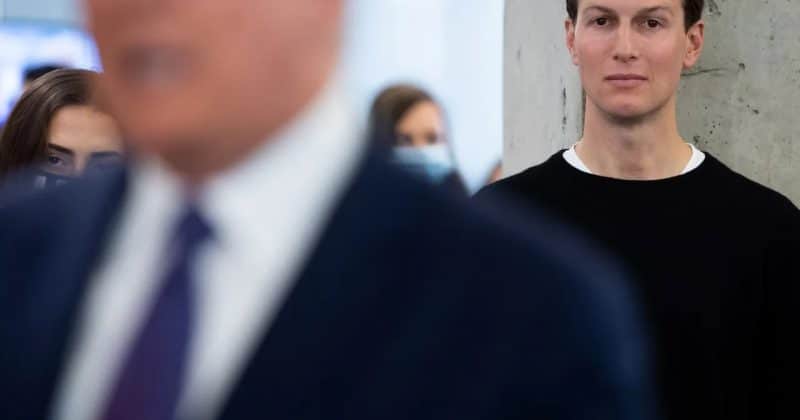
Jared Kushner and Steve Witkoff arrive in Doha for indirect US-Iran talks
The Trump administration's envoys met with Qatari mediators on June 30, with no direct meeting with Iranian officials scheduled during the visit.
Two of the Trump administration’s most prominent dealmakers landed in Doha on June 30, 2026, carrying one of the more complicated diplomatic briefs in recent memory. Jared Kushner and Steve Witkoff arrived in Qatar’s capital to engage with Qatari mediators over the state of US-Iran relations, continuing a pattern of indirect back-channel diplomacy that has defined this particular geopolitical relationship for decades.
The visit comes at a tense moment. Recent military exchanges in the Strait of Hormuz region and a fragile ceasefire have raised the stakes on any diplomatic movement, making Doha’s role as a neutral intermediary more important than ever.
What actually happened in Doha
President Trump stated that Iran had requested direct talks. Qatar’s Foreign Ministry offered a different picture, clarifying that no high-level meeting between US and Iranian officials was scheduled for this trip. The envoys were set to meet Qatari Prime Minister Sheikh Mohammed bin Abdulrahman bin Jassim Al-Thani, with technical discussions on US-Iran issues expected to occur on the sidelines.
The White House Press Secretary confirmed that technical meetings were taking place alongside higher-level discussions, suggesting a two-track process.
The scope of conversations is expected to include a memorandum of understanding between the US and Iran, as well as regional issues including the situation in Lebanon.
Macro, rates, and crypto—what moved markets and what matters next.
Daily. Free. Join 34,000+ readers across crypto, finance, and policy.
Who Kushner and Witkoff are, and why they’re in the room
Kushner, Trump’s son-in-law, was a central figure in the original Abraham Accords negotiations during Trump’s first term, a set of normalization agreements between Israel and several Arab states. Witkoff has been similarly deployed across multiple sensitive assignments in this current administration. The two envoys previously participated in diplomatic rounds that included talks in Pakistan.
Qatar maintains working relationships with parties that Washington cannot engage with directly, which is precisely why it has served as a venue for talks involving Iran, Hamas, the Taliban, and other actors the US keeps at arm’s length.
What this means for markets, including crypto
Developments in US-Iran negotiations, particularly anything touching sanctions relief or renewed restrictions, have moved energy markets, regional currencies, and increasingly, digital assets. Bitcoin has shown sensitivity to large-scale geopolitical shifts, especially events that affect global risk appetite or signal a realignment of major economic relationships.
The Strait of Hormuz handles a significant portion of global oil transit. Any escalation or de-escalation in that corridor ripples outward into commodity prices, inflation expectations, and the broader macro environment that crypto trades against.
Steve Witkoff’s name has been associated with $WLFI, a crypto-linked project connected to his business interests. That association creates a potential conflict-of-interest dynamic that investors in the digital asset space should keep in mind as these talks progress.