
Lightwheel raises $145M to build robotics simulation and data infrastructure

Lightwheel raises $145M to build robotics simulation and data infrastructure

The Beijing-based startup becomes the world's first unicorn in embodied data infrastructure, tackling what its CEO calls the 'data wall' in physical AI

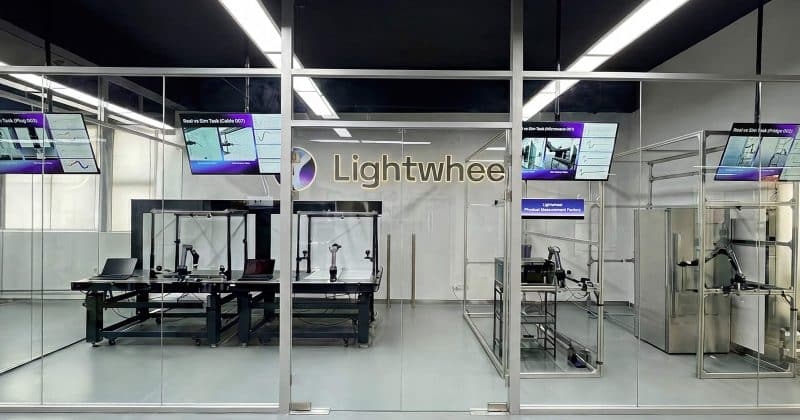
A Beijing-based startup called Lightwheel just pulled in RMB 1 billion, roughly $145 million, to build the simulation and data backbone that robots desperately need to get smarter. The combined Series A++ and A+++ rounds make Lightwheel what backers are calling the world’s first unicorn specifically targeting embodied data infrastructure.

The company has constructed what it describes as a three-layer data engine. The first layer, called SimReady, creates accurate simulation environments. The second layer, EgoSuite, generates scalable human demonstration data. The third layer, RoboFinals, functions as an evaluation platform for industrial applications.

Advertisement

Lightwheel’s CEO Steve Xie has framed the company’s mission around overcoming what he calls the “data wall” in physical AI. The concept is straightforward: current robotics systems hit a hard ceiling not because the algorithms are bad, but because there simply isn’t enough high-quality training data to make them work reliably in unstructured environments.

Xie’s resume includes stints at Cruise (GM’s autonomous vehicle unit), NVIDIA, and NIO, the Chinese EV maker. The investor roster includes New Hope Group, one of China’s largest agribusiness conglomerates, alongside Dingbang Investment, a family office. AUX Group, known primarily for its appliance manufacturing, also joined the round, as did CCB Sci-Tech, which is connected to China Construction Bank’s technology arm.

In June 2026, Lightwheel extended its reach further by forming joint ventures with three listed Chinese companies: Wuxi Boton Technology, IAT, and Yusys Technologies. These partnerships are specifically targeting high-risk industrial and mining robotics applications.

Disclosure: This article was edited by Editorial Team. For more information on how we create and review content, see our Editorial Policy.

Lightwheel raises $145M to build robotics simulation and data infrastructure

Lightwheel raises $145M to build robotics simulation and data infrastructure

The Beijing-based startup becomes the world's first unicorn in embodied data infrastructure, tackling what its CEO calls the 'data wall' in physical AI

A Beijing-based startup called Lightwheel just pulled in RMB 1 billion, roughly $145 million, to build the simulation and data backbone that robots desperately need to get smarter. The combined Series A++ and A+++ rounds make Lightwheel what backers are calling the world’s first unicorn specifically targeting embodied data infrastructure.

The company has constructed what it describes as a three-layer data engine. The first layer, called SimReady, creates accurate simulation environments. The second layer, EgoSuite, generates scalable human demonstration data. The third layer, RoboFinals, functions as an evaluation platform for industrial applications.

Advertisement

Lightwheel’s CEO Steve Xie has framed the company’s mission around overcoming what he calls the “data wall” in physical AI. The concept is straightforward: current robotics systems hit a hard ceiling not because the algorithms are bad, but because there simply isn’t enough high-quality training data to make them work reliably in unstructured environments.

Xie’s resume includes stints at Cruise (GM’s autonomous vehicle unit), NVIDIA, and NIO, the Chinese EV maker. The investor roster includes New Hope Group, one of China’s largest agribusiness conglomerates, alongside Dingbang Investment, a family office. AUX Group, known primarily for its appliance manufacturing, also joined the round, as did CCB Sci-Tech, which is connected to China Construction Bank’s technology arm.

In June 2026, Lightwheel extended its reach further by forming joint ventures with three listed Chinese companies: Wuxi Boton Technology, IAT, and Yusys Technologies. These partnerships are specifically targeting high-risk industrial and mining robotics applications.

Disclosure: This article was edited by Editorial Team. For more information on how we create and review content, see our Editorial Policy.