
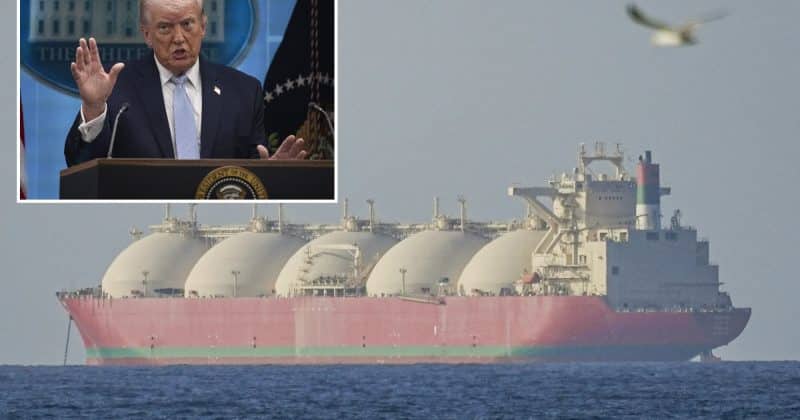
LNG tanker approaches Hormuz as US-Iran peace deal takes effect

LNG tanker approaches Hormuz as US-Iran peace deal takes effect

The first major vessel to navigate the strait since the crisis began signals a potential thaw in one of the world's most critical energy chokepoints, with ripple effects across crypto markets.

An LNG tanker named Disha, loaded at Qatar’s Ras Laffan terminal, is currently approaching the Strait of Hormuz, marking one of the first significant commercial transits since the US-Iran memorandum of understanding went into effect. The vessel had been idled just west of the strait before the deal was announced, waiting for the diplomatic green light that finally came.

The Strait of Hormuz normally handles roughly 20% of global oil and 20% of global LNG trade. When Iran closed it on March 4 following escalating tensions that began on February 28, the world’s energy markets went into a sustained panic. Now, with the Disha heading toward India’s Dahej terminal with an expected arrival around June 18, there’s a tangible sign that the chokepoint may be reopening for business.

What the deal actually covers

The MoU, unveiled around June 15, was advanced by US President Donald Trump and Iranian President Masoud Pezeshkian. A formal signing is scheduled for June 19 in Switzerland.

Advertisement

The framework has three main components: extending a ceasefire, reopening the Strait of Hormuz to commercial traffic, and initiating a 60-day negotiation phase on thornier issues like Iran’s nuclear program. There’s also a potential $300 billion reconstruction fund for Iran baked into the framework, which gives Tehran a significant economic incentive to stay at the table.

Oil prices dropped approximately 5% following the announcement. QatarEnergy and India’s Petronet, key players in the LNG trade route the Disha is traveling, are watching closely before committing to normalized shipping schedules.

The crypto connection

Bitcoin surpassed $67,000 as tensions eased, a move consistent with the risk-on sentiment that typically accompanies de-escalation in major global conflicts.

The Hormuz crisis and the broader US-Iran conflict existed within a sanctions framework that had significant implications for cryptocurrency. Iran itself has been linked to Bitcoin mining operations and cryptocurrency-based trade mechanisms designed to circumvent financial restrictions. If the MoU leads to a genuine relaxation of sanctions, it could reduce regulatory pressure on crypto platforms that have been forced to implement aggressive compliance measures related to Iranian transactions.

No specific tokens or protocols have been directly associated with the Hormuz developments. The market reaction has been broad-based, reflecting general risk appetite rather than sector-specific enthusiasm.

What investors should actually watch

The June 19 signing ceremony in Switzerland is the next major milestone. The 60-day negotiation window that follows covers Iran’s nuclear program and the $300 billion reconstruction fund, which will face intense political scrutiny in Washington.

The Disha loaded at Ras Laffan back on March 1-2, meaning it has been sitting in limbo for over three months waiting for this moment.

Disclosure: This article was edited by Editorial Team. For more information on how we create and review content, see our Editorial Policy.

LNG tanker approaches Hormuz as US-Iran peace deal takes effect

LNG tanker approaches Hormuz as US-Iran peace deal takes effect

The first major vessel to navigate the strait since the crisis began signals a potential thaw in one of the world's most critical energy chokepoints, with ripple effects across crypto markets.

An LNG tanker named Disha, loaded at Qatar’s Ras Laffan terminal, is currently approaching the Strait of Hormuz, marking one of the first significant commercial transits since the US-Iran memorandum of understanding went into effect. The vessel had been idled just west of the strait before the deal was announced, waiting for the diplomatic green light that finally came.

The Strait of Hormuz normally handles roughly 20% of global oil and 20% of global LNG trade. When Iran closed it on March 4 following escalating tensions that began on February 28, the world’s energy markets went into a sustained panic. Now, with the Disha heading toward India’s Dahej terminal with an expected arrival around June 18, there’s a tangible sign that the chokepoint may be reopening for business.

What the deal actually covers

The MoU, unveiled around June 15, was advanced by US President Donald Trump and Iranian President Masoud Pezeshkian. A formal signing is scheduled for June 19 in Switzerland.

Advertisement

The framework has three main components: extending a ceasefire, reopening the Strait of Hormuz to commercial traffic, and initiating a 60-day negotiation phase on thornier issues like Iran’s nuclear program. There’s also a potential $300 billion reconstruction fund for Iran baked into the framework, which gives Tehran a significant economic incentive to stay at the table.

Oil prices dropped approximately 5% following the announcement. QatarEnergy and India’s Petronet, key players in the LNG trade route the Disha is traveling, are watching closely before committing to normalized shipping schedules.

The crypto connection

Bitcoin surpassed $67,000 as tensions eased, a move consistent with the risk-on sentiment that typically accompanies de-escalation in major global conflicts.

The Hormuz crisis and the broader US-Iran conflict existed within a sanctions framework that had significant implications for cryptocurrency. Iran itself has been linked to Bitcoin mining operations and cryptocurrency-based trade mechanisms designed to circumvent financial restrictions. If the MoU leads to a genuine relaxation of sanctions, it could reduce regulatory pressure on crypto platforms that have been forced to implement aggressive compliance measures related to Iranian transactions.

No specific tokens or protocols have been directly associated with the Hormuz developments. The market reaction has been broad-based, reflecting general risk appetite rather than sector-specific enthusiasm.

What investors should actually watch

The June 19 signing ceremony in Switzerland is the next major milestone. The 60-day negotiation window that follows covers Iran’s nuclear program and the $300 billion reconstruction fund, which will face intense political scrutiny in Washington.

The Disha loaded at Ras Laffan back on March 1-2, meaning it has been sitting in limbo for over three months waiting for this moment.

Disclosure: This article was edited by Editorial Team. For more information on how we create and review content, see our Editorial Policy.