
Nexo Earn with Nexo
Lorie Logan warns US oil production won’t fill global supply gap

Lorie Logan warns US oil production won’t fill global supply gap

The Dallas Fed president says American producers are sitting on their hands despite $110 oil, and that spells trouble for inflation.

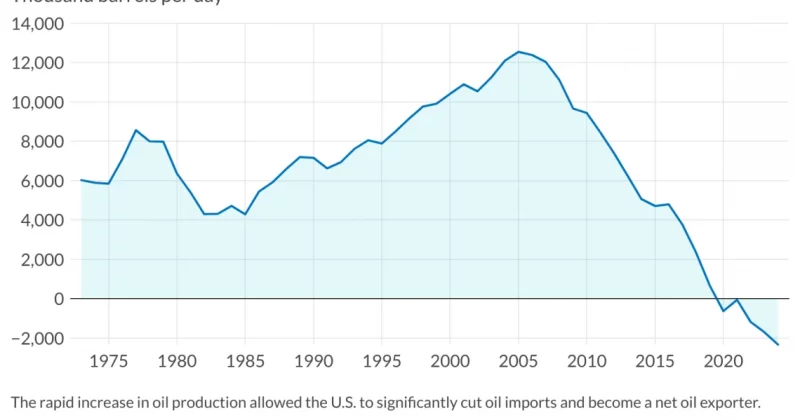
Oil is trading around $110 per barrel. American shale producers have the capacity to drill more. And yet, according to Dallas Federal Reserve President Lorie Logan, they’re choosing not to. Her message on April 2 was blunt: don’t count on US oil production to ride in and rescue global supply.

The $70 floor that explains everything

Here’s the thing about oil economics that gets lost in the headline price. West Texas Intermediate crude sitting at $110 per barrel sounds like a gold rush for US producers. But the breakeven price for new drilling projects hovers just below $70 per barrel, according to Logan’s remarks. That’s a $40-plus margin on paper.

The Dallas Fed’s Energy Survey from Q1 2026 paints a picture of an industry exercising extreme caution in capital spending. Oil and gas firms are showing mixed production outlooks and a general hesitance to expand output aggressively. They’ve been burned before by boom-bust cycles, and $110 oil driven by geopolitical chaos doesn’t exactly inspire long-term investment confidence.

Advertisement

Geopolitics and the inflation problem

The backdrop to Logan’s comments matters enormously. Current WTI prices are elevated in large part due to geopolitical tensions, including the US-Israeli conflict with Iran and related disruptions near the Strait of Hormuz.

Logan made clear she was “very worried” about inflation. She expressed doubt about a clear path to the Federal Reserve’s 2% inflation target, and notably, those doubts predated the most recent escalation with Iran.

What this means for investors

Logan’s warning carries direct implications for several corners of the market.

First, energy prices. If US producers aren’t going to meaningfully increase output, the supply side of the equation stays constrained. The traditional relief valve of American shale production ramping up is, at least for now, stuck.

Second, monetary policy. A Fed that can’t count on falling energy prices to help with inflation is a Fed that stays hawkish longer. Rate cuts become harder to justify when the Dallas Fed president is publicly doubting the inflation trajectory.

Third, the lag effect. Even if producers did decide tomorrow to open the taps, new drilling projects take months to years to bring online at scale.

Disclosure: This article was edited by Editorial Team. For more information on how we create and review content, see our Editorial Policy.

Lorie Logan warns US oil production won’t fill global supply gap

Lorie Logan warns US oil production won’t fill global supply gap

The Dallas Fed president says American producers are sitting on their hands despite $110 oil, and that spells trouble for inflation.

Oil is trading around $110 per barrel. American shale producers have the capacity to drill more. And yet, according to Dallas Federal Reserve President Lorie Logan, they’re choosing not to. Her message on April 2 was blunt: don’t count on US oil production to ride in and rescue global supply.

The $70 floor that explains everything

Here’s the thing about oil economics that gets lost in the headline price. West Texas Intermediate crude sitting at $110 per barrel sounds like a gold rush for US producers. But the breakeven price for new drilling projects hovers just below $70 per barrel, according to Logan’s remarks. That’s a $40-plus margin on paper.

The Dallas Fed’s Energy Survey from Q1 2026 paints a picture of an industry exercising extreme caution in capital spending. Oil and gas firms are showing mixed production outlooks and a general hesitance to expand output aggressively. They’ve been burned before by boom-bust cycles, and $110 oil driven by geopolitical chaos doesn’t exactly inspire long-term investment confidence.

Advertisement

Geopolitics and the inflation problem

The backdrop to Logan’s comments matters enormously. Current WTI prices are elevated in large part due to geopolitical tensions, including the US-Israeli conflict with Iran and related disruptions near the Strait of Hormuz.

Logan made clear she was “very worried” about inflation. She expressed doubt about a clear path to the Federal Reserve’s 2% inflation target, and notably, those doubts predated the most recent escalation with Iran.

What this means for investors

Logan’s warning carries direct implications for several corners of the market.

First, energy prices. If US producers aren’t going to meaningfully increase output, the supply side of the equation stays constrained. The traditional relief valve of American shale production ramping up is, at least for now, stuck.

Second, monetary policy. A Fed that can’t count on falling energy prices to help with inflation is a Fed that stays hawkish longer. Rate cuts become harder to justify when the Dallas Fed president is publicly doubting the inflation trajectory.

Third, the lag effect. Even if producers did decide tomorrow to open the taps, new drilling projects take months to years to bring online at scale.

Disclosure: This article was edited by Editorial Team. For more information on how we create and review content, see our Editorial Policy.