
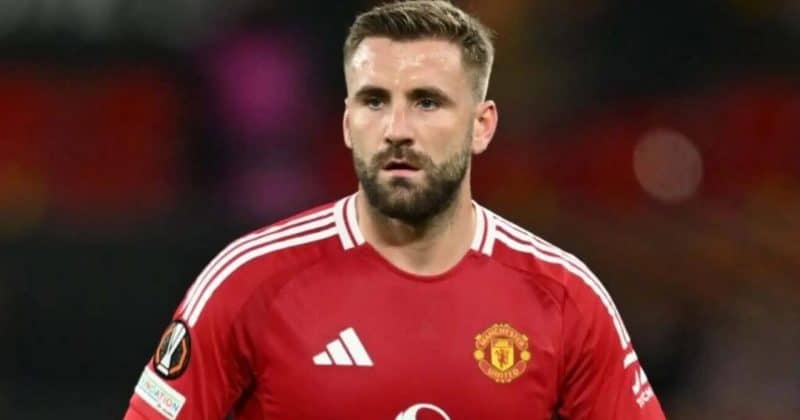
Manchester United expects Luke Shaw to take pay cut for new contract

Manchester United expects Luke Shaw to take pay cut for new contract

The left-back earns £200,000 per week but United's evolving wage strategy means his next deal will look very different

Luke Shaw has been one of Manchester United’s most reliable performers when healthy. United expects Shaw to accept a reduced salary if he wants to sign a new contract at Old Trafford. The 30-year-old defender currently earns £200,000 per week following a four-year extension he signed on 4 April 2023, a deal that runs through 30 June 2027. But the club has no plans to offer anything close to those same terms when negotiations begin for a follow-up agreement.

A strong season, a complicated negotiation

Shaw has actually been excellent this season. The 2025/26 campaign has arguably been one of the best of his career, with the left-back on track to potentially start all 38 Premier League matches.

Advertisement

Shaw will be 32 by the time his current deal expires. The absence of an option clause in his current contract matters too. There’s no automatic extension that would give the club leverage or flexibility. When Shaw enters the final year of his deal, both sides will be negotiating from scratch, with the player theoretically able to speak to foreign clubs for free from January 2027.

United’s broader wage strategy

Manchester United has been actively reassessing its wage bill as part of a wider financial restructuring. The club’s approach to contracts has shifted noticeably, with age, medical history, and on-pitch contribution all being weighted more carefully against salary demands.

Shaw joined United from Southampton back in June 2014 for roughly £30 million, which was a record fee for a teenager at the time. At £200,000 per week, Shaw is among the higher earners in the squad. A meaningful pay cut could see him drop to somewhere that reflects his age bracket and injury profile rather than his peak-years valuation.

Disclosure: This article was edited by Editorial Team. For more information on how we create and review content, see our Editorial Policy.

Manchester United expects Luke Shaw to take pay cut for new contract

Manchester United expects Luke Shaw to take pay cut for new contract

The left-back earns £200,000 per week but United's evolving wage strategy means his next deal will look very different

Luke Shaw has been one of Manchester United’s most reliable performers when healthy. United expects Shaw to accept a reduced salary if he wants to sign a new contract at Old Trafford. The 30-year-old defender currently earns £200,000 per week following a four-year extension he signed on 4 April 2023, a deal that runs through 30 June 2027. But the club has no plans to offer anything close to those same terms when negotiations begin for a follow-up agreement.

A strong season, a complicated negotiation

Shaw has actually been excellent this season. The 2025/26 campaign has arguably been one of the best of his career, with the left-back on track to potentially start all 38 Premier League matches.

Advertisement

Shaw will be 32 by the time his current deal expires. The absence of an option clause in his current contract matters too. There’s no automatic extension that would give the club leverage or flexibility. When Shaw enters the final year of his deal, both sides will be negotiating from scratch, with the player theoretically able to speak to foreign clubs for free from January 2027.

United’s broader wage strategy

Manchester United has been actively reassessing its wage bill as part of a wider financial restructuring. The club’s approach to contracts has shifted noticeably, with age, medical history, and on-pitch contribution all being weighted more carefully against salary demands.

Shaw joined United from Southampton back in June 2014 for roughly £30 million, which was a record fee for a teenager at the time. At £200,000 per week, Shaw is among the higher earners in the squad. A meaningful pay cut could see him drop to somewhere that reflects his age bracket and injury profile rather than his peak-years valuation.

Disclosure: This article was edited by Editorial Team. For more information on how we create and review content, see our Editorial Policy.