
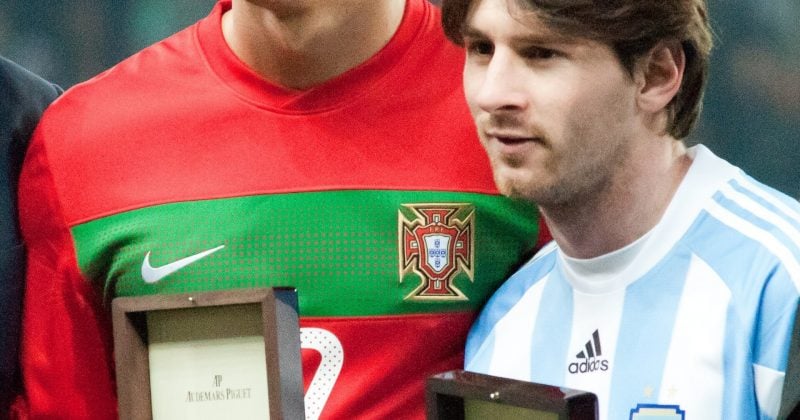
Lionel Messi ties Ronaldo Nazario as second all-time World Cup goalscorer
Messi's 15th World Cup goal matches a record that stood since 2006, and his growing crypto partnerships could ride the wave of renewed global attention
Lionel Messi has scored his 15th World Cup goal, pulling level with Ronaldo Nazario for second place on the all-time World Cup scoring list. The Brazilian legend’s mark of 15 goals, set across the 1998, 2002, and 2006 tournaments, had stood unchallenged for nearly two decades.
Only Miroslav Klose, with 16 World Cup goals, now sits above Messi on the all-time list.
The path to 15
Messi’s breakthrough tournament was the 2022 edition in Qatar, where he scored 7 goals en route to finally lifting the trophy that had eluded him for his entire career.
Ronaldo Nazario’s 15th goal came in the 2006 Round of 16, capping a three-tournament run that cemented the Brazilian striker as one of the greatest pure scorers in World Cup history. His 8-goal haul at the 2002 tournament, where Brazil won the title, remains one of the most dominant individual performances in the competition’s history.
Messi’s crypto footprint keeps growing
Beyond the pitch, Messi has quietly assembled one of the more substantial crypto and digital asset portfolios among global athletes. His involvement in the space dates back to at least early 2022, when he signed a promotional agreement with Socios.com worth over $20 million, focused on digital fan tokens.
The news moving money, markets, and the world—before your day starts.
Daily. Free. Join 34,000+ readers across crypto, finance, and policy.
In November 2022, Messi acquired an equity stake in Sorare, a fantasy soccer platform built on NFT technology, taking on dual roles as both investor and brand ambassador. Then in October 2022, he partnered with Bitget, a cryptocurrency exchange, to promote Web3 trading.
It’s also worth noting that various tokens exist with Messi’s name attached, like MESSI COIN on Ethereum, but these are not officially linked to the player. Investors should treat such tokens with the appropriate level of skepticism.
What this means for investors
Platforms like Socios.com, Sorare, and Bitget have structured their partnerships around exactly this kind of moment. For fan token platforms in particular, the correlation between on-pitch excitement and trading volume has been well-documented across previous tournaments.
The 2026 World Cup’s expanded format, featuring 48 teams instead of the traditional 32, means more matches and more potential touchpoints for crypto platforms looking to convert sports fans into users.
Fan tokens broadly have struggled to maintain value between major sporting events, and the NFT market has cooled considerably from its 2021-2022 peaks.