
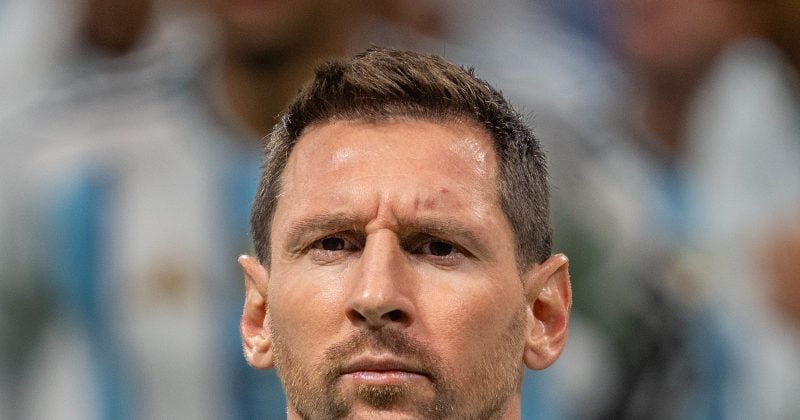
Messi’s blue jersey moment at World Cup 2026 spotlights crypto’s deepening grip on global football

Messi’s blue jersey moment at World Cup 2026 spotlights crypto’s deepening grip on global football

Argentina's kit swap against Jordan is a footnote, but Messi's crypto partnerships and fan token volatility during the tournament are the real story worth watching.

Argentina walked onto the pitch against Jordan in their final World Cup group-stage match wearing navy blue instead of the iconic light blue-and-white stripes. For football purists, it was a minor curiosity, a routine kit rotation dictated by Adidas and color-clash rules. For the crypto market, though, every Messi appearance is a data point.

Messi’s crypto portfolio is bigger than most protocols

Lionel Messi signed a partnership with Socios.com back in 2022, a deal reportedly worth more than $20 million. Socios is the dominant platform behind fan tokens, the tradable digital assets that give holders voting rights on minor club decisions and, more practically, a way to speculate on team sentiment.

The $ARG fan token, representing the Argentine Football Association, has become one of the most watched assets in the fan token vertical. Its price movements have historically tracked Messi’s performances and Argentina’s match outcomes during major tournaments.

Advertisement

He also has a sponsorship deal with Bitget, the centralized exchange, and holds an ownership stake in Sorare, the fantasy football platform built on blockchain rails.

Fan tokens and the World Cup volatility machine

The $ARG token and Chiliz’s $CHZ, the layer-1 token powering the Socios ecosystem, have both exhibited price movements tied to Argentina’s game results during the ongoing tournament. The Jordan fixture specifically didn’t generate a dramatic spike, which makes sense. Argentina were heavy favorites, and the match carried relatively low stakes for a team already through the group stage.

FIFA’s own crypto infrastructure keeps expanding

Kraken was announced as FIFA’s Official Crypto Exchange Supporter for the 2026 tournament back in June 2022. Meanwhile, Avalanche powers the blockchain infrastructure behind FIFA Collect, the organization’s NFT platform. FIFA Collect lets fans purchase digital collectible moments from matches. The 2026 World Cup, expanded to 48 teams across the US, Mexico, and Canada, represents the largest stage crypto has ever had in professional sports.

What this means for investors

The investment thesis here splits into two lanes. The first is direct: fan tokens like $ARG and $CHZ are tradable assets with clear catalysts tied to match schedules. The risk is equally clear. These tokens are thinly traded compared to majors, and liquidity can evaporate exactly when you need it most.

The second lane is structural. Every major sports organization that partners with a crypto company, whether it’s FIFA with Kraken or the AFA with Socios, normalizes the technology for a demographic that might never visit a DeFi dashboard.

Disclosure: This article was edited by Editorial Team. For more information on how we create and review content, see our Editorial Policy.

Messi’s blue jersey moment at World Cup 2026 spotlights crypto’s deepening grip on global football

Messi’s blue jersey moment at World Cup 2026 spotlights crypto’s deepening grip on global football

Argentina's kit swap against Jordan is a footnote, but Messi's crypto partnerships and fan token volatility during the tournament are the real story worth watching.

Argentina walked onto the pitch against Jordan in their final World Cup group-stage match wearing navy blue instead of the iconic light blue-and-white stripes. For football purists, it was a minor curiosity, a routine kit rotation dictated by Adidas and color-clash rules. For the crypto market, though, every Messi appearance is a data point.

Messi’s crypto portfolio is bigger than most protocols

Lionel Messi signed a partnership with Socios.com back in 2022, a deal reportedly worth more than $20 million. Socios is the dominant platform behind fan tokens, the tradable digital assets that give holders voting rights on minor club decisions and, more practically, a way to speculate on team sentiment.

The $ARG fan token, representing the Argentine Football Association, has become one of the most watched assets in the fan token vertical. Its price movements have historically tracked Messi’s performances and Argentina’s match outcomes during major tournaments.

Advertisement

He also has a sponsorship deal with Bitget, the centralized exchange, and holds an ownership stake in Sorare, the fantasy football platform built on blockchain rails.

Fan tokens and the World Cup volatility machine

The $ARG token and Chiliz’s $CHZ, the layer-1 token powering the Socios ecosystem, have both exhibited price movements tied to Argentina’s game results during the ongoing tournament. The Jordan fixture specifically didn’t generate a dramatic spike, which makes sense. Argentina were heavy favorites, and the match carried relatively low stakes for a team already through the group stage.

FIFA’s own crypto infrastructure keeps expanding

Kraken was announced as FIFA’s Official Crypto Exchange Supporter for the 2026 tournament back in June 2022. Meanwhile, Avalanche powers the blockchain infrastructure behind FIFA Collect, the organization’s NFT platform. FIFA Collect lets fans purchase digital collectible moments from matches. The 2026 World Cup, expanded to 48 teams across the US, Mexico, and Canada, represents the largest stage crypto has ever had in professional sports.

What this means for investors

The investment thesis here splits into two lanes. The first is direct: fan tokens like $ARG and $CHZ are tradable assets with clear catalysts tied to match schedules. The risk is equally clear. These tokens are thinly traded compared to majors, and liquidity can evaporate exactly when you need it most.

The second lane is structural. Every major sports organization that partners with a crypto company, whether it’s FIFA with Kraken or the AFA with Socios, normalizes the technology for a demographic that might never visit a DeFi dashboard.

Disclosure: This article was edited by Editorial Team. For more information on how we create and review content, see our Editorial Policy.