
Messi’s World Cup hat-trick reignites interest in sports fan tokens and blockchain ticketing

Messi’s World Cup hat-trick reignites interest in sports fan tokens and blockchain ticketing

Argentina's 3-0 demolition of Algeria puts the spotlight back on crypto's complicated relationship with the beautiful game

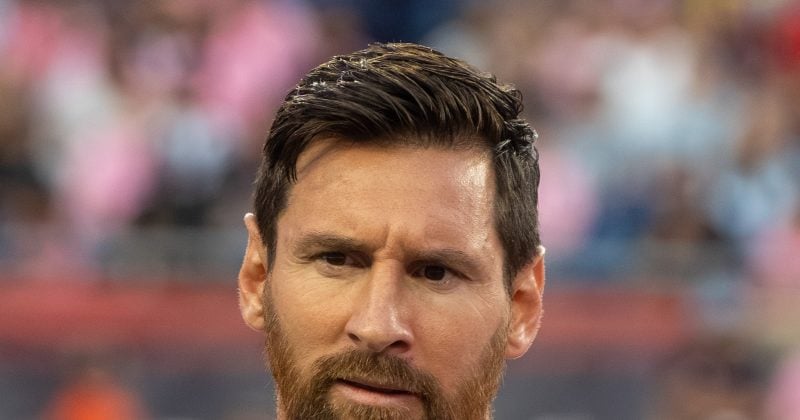
Lionel Messi, somehow still defying the laws of biology at 38, scored a hat-trick in Argentina’s 3-0 victory over Algeria on June 17, marking what might be the most Messi thing to ever happen in a World Cup. It was Argentina’s opening salvo in their title defense, and it reminded everyone, once again, that retirement is apparently just a concept the man refuses to acknowledge.

The GOAT’s crypto footprint

Messi’s connection to digital assets isn’t new or accidental. When he signed with Paris Saint-Germain in 2021, a portion of his welcome package included $PSG fan tokens distributed through Socios.com. That deal marked one of the highest-profile intersections of professional sports and crypto, turning Messi into an unwitting ambassador for an entire asset class.

Argentina’s national team has its own $ARG fan token, and historically, the token’s price has moved in tandem with the team’s on-pitch fortunes. During previous World Cup cycles, the $ARG token exhibited notable volatility that correlated with the national team’s results. A win pushed prices up. A loss dragged them down.

Advertisement

Now, with Messi becoming the first player in history to feature in six FIFA World Cups, and earning his 200th international cap during this tournament, the attention economy around Argentina’s squad is at full throttle.

FIFA’s blockchain ambitions

Messi isn’t the only World Cup participant flirting with crypto infrastructure. FIFA itself has explored using Avalanche’s blockchain technology for the 2026 World Cup ticketing system, aiming to combat the perennial problem of ticket scalping.

The logic is straightforward. Blockchain-based tickets create a verifiable chain of ownership that makes counterfeiting and unauthorized resale significantly harder. The choice of Avalanche is interesting in itself. The network has positioned itself as a high-throughput, low-cost alternative to Ethereum, making it a practical choice for processing millions of ticket transactions during a month-long tournament spread across multiple countries.

What this means for the fan token market

During the 2022 World Cup, fan tokens for participating nations saw significant trading volume spikes, suggesting that a meaningful cohort of crypto users treat them as a way to express fandom through financial exposure.

As of early July 2026, there haven’t been new token launches or major sponsorship announcements tied directly to this World Cup cycle. That restraint is worth noting. After the excesses of the 2021-2022 bull market, when every celebrity endorsement seemed to precede a rug pull, the industry appears to be exercising more caution this time around.

For investors watching this space, there are a few dynamics worth tracking. First, the correlation between Argentina’s results and $ARG token price movements will test whether the patterns observed in 2022 hold in a different market environment. Second, FIFA’s blockchain ticketing experiment could produce tangible data on enterprise adoption of crypto infrastructure.

Disclosure: This article was edited by Editorial Team. For more information on how we create and review content, see our Editorial Policy.

Messi’s World Cup hat-trick reignites interest in sports fan tokens and blockchain ticketing

Messi’s World Cup hat-trick reignites interest in sports fan tokens and blockchain ticketing

Argentina's 3-0 demolition of Algeria puts the spotlight back on crypto's complicated relationship with the beautiful game

Lionel Messi, somehow still defying the laws of biology at 38, scored a hat-trick in Argentina’s 3-0 victory over Algeria on June 17, marking what might be the most Messi thing to ever happen in a World Cup. It was Argentina’s opening salvo in their title defense, and it reminded everyone, once again, that retirement is apparently just a concept the man refuses to acknowledge.

The GOAT’s crypto footprint

Messi’s connection to digital assets isn’t new or accidental. When he signed with Paris Saint-Germain in 2021, a portion of his welcome package included $PSG fan tokens distributed through Socios.com. That deal marked one of the highest-profile intersections of professional sports and crypto, turning Messi into an unwitting ambassador for an entire asset class.

Argentina’s national team has its own $ARG fan token, and historically, the token’s price has moved in tandem with the team’s on-pitch fortunes. During previous World Cup cycles, the $ARG token exhibited notable volatility that correlated with the national team’s results. A win pushed prices up. A loss dragged them down.

Advertisement

Now, with Messi becoming the first player in history to feature in six FIFA World Cups, and earning his 200th international cap during this tournament, the attention economy around Argentina’s squad is at full throttle.

FIFA’s blockchain ambitions

Messi isn’t the only World Cup participant flirting with crypto infrastructure. FIFA itself has explored using Avalanche’s blockchain technology for the 2026 World Cup ticketing system, aiming to combat the perennial problem of ticket scalping.

The logic is straightforward. Blockchain-based tickets create a verifiable chain of ownership that makes counterfeiting and unauthorized resale significantly harder. The choice of Avalanche is interesting in itself. The network has positioned itself as a high-throughput, low-cost alternative to Ethereum, making it a practical choice for processing millions of ticket transactions during a month-long tournament spread across multiple countries.

What this means for the fan token market

During the 2022 World Cup, fan tokens for participating nations saw significant trading volume spikes, suggesting that a meaningful cohort of crypto users treat them as a way to express fandom through financial exposure.

As of early July 2026, there haven’t been new token launches or major sponsorship announcements tied directly to this World Cup cycle. That restraint is worth noting. After the excesses of the 2021-2022 bull market, when every celebrity endorsement seemed to precede a rug pull, the industry appears to be exercising more caution this time around.

For investors watching this space, there are a few dynamics worth tracking. First, the correlation between Argentina’s results and $ARG token price movements will test whether the patterns observed in 2022 hold in a different market environment. Second, FIFA’s blockchain ticketing experiment could produce tangible data on enterprise adoption of crypto infrastructure.

Disclosure: This article was edited by Editorial Team. For more information on how we create and review content, see our Editorial Policy.