
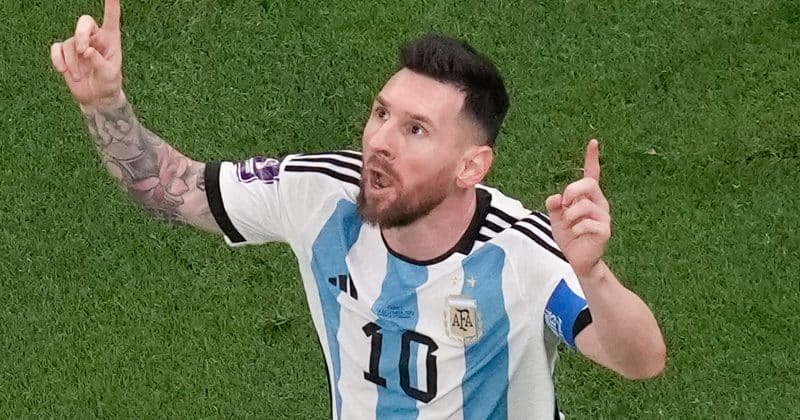
Lionel Messi’s World Cup scoring spree is moving the needle for Argentina’s fan token
The GOAT debate is settled on the pitch, and crypto markets tied to Argentina are reacting accordingly
Lionel Messi has scored seven goals in four games at the 2026 FIFA World Cup. That’s the same number he netted across the entire 2022 tournament, except he did it in nearly half the matches this time around.
The 39-year-old, playing in his sixth World Cup, is now the all-time leading scorer in men’s World Cup history with at least 20 career goals. He’s also the first player ever to score seven goals in two different World Cup editions.
What the numbers actually look like
Messi’s scoring pace in 2026 is historically unusual. Seven goals in four matches puts him at 1.75 goals per game, a rate that, if sustained through Argentina’s remaining fixtures, would challenge single-tournament records that have stood for decades.
He’s currently among the leaders for the Golden Boot alongside Kylian Mbappe. Messi has scored in consecutive matches, extending a record scoring streak that cements his status as the most productive World Cup forward the sport has seen.
Argentina entered this tournament as defending champions. The 2026 World Cup is hosted across the US, Canada, and Mexico.
The fan token angle
Argentina’s $ARG fan token has seen increased trading volume and interest that correlates directly with Messi’s scoring performances.
The news moving money, markets, and the world—before your day starts.
Daily. Free. Join 34,000+ readers across crypto, finance, and policy.
Fan tokens are digital assets, typically built on blockchain platforms like Chiliz’s Socios ecosystem, that give holders voting rights on minor club or national team decisions and serve as a speculative vehicle tied to team sentiment.
The 2022 World Cup saw similar dynamics, with tokens for participating nations experiencing volume spikes around key matches. The 2026 edition appears to be following the same playbook, with Messi’s individual brilliance acting as an amplifier.
What this means for crypto investors
Fan tokens occupy a strange corner of the crypto market. They’re sentiment-driven assets that correlate with real-world sporting outcomes, which makes them both predictable in their catalysts and unpredictable in their magnitude.
The risk is that these tokens are reflexive. They go up when things go well and drop when the team loses. There’s no fundamental value floor the way there might be for a token with protocol revenue or a productive treasury.
For longer-term investors, the question is whether fan tokens as a category can sustain relevance between major tournaments. History suggests they struggle with engagement during off-cycles, which makes them more of a trading instrument than a portfolio holding.